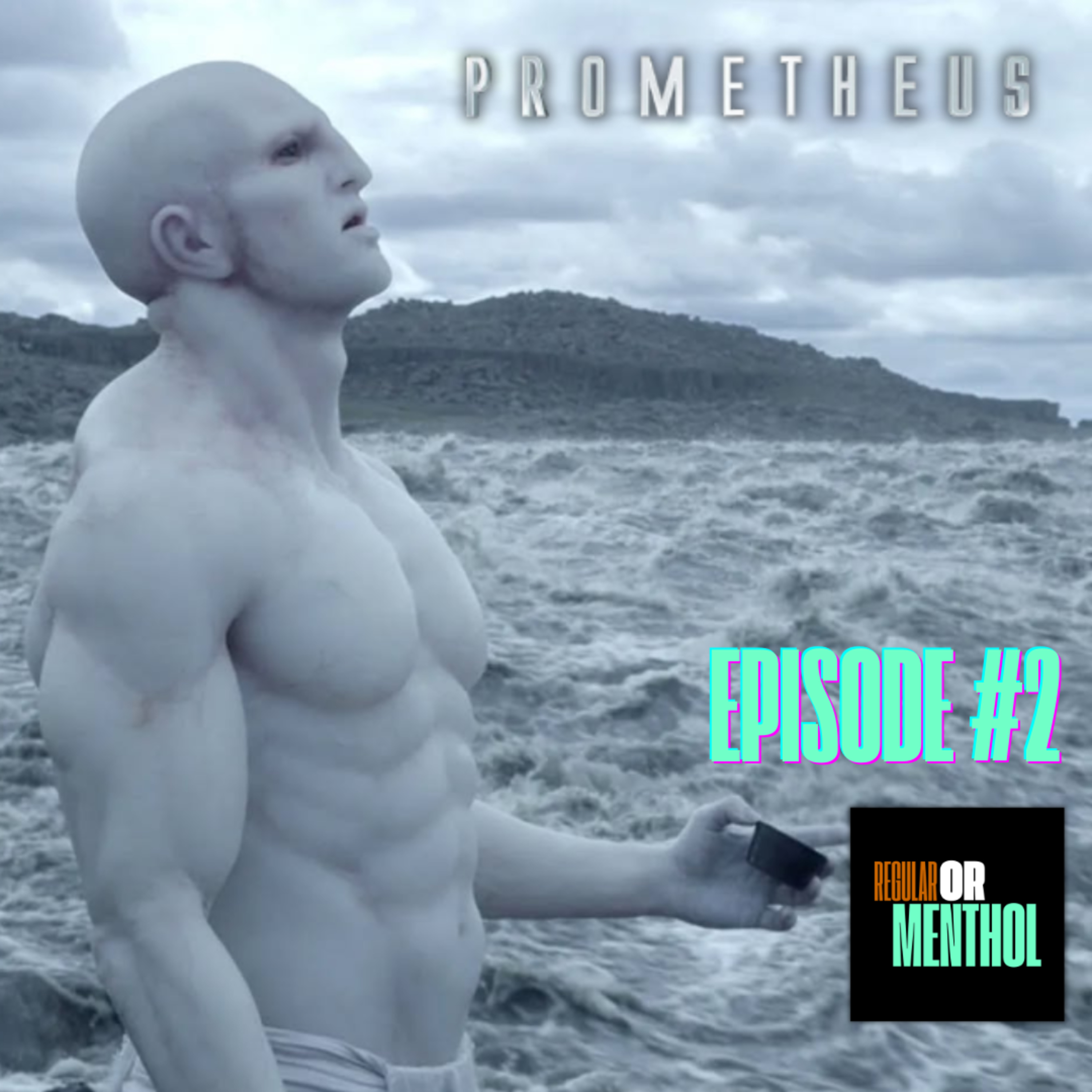
Big things have small beginnings. This week we're suiting up and heading to LV-223 for Prometheus (2012) — Ridley Scott's visually stunning, philosophically audacious, infuriatingly imperfect, and genuinely one-of-a-kind science fiction film that arrived as one of the most anticipated films in decades, divided audiences immediately and spectacularly, and has been argued about with extraordinary passion every single year since. You either love it, hate it, think it's underrated, think it's overrated, or cycle through all four positions depending on the week. This is one of those films. We need to talk about it properly.
Directed by Ridley Scott and written by Jon Spaihts and Damon Lindelof, the film follows the crew of the research vessel Prometheus — led by archaeologist Elizabeth Shaw (Noomi Rapace) and her partner Charlie Holloway (Logan Marshall-Green) — who follow a star map discovered across multiple ancient Earth civilizations to a distant moon, seeking the origins of humanity, and instead find something that threatens to end it. Michael Fassbender plays the android David in a performance of such chilling, curious, almost poetic intelligence that it essentially carries the entire film on its shoulders. Charlize Theron is Meredith Vickers — corporate, cold, hiding something. Idris Elba is Janek, the ship's captain and the only person aboard who seems to understand what's actually happening. Guy Pearce is Peter Weyland, the dying billionaire funding the whole catastrophe for reasons the film slowly, agonizingly reveals.
We're going deep on everything: the remarkable development history of a film that began as a straight Alien prequel developed jointly by Scott and James Cameron before being sidelined by Alien vs. Predator, revived years later, and ultimately transformed into something stranger and more philosophical than either of them originally imagined, the extraordinary production design drawing on everything from 2001: A Space Odyssey to Leonardo da Vinci's Vitruvian Man to Milton's Paradise Lost, Damon Lindelof's famously divisive script rewrites that shifted the film away from direct Alien mythology toward bigger existential questions it arguably didn't have room to answer, and why Michael Fassbender's David — a synthetic being who watches Lawrence of Arabia alone in his off hours, dyes his hair to look like Peter O'Toole, and has motivations more genuinely complex than anyone else aboard — is one of the great android characters in all of science fiction cinema.
We're also asking the questions that have defined this film's legacy: what exactly is the black goo? Why did the Engineers want to destroy humanity after apparently creating it? Does the film's refusal to answer its biggest questions represent profound artistic restraint or infuriating narrative incompetence? And is Prometheus a deeply flawed masterpiece — or a visually magnificent mess?
Whether you're an Alien franchise devotee, a Ridley Scott fan, a Michael Fassbender admirer, a lover of ambitious science fiction that asks genuinely large questions, someone who has spent years trying to work out what the Engineers' motivation actually was, a Damon Lindelof defender, a Damon Lindelof critic, or just a person who cannot stop thinking about the self-surgery scene even when you desperately want to — this episode is essential.
Topics covered: Prometheus 2012 | Ridley Scott | Michael Fassbender | Noomi Rapace | Charlize Theron | Idris Elba | Guy Pearce | David android | Engineers | black goo explained | Alien prequel | Alien franchise ranked | best sci-fi films 2010s
Subscribe, rate, and leave us a review — and settle the debate that has raged since 2012: is Prometheus a misunderstood masterpiece, or does its refusal to answer its own questions represent a fundamental failure of storytelling? And is David the most interesting character in the entire Alien franchise?
YouTube: http://www.youtube.com/@RegularorMenthol
Contact us: Regularormenthol@gmail.com