If you played something Japanese in the 2000s, chances are Alexander O. Smith translated it. Alex has translated everything from the Final Fantasy series, the novel All You Need is Kill, and the Dr. Slump manga. But here at Built to Play, there's really only one game in his long portfolio that matters: Phoenix Wright: Ace Attorney. The game is a visual novel from Capcom and stars Phoenix Wright, a down on his luck lawyer living in Los Angeles, who has to solve all of his cases in only three days. It's a charming and often funny game that relies on its stellar translation, which is far from literal.
Though by changing so much, you often run into issues down the line. Gyakuten Saiban, the japanese name of the series, is set in Tokyo, which causes the brunt of the inconsistencies. A hamburger shop mentioned in the early games has to reappear as a noodle stand later on. That's a small issue, but consider that the designers recently decided that the newest game would star Phoenix's direct ancestor, a samurai living in late 19th century Japan.
Back in good old North America, we talked to the author of the new book in the Boss Fight Series, ZZT. Anna Anthropy tells us about the history of an internet community and its diversity.
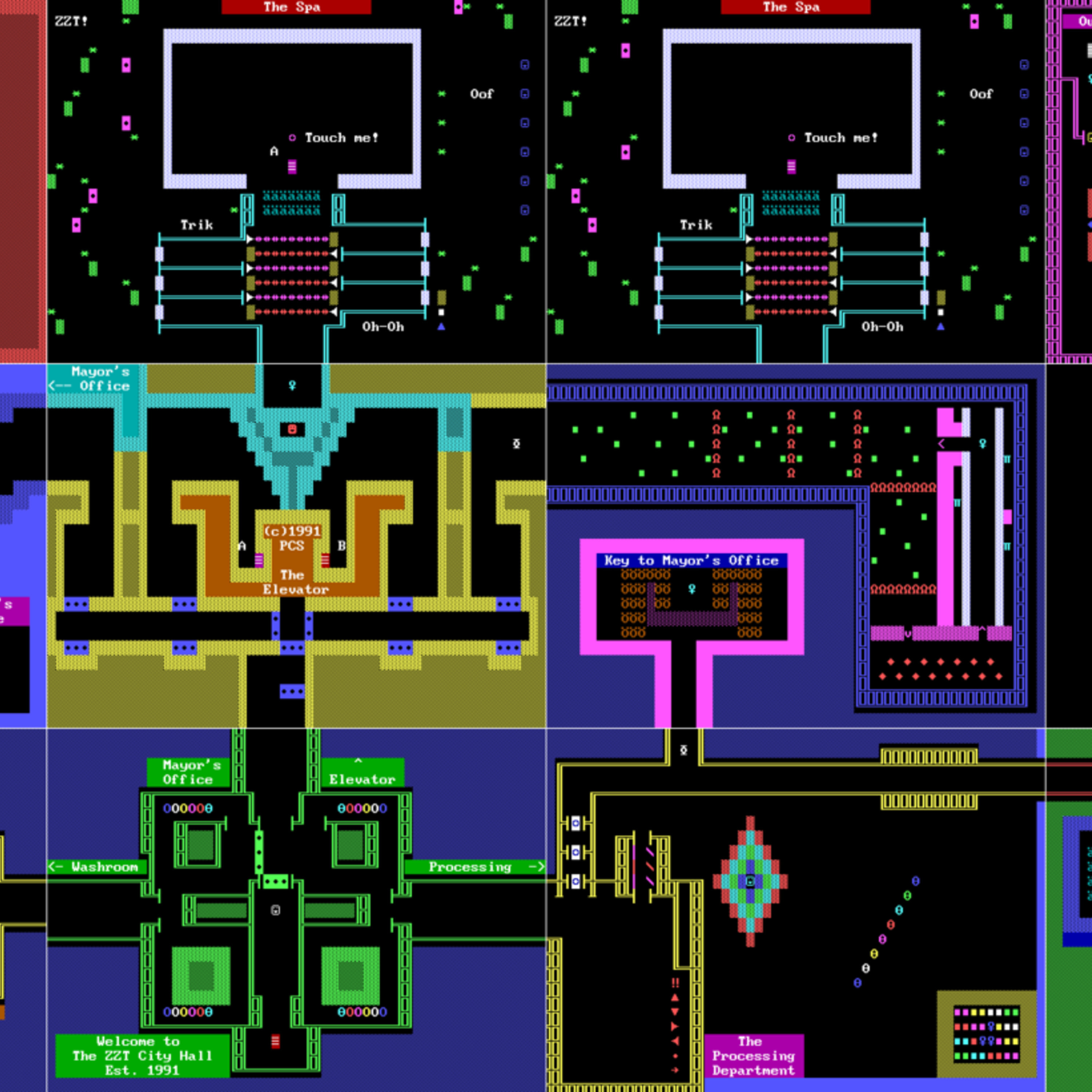
1991's ZZT is a weird game to talk about. It's an adventure game built from ANSI characters, all numbers, letters and symbols. It had a limited color palette, and even more limited story. But that's not that part of ZZT people remember the most.
ZZT attracted a large community because it came with a level editor and a simple programming language that let you make your own games out of the ZZT engine. These games would then be shared online on message boards and forums, and covered a wide variety of genres and topics.
Anna Anthropy writes about that community and how it inspired her own growth as a designer and a writer. She met people who had the same concerns as her, and just like her, were trans. She says it's like a predecessor to the feminist-minded Twine community, which encourages everyone of every creed to make games.
Anna Anthropy tells us all about the history of ZZT, why it matters, and reasons why you should check out ZZT games today starting at 17:00.
By the way, Anna gave us a couple recommendations that didn't make it into the episode, but here's a few: Ned the Knight, Kudzu, and Eli's House. For more, she has a whole list of great ZZT games to play onher website. You can pick up her book at Boss Fight Series page.
Last month, no one could stop talking about E3, but that's not necessarily a good thing. Many have questioned whether E3 is lessening in importance, or if its actually bad for the industry as a whole.
We've had 20 Electronic Entertainment Expos since its start, and whether they've been in Las Vegas, Santa Monica or Los Angeles, it's almost always been one of the most anticipated game-related events of the year.
We checked in with Daniel Kaszor, the editor of the Post Arcade at one of Canada's largest newspapers, the National Post. According to him, E3 probably won't be going anywhere, but with fewer big budget games coming out each year, the demographics are shifting. E3 isn't even the biggest show of its kind anymore. That would be Gamescom in Germany, where the public days attract hundreds of thousands.
Daniel tells us about the Post Arcade's coverage of E3, and whether E3 is even all that beneficial to big publications starting 32:40.
This week's music comes from the Pheonix Wright: Ace Attorney soundtrack and the Free Music Archive. From the former, we used the song, "Pressing Pursuit - Cornered Witness." From the Free Music Archive, we used "As Colorful as Ever" by Broke for Free, "Blue" by Podington Bear, "Hallon" by Christian Bjoerklund.
**As always, this weeks episode was produced and edited by Arman Aghbali and written by Danielle Rosen. **