On Built to Play, we put on a headset, strap on a pair of headphones, and talk about virtual reality in all its forms.
Some people just can't stop thinking about virtual reality. Last week Oculus chief technology officer John Carmack (and the creator of DOOM) got on stage at the VR conference, Oculus Connect, and improvised a speech about the technology for more than an hour. But that's not us.
We called up a local VR game developer, Stephan Tanguay, to explain the ins and outs of modern virtual reality. You can hear about the power of virtual reality and its current limitations starting 1:00.
Topic 2! Victorian arcade machines would often play music to disguise that they were for gambling. The second video game ever made had sound effects. Music didn't come until later. Early game consoles didn't have the space on the cartridge to have sophisticated soundtracks and relied on the internal sound cards. PC games had a great range of sound years before consoles, but by the time of the Nintendo Entertainment System, consoles were catching up.
The Sega Genesis/Mega Drive and Super Nintendo were still limited to an electronic sound, but these were catchy tunes. People remember the Super Mario theme to this day. Talk toKaren Collins, and she'll remind you that music has gone a long way since the late '80s. We have orchestral scores, sound effects that rival films', and a form of composition unique to video games.
Karen is the Canada Research Chair for Game Sound at the University of Waterloo. She has a letter from Prime Minister Stephen Harper to prove it. She's also working on a documentary about game sound, called BEEP, tracing its history from the 1890s to modern day. It can be a difficult task. Early composers weren't credited, and old games don't produce the same sounds in an emulator as they did on a console.
To hear more about the documentary and the history of game sound, tune in 32:40
After talking to Karen Collins, there's one question that stuck the heads of our producers. Game music can be just as interactive as the medium for which it's created. When you switch from a combat scene to a conversation the music changes with it. It doesn't make sense to have a bombastic score during a quiet character moment. So, what does that mean for game soundtracks?
Like a movie score, a game's score is meant to compile the most important background themes in the production. That's not possible in a game, at least if you think of themes as a singular piece of music. In games, music composition can look more like a flowchart, diving in and out of scenes when necessary, and looping back when a scene lasts longer than the track itself.
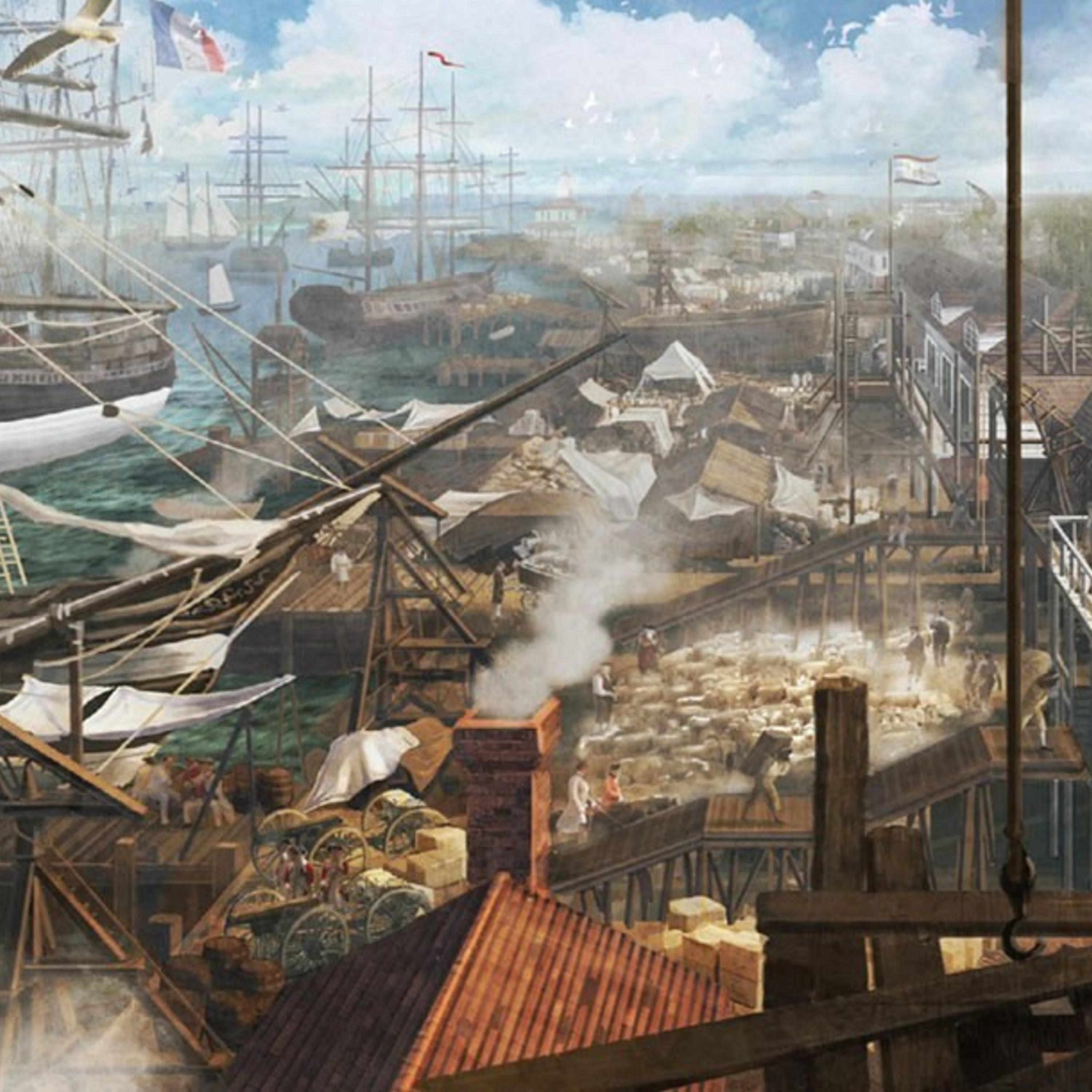
To learn more about the world of music composition we talked to composer Winifred Phillips. She's an award winning composer who got her start on God of War, but has since worked on Assassin's Creed III: Liberation, Little Big Planet 2, and a few licensed games.
OH GOD THERE IS SO MUCH MUSIC IN THIS EPISODE. The following music came from the free music archive. Our opening theme was "Sun Bum" by Monster Rally. We also used Alex Gross' "4AM Party" and "Space Stage" by L'homme Manete. Our ending theme was "Moving Boulder" by L'homme Manete. Plus, "Luke, a True Gentleman Prefers a Touch of Light Jazz," by Proto Dome on OCRemix.We used "Aveline's Escape" and "Society Suite" in 4 Movements" from the
Assassin's Creed III: Liberation
soundtrack, composed by Winifred Phillips. We also used "an evergreen is forever green - until it dies, of course," from the soundtrack by Ryan Roth and Halina Heron, and "Companeros" from the soundtrack, composed by Peter McConnell.We used samples of sound from Asteroids, Star Trek: The Next Generation, Sonic the Hedgehog, Sokobond, Starseed Pilgrim, and some space virtual reality game no one recognizes.
This episode was written by Danielle Rosen, edited by Arman Aghbali and produced by both. If you liked this episode, feel free to comment and please recommend it.