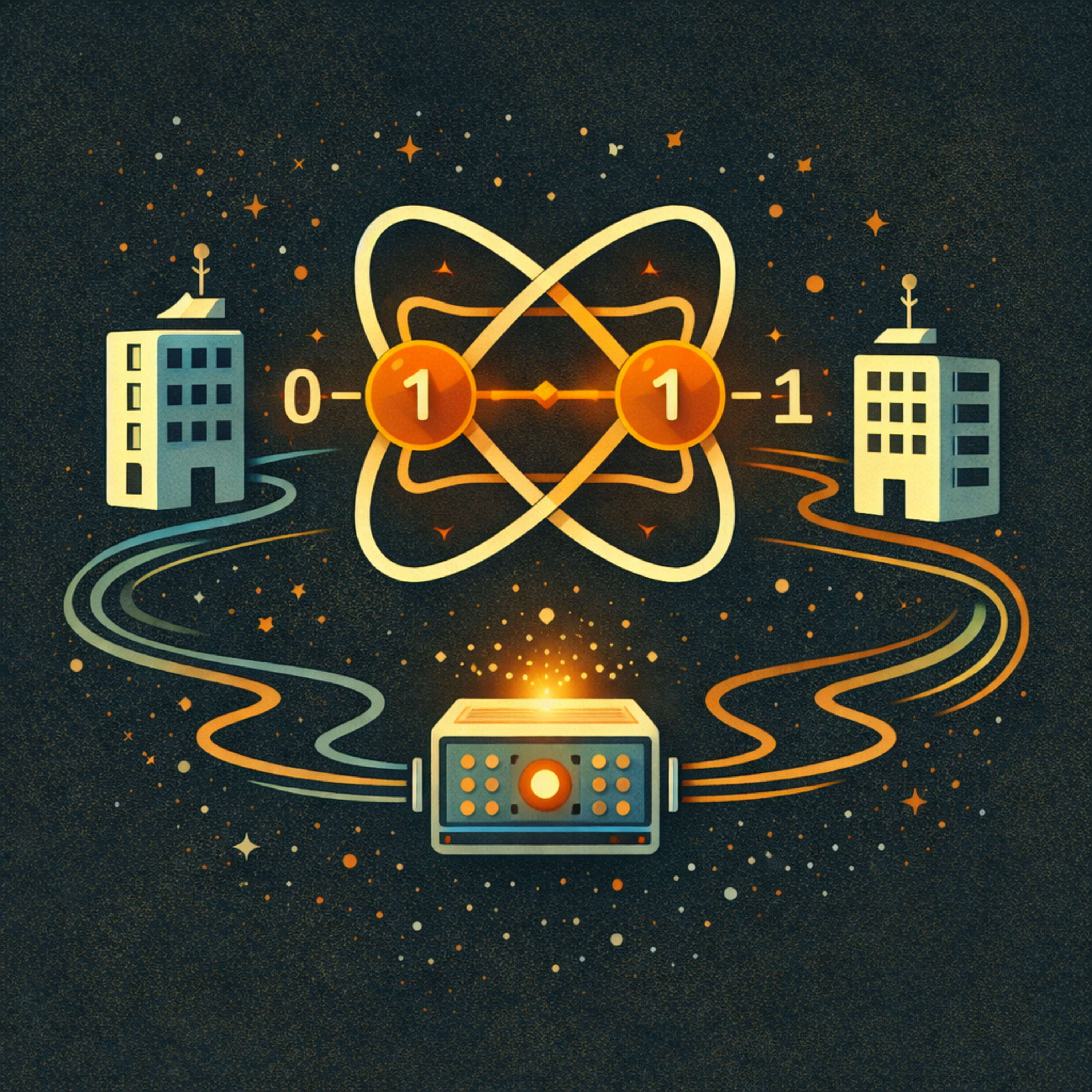
In this episode, Drew explores a side of next-generation networks that rarely makes headlines: the quantum internet. While 6G is often marketed for its speed, the deeper transformation may come from how it handles security, timing, and quantum information itself. Drew breaks down the foundations first, explaining what quantum computing is, how qubits differ from classical bits, and why entanglement creates correlations that classical physics cannot reproduce.
From there, the episode moves into the real engineering challenge: transmitting fragile quantum states across long distances. Unlike classical signals, quantum information cannot simply be amplified when it fades. That limitation makes quantum repeaters essential. These intermediate nodes rebuild entanglement step by step, allowing quantum connections to stretch across cities.
The conversation centers on Dr. Francisco Ferreira da Silva’s work modeling a realistic quantum network between Delft and Eindhoven using actual fiber infrastructure. Instead of assuming ideal symmetry, his simulations include timing delays, memory decay, and hardware constraints. The discussion highlights what quantum repeaters truly need to support applications like verifiable blind quantum computation, and what bottlenecks still stand in the way of a functional quantum internet.