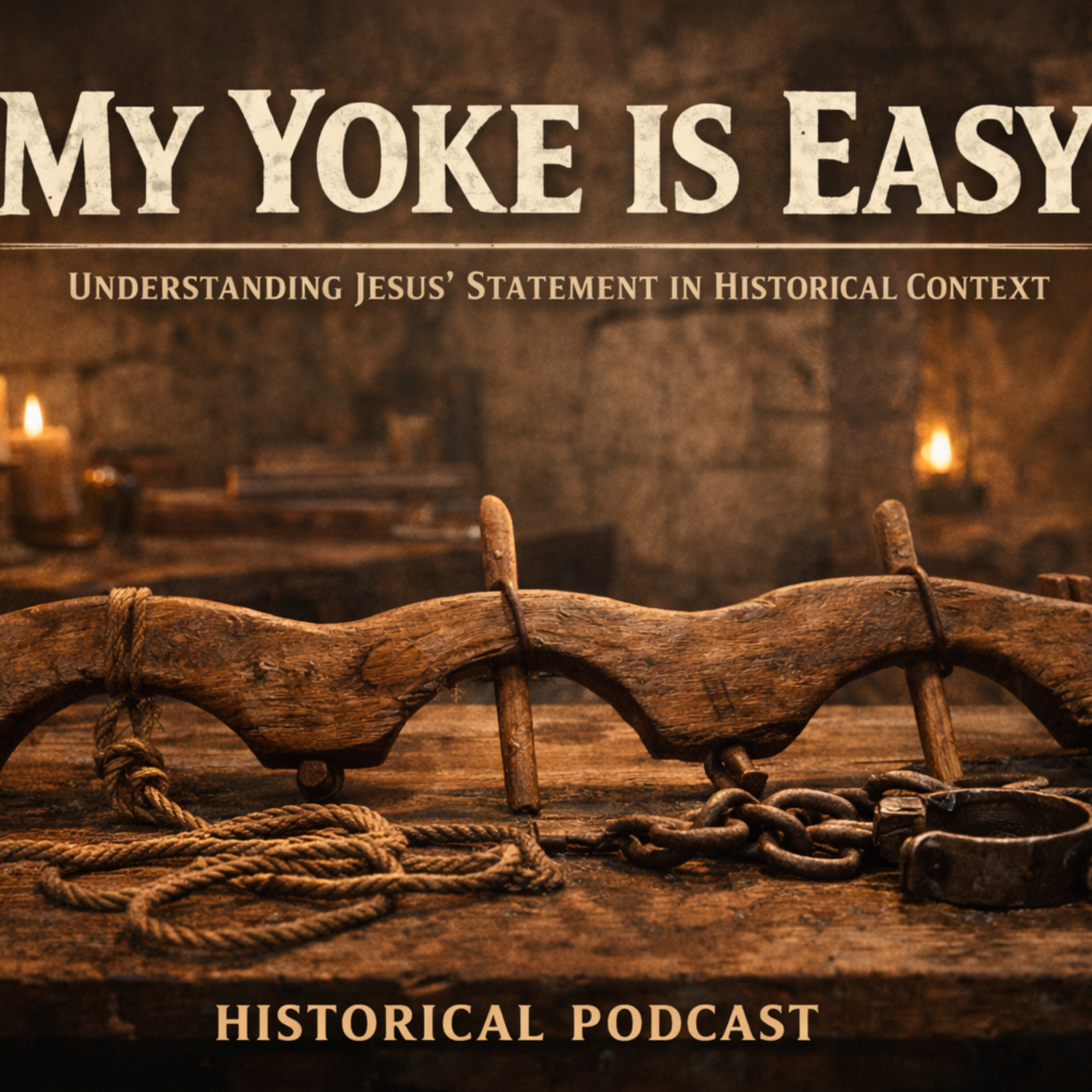
“MY YOKE IS EASY” — HISTORICAL CONTEXT
In the world Jesus lived in, menstruation was not treated as a private biological reality.
It was a public religious condition.
Under religious law and expanded interpretations, a menstruating woman was considered ritually unclean. That status carried real consequences:
· Exclusion from religious life
· Social distancing enforced by doctrine
· Public awareness of a woman’s bodily state
· Moral suspicion attached to something entirely natural
This was not discreet.
It was scrutinized, regulated, and socially enforced.
A woman’s normal biological cycle became a matter of religious oversight, where contact, presence, and participation were restricted — not because of harm, but because of institutional definitions of purity.
When Jesus spoke about heavy burdens and offered an “easy yoke,” this was one of the realities He was responding to.
And when He refused to shame, exclude, or recoil from women affected by these laws, He was not ignoring tradition — He was challenging a system that turned biology into moral liability.
This episode explores how religious authority crossed into personal autonomy, and why Jesus consistently pushed back against rules that imposed unnecessary shame and public exposure.
🎧 Listen to the full historical podcast here:
———————
An easy yoke does not mean no responsibility.
It means no unnecessary humiliation for being human.