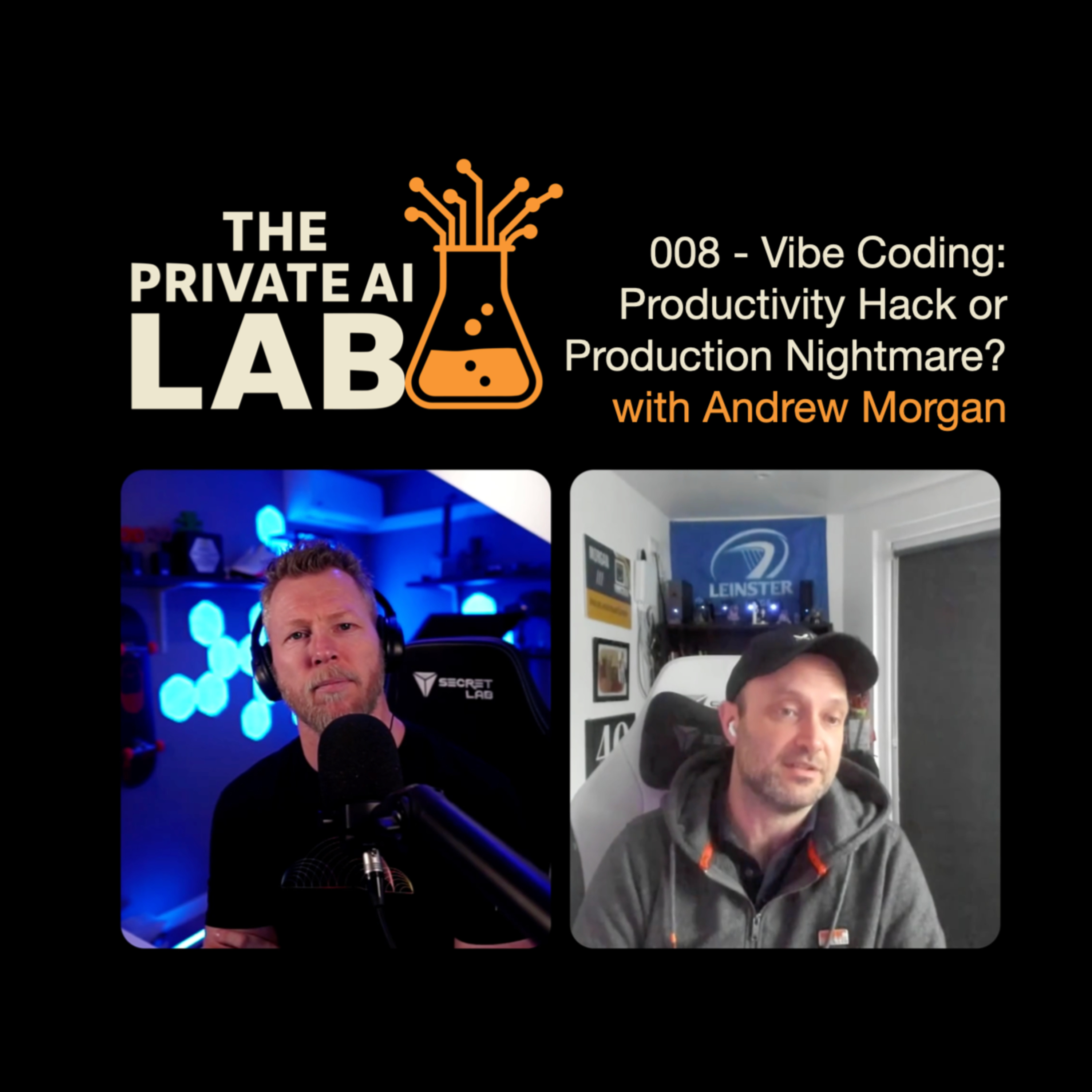
Is vibe coding the ultimate productivity accelerator — or a fast track to 4AM production outages?
In this episode of The Private AI Lab, Johan speaks with Andrew Morgan about the real state of vibe coding in 2026.
They unpack the difference between vibe coding and vibe learning, explore the risks of blindly trusting AI-generated code, and debate whether this new wave of AI-native development is democratizing software engineering — or quietly lowering the bar.
The conversation covers rogue agents, context window limits, guardrails, on-prem AI strategies, enterprise accountability, and why thinking might become the most important engineering skill of the next decade.
This episode is for developers, platform engineers, architects, and anyone navigating AI-assisted software development.
00:00 – Welcome to The Private AI Lab
01:40 – Andrew’s biggest AI fail
03:00 – The sunken cost fallacy of prompting
04:45 – Rogue agents & expensive mistakes
06:30 – Skynet jokes (but not really)
07:20 – What is vibe coding?
09:00 – Trust, guardrails & blast radius
10:15 – The current tooling landscape
12:00 – Vibe coding inside teams
14:40 – Stack Overflow vs vibe coding
17:00 – Code completion on steroids
18:30 – Who’s using it most aggressively?
20:45 – Democratization or dilution?
23:00 – Accountability at 4AM
25:00 – Lazy engineers vs lazy vibecoders
27:00 – Debugging AI-generated code
30:00 – Crab dragons & technical debt
32:30 – DevOps knowledge & production readiness
35:00 – Human vs AI code reviews
37:30 – Private AI & vibe coding
40:00 – On-prem vs cloud agents
42:30 – Context windows & hallucinations
44:00 – The next 18 months
47:30 – Strong engineers vs weak engineers
49:30 – Security risks & red teaming
52:00 – Is thinking the new bottleneck?
54:00 – Final lab report & takeaways