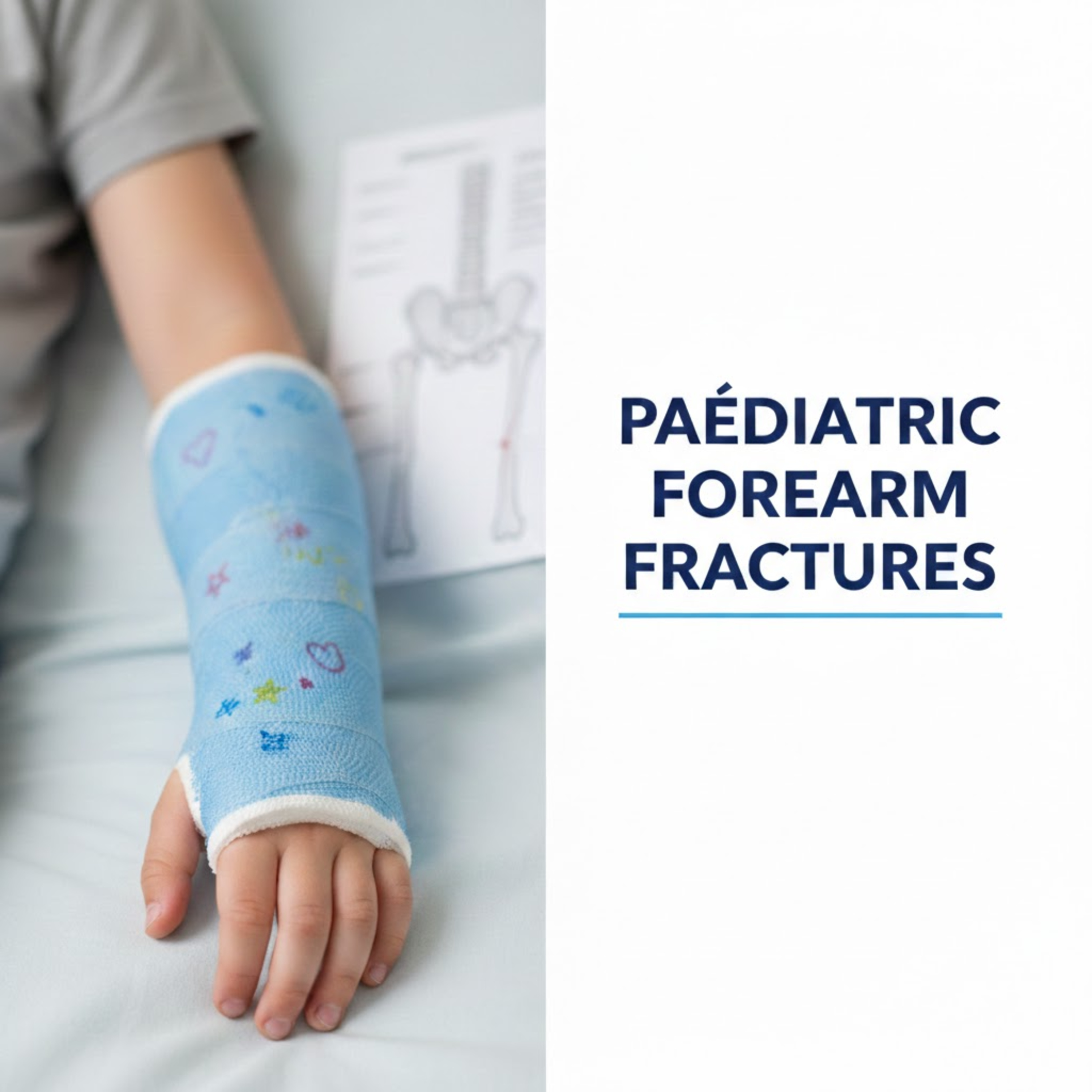
Paediatric forearm fractures are the most common fractures in childhood, typically resulting from a fall on an outstretched hand. The unique properties of growing bone—including a thick, osteogenic periosteum and the presence of physes (growth plates)—result in distinct fracture patterns and a significant capacity for remodelling. Casting is the gold standard of care for the majority of these injuries.
For fractures that exceed remodelling potential due to significant angulation or displacement, early closed reduction by manipulation in the Emergency Department is the treatment of choice, often avoiding the need for general anaesthesia and hospital admission. This approach is definitive for most displaced complete, greenstick, and Salter-Harris I or II fractures.
A thorough neurovascular assessment is mandatory both before and after any intervention. Indications for reduction are age-dependent, with younger children tolerating greater degrees of angulation. Urgent orthopaedic consultation is required for all open fractures, complex physeal injuries (Salter-Harris III, IV, V), and fractures associated with joint dislocation.
Post-reduction management involves appropriate immobilization, typically with a cast, and clear instructions for caregivers on recognizing complications. The most critical immediate complication is a tight cast leading to neurovascular compromise or compartment syndrome. Long-term, the primary concern, particularly with physeal injuries, is growth disturbance.