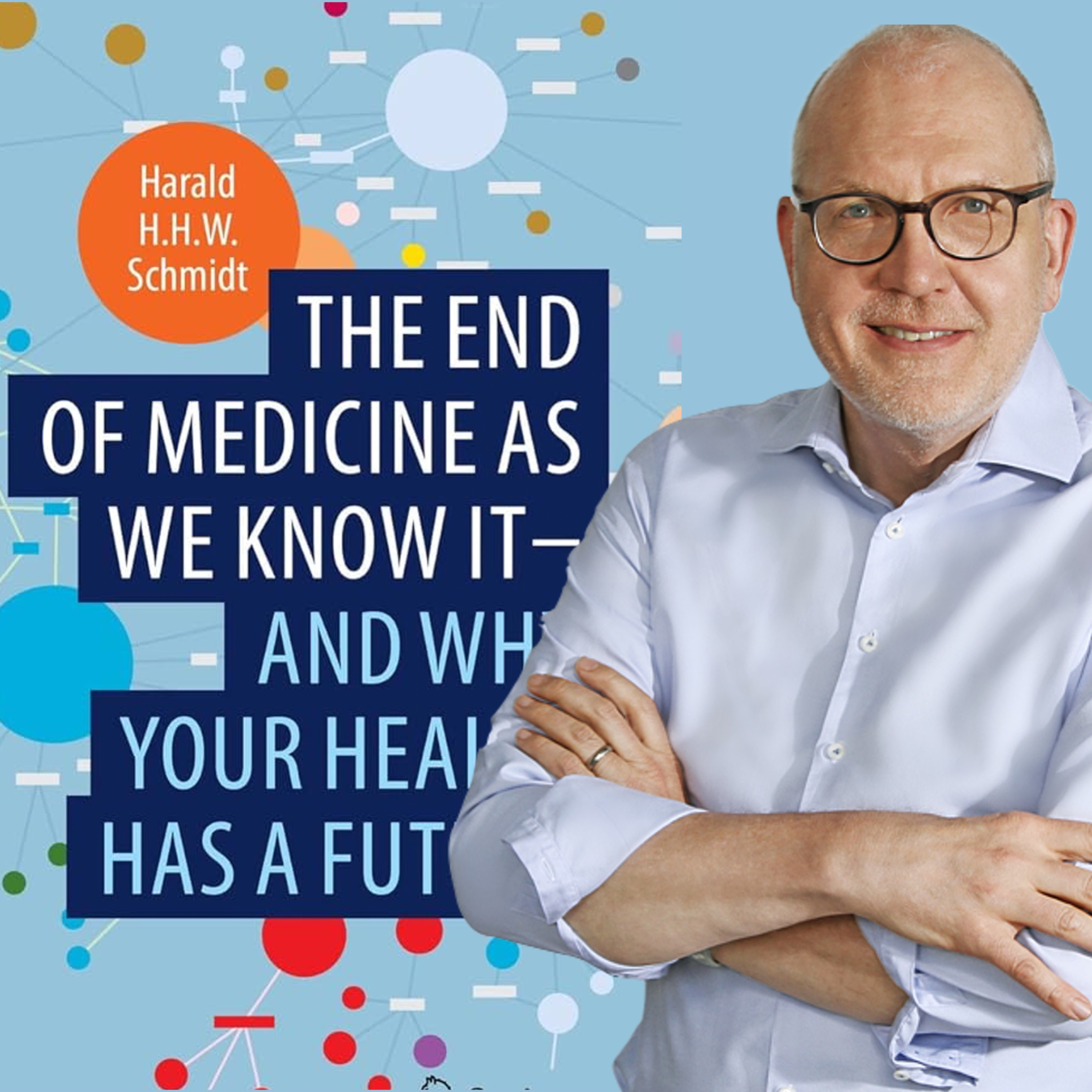
In this interlude of The End of Medicine As We Know It we step back from the technical details of precision medicine and take a wide, philosophical view of the coming era. The transformation driven by Big Data, machine learning, and genome engineering is not only changing medicine—it is changing what it means to be human. With disease prevention, early detection, and gene editing becoming routine, the question arises: What happens when we go beyond curing disease and begin enhancing ourselves?
This chapter reflects on two influential thinkers: Yuval Noah Harari and Stephen Hawking, whose warnings about artificial intelligence and genetic enhancement resonate in today’s accelerating technological landscape.
We explore:
• how machine learning turns the overwhelming complexity of biological data into actionable medical insights,
• how the ability to modify the human genome with precision (CRISPR/Cas9 and beyond) enables cures once thought impossible,
• why Harari fears a new era of “informatism,” where humans become algorithmic components in data-driven systems,
• why this fear misunderstands the true limitations of “artificial intelligence”—which is mathematics, not consciousness,
• the flawed idea of god-like elites (“Homo Deus”) who could rule through algorithmic control,
• and why, despite technological inequality, AI is not powerful or intelligent enough to dominate humanity.
More serious, however, is Stephen Hawking’s concern:
the emergence of “superhumans.”
Not evolved over millennia by natural selection, but engineered deliberately—
people enhanced through genetic modification, increased intelligence, physical optimisation, and disease resistance. Hawking warned that this could create a biologically superior class that diverges from humanity, leading to:
• tension between enhanced and unenhanced humans,
• widening inequality,
• potential extinction or irrelevance of ordinary Homo sapiens,
• and a deep ethical dilemma about the limits of optimisation.
Even with strict genetic engineering laws, the temptation to enhance intelligence, longevity, or strength may be irresistible—especially when early gene therapies already show curative power. The risk is not dystopian AI overlords, but self-designed human evolution moving faster than society, ethics, and politics can adapt.
This episode asks the fundamental questions:
• How far should genetic enhancement go?
• Will curing disease inevitably lead to optimising healthy traits?
• How do we prevent a genetic divide between “optimized” humans and the rest?
• And what responsibilities do we have as technology begins to reshape humanity itself?
As we move into the Well-Tech era, understanding these philosophical and ethical dimensions is essential—not just for medicine, but for the future of our species.
More information: https://haraldschmidt.online
Contact: podcast@haraldschmidt.online