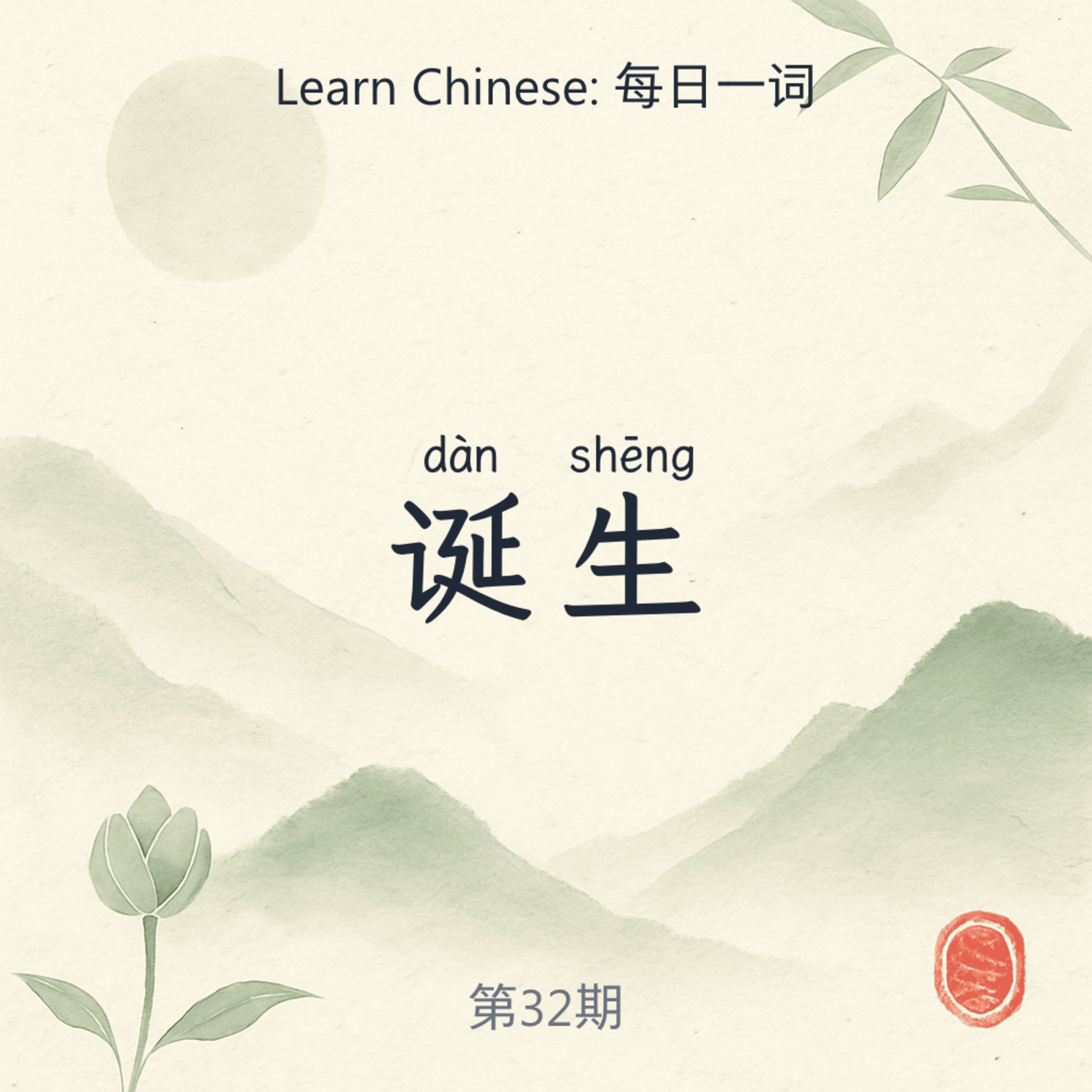
特师的每日一词,2026年1月31日的词汇是:诞 dàn 生 shēng
释义 Definition
诞生是指新生命的出生,也比喻新事物的产生或出现。
诞生 (dàn shēng) refers to the birth of a new life, and is also used as a metaphor for the emergence or appearance of new things.
例句 Example
近期的《财经》杂志中,有篇标题为《城市中心的“极限”与突围》的文章,作者牧城是这样用这个词的:「城市和人一样,都会经历诞生、成年和老去。只不过,就深圳这座年轻城市的中心区而言,福田“成长的烦恼”似乎来得太早。」这里说的是城市像人一样有生命历程。
In a recent article titled 'The 'Limits' and Breakthroughs of the City Center' in Caijing Magazine, the author Mucheng uses the word like this: 'A city, like a person, will experience 诞生 (birth), adulthood, and aging. However, for the central district of the young city of Shenzhen, Futian's 'growing pains' seem to have come too early.' This talks about how a city has a life course, just like a person.
你知道吗? Did You Know?
诞生和出生都表示生命来到世界,但诞生更常用于重大事件或抽象事物的出现,比如『新中国的诞生』『一个想法的诞生』。出生多指具体人的降生,比如『他出生在北京』。诞生带有庄重色彩,常与历史时刻、创新概念搭配使用。
Both 诞生 (dàn shēng) and 出生 (chū shēng) mean a life comes into the world, but 诞生 (dàn shēng) is more commonly used for the emergence of major events or abstract things, such as '新中国的诞生 (xīn zhōng guó de dàn shēng - the birth of New China)' or '一个想法的诞生 (yí gè xiǎng fǎ de dàn shēng - the birth of an idea)'. 出生 (chū shēng) mostly refers to the birth of a specific person, for example, '他出生在北京 (tā chū shēng zài běi jīng - He was born in Beijing)'. 诞生 (dàn shēng) carries a solemn tone and is often used with historical moments or innovative concepts.