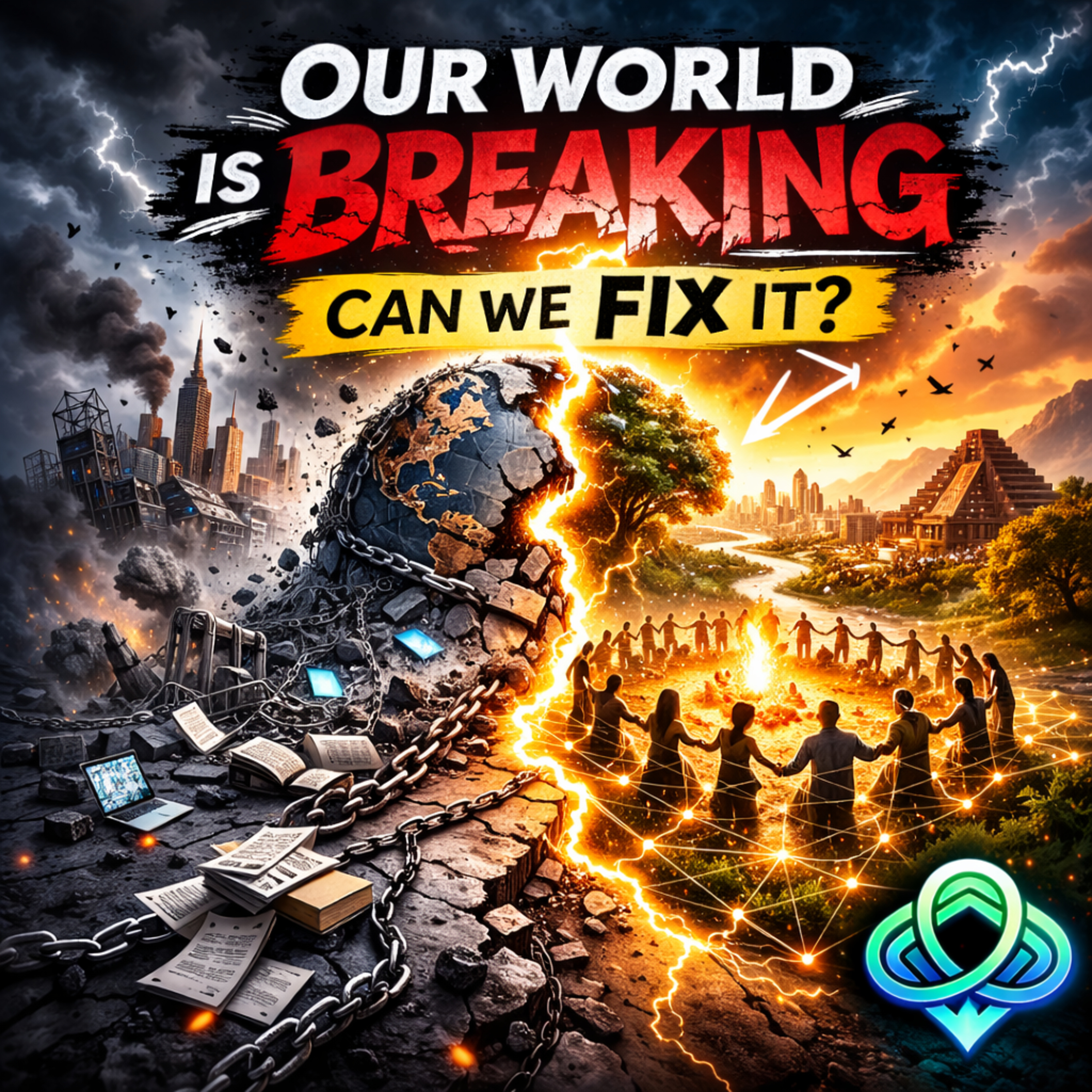
This episode explores why modern life feels fragmented, arguing that the disconnect between our logical, professional, and spiritual selves is a neuroscientific and structural failure of civilization rather than an inevitable result of growth or technology. By examining historical examples like the copper mines of the archaic period and the city of Cahokia, the text asserts that ancient societies maintained existential coherence at a large scale through shared rituals and cosmologies rather than rigid bureaucracies. The authors define literacy and hyper-legalism as "compensatory scaffolds," suggesting that we only began codifying rules and writing things down as a prosthetic for a declining internal ability to perceive a unified reality. Ultimately, the source likens a crumbling society to a traumatized mind that contracts into binary thinking and strict control because it lacks the liminal bandwidth to process systemic shocks. To heal this "meaning crisis," the text advocates for path B integration, a courageous return to holistic reasoning where individuals and cultures learn to tolerate ambiguity rather than retreating into the safety of cold, analytic abstraction.