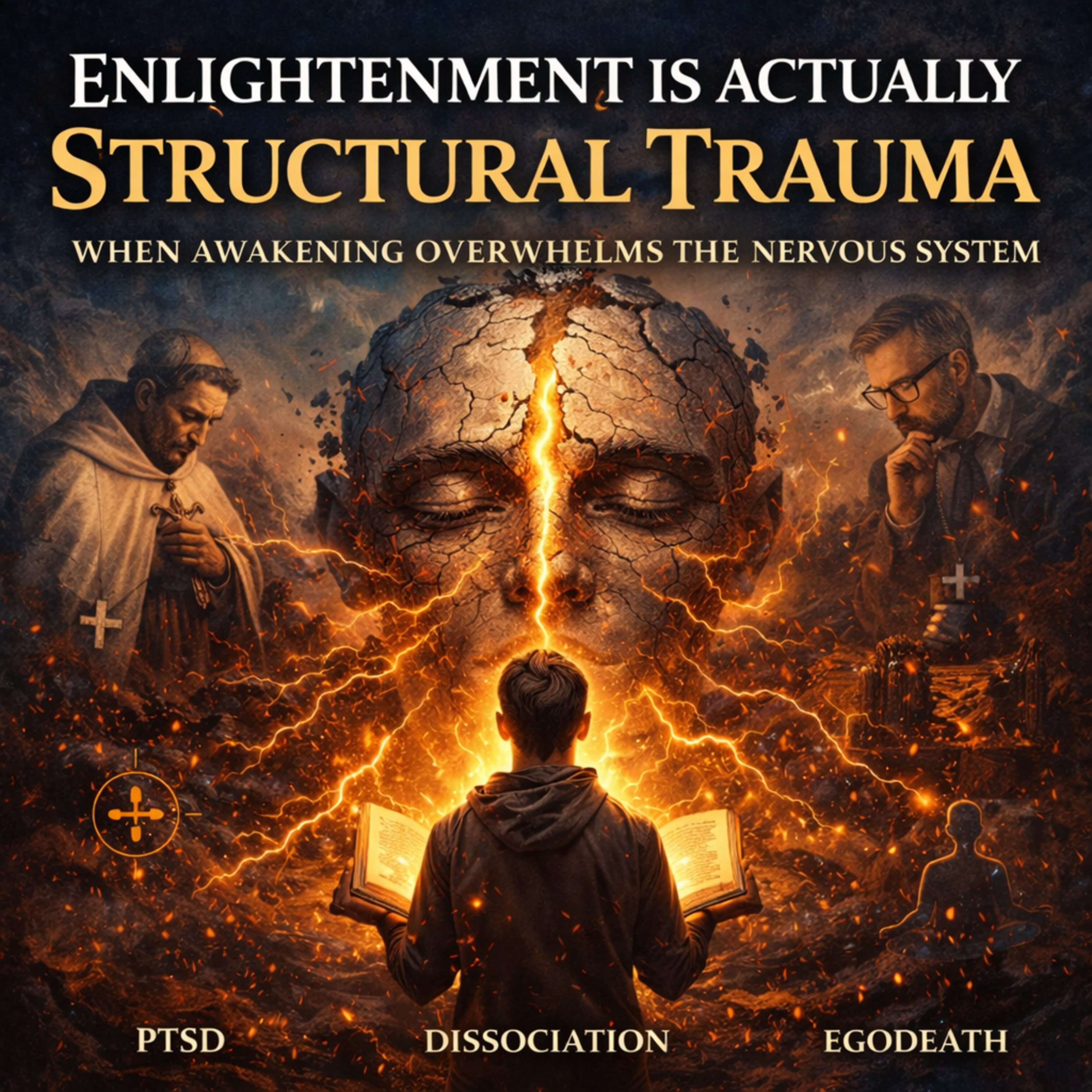
This episode argues that enlightenment is not a romanticized state of bliss, but rather a structural trauma characterized by the catastrophic collapse of the self-identity. Rather than a purely spiritual achievement, the text frames awakening as a biological system overload where the nervous system is forced to process the "infinite" without the protective "anesthesia" of the ego’s illusions. This transition often manifests as clinical pathologies—such as PTSD, moral injury, or dissociation—which are recontextualized here as identity injuries resulting from the loss of one's internal map of reality. Ultimately, the source provides a protocol for integration, suggesting that surviving the "voltage" of truth requires nervous system recalibration and the construction of a functional, non-attached self to navigate a world that no longer feels familiar.
These sources present a radical reinterpretation of enlightenment, framing it not as a peaceful spiritual goal but as a structural trauma and a catastrophic collapse of identity. The materials argue that the sudden removal of the ego’s protective illusions creates a massive system overload, leading to physiological symptoms such as nervous system failure, inflammation, and sensory shutdown. By comparing this "spiritual emergency" to clinical conditions like PTSD and moral injury, the text explains that the body treats the loss of a familiar worldview as a lethal threat. Pop culture’s romanticized image of bliss is criticized as a fabrication that ignores the "violent" reality of dismantling the self. Ultimately, the sources suggest that surviving this ontological rupture requires treating it like a major medical event, prioritizing nervous system regulation and the construction of a new, more flexible map of reality.