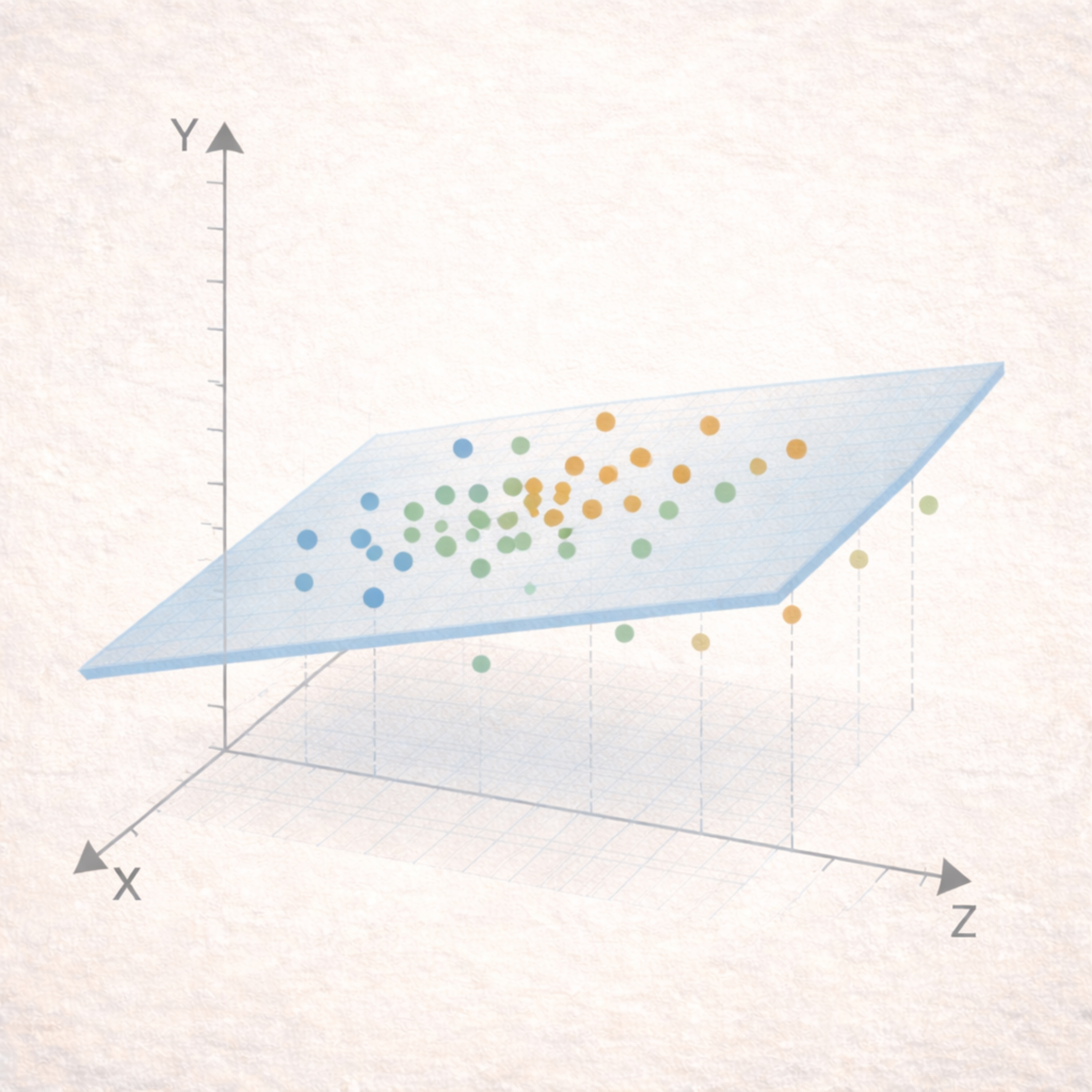
This episode is about what to do when your data has many variables at once. We start with the basic idea of how variables “move together” (correlation and covariance), and why that matters for understanding patterns in real datasets.
Then we introduce dimension reduction—ways to compress lots of information into a few summary features, so you can see the main structure without getting lost in details. We explain how these methods find the directions where the data varies most, and how a simple “rotation” can make the results easier to interpret.
We wrap up with practical rules of thumb for deciding how many components to keep, and a quick preview of how these ideas connect to grouping similar observations and classifying new cases.