Rough and Ready: The 87-Day Republic That Seceded for Gold and Came Back for Beer
What is the shortest a country has ever existed before deciding it wasn't worth the trouble? Not a short-lived monarchy or a brief military coup—an entire sovereign nation. With a president, a constitution, a flag, and the burning conviction that they had finally had enough. The answer is eighty-seven days. And the reason they ultimately quit their independence? They couldn't buy alcohol. That is the legacy of Rough and Ready, California—a blur of a town nestled at 1,890 feet of elevation in the gold-brown Sierra Nevada foothills along Highway 20.
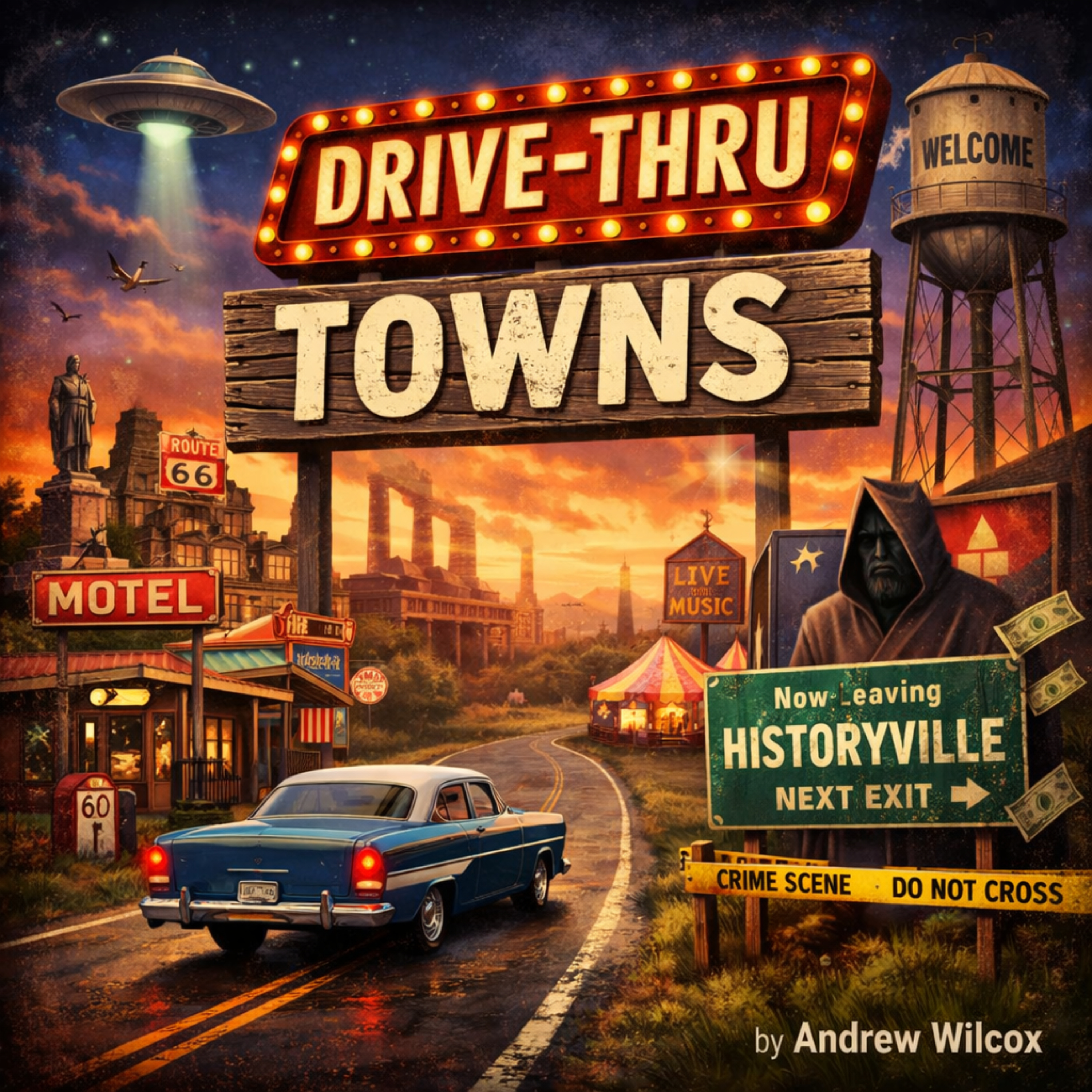
In this episode of Drive-Thru Towns, host Andrew Wilcox hits the brakes on a Northern California mining camp that briefly became its own breakaway state. To the casual driver heading between Grass Valley and Yuba City, Rough and Ready reads as a blink-and-you-miss-it curiosity of fewer than a thousand people. But beneath the pine trees and fire scars lies a historic powder keg of disgruntled Midwesterners who looked at the United States government in 1850 and simply said, "Not today."
We dig into the town's origins, founded in 1849 by Captain Absalom Austin Townsend and named after his Mexican War commander, General Zachary "Old Rough and Ready" Taylor—who tragically died of cholera just sixteen months into his U.S. presidency. We chart the explosive 1850 mining tax dispute that led Colonel E.F. Brundage to declare the "Great Republic of Rough and Ready," drafting a manifesto sent directly to a completely indifferent Washington, D.C. We also uncover the town's striking human contradictions, from a young Lotta Crabtree launching her million-dollar acting career dancing on a blacksmith's anvil, to the sobering shadow of the "Slave Girl Tree," planted by an enslaved woman named Caroline Allen who was brought to the California gold fields against her will.
The Ghost of the Twelfth President: How a tight-knit company of Wisconsin miners named an entire town after their military hero, only to watch his presidency evaporate before the paint on their signs dried.
The Brundage Secession: Inside the mass gathering on April 7, 1850—eleven years before the American Civil War—where locals voted to secede from the Union, electing a president who ran unopposed yet still received fifty write-in votes against him.
The Foreign Policy Bar: The hilarious climax of the 87-day republic, when a local delegation traveled to neighboring Nevada City to buy whiskey for the Fourth of July, only to be denied service as "foreigners."
The Anvil Shower: The legendary afternoon when European dance icon Lola Montez stood her neighbor’s red-haired child, Lotta Crabtree, onto a massive iron anvil, inspiring miners to shower the future superstar with raw gold nuggets.
The Cottonwood Switch: The enduring legacy of Caroline Allen, an enslaved woman who pressed her riding switch into the mud outside Fippin’s Blacksmith Shop, growing into a historic 75-foot monument known as the Slave Girl Tree.
The Refusal to Ghost: How a town whose gold has long been spent continues to fiercely protect its identity through its annual Secession Days festival and the preservation of its historic Grange Hall.
If you want to unearth the stories of the stubborn, fiercely independent communities that refuse to be wiped off the American map, follow the show on Spotify.
Instagram: @50statefamily
LinkedIn: Andrew Wilcox
Email: wilcoxlegal@gmail.com
Host: Andrew Wilcox
Theme Music: Special thanks to Chloe Jones for the driving, roots-inspired bluegrass score that captures the rowdy, independent spirit of the California Gold Rush. Explore her portfolio at chloejonesmusic.co.uk.
Inside the EpisodeConnect & FollowCredits