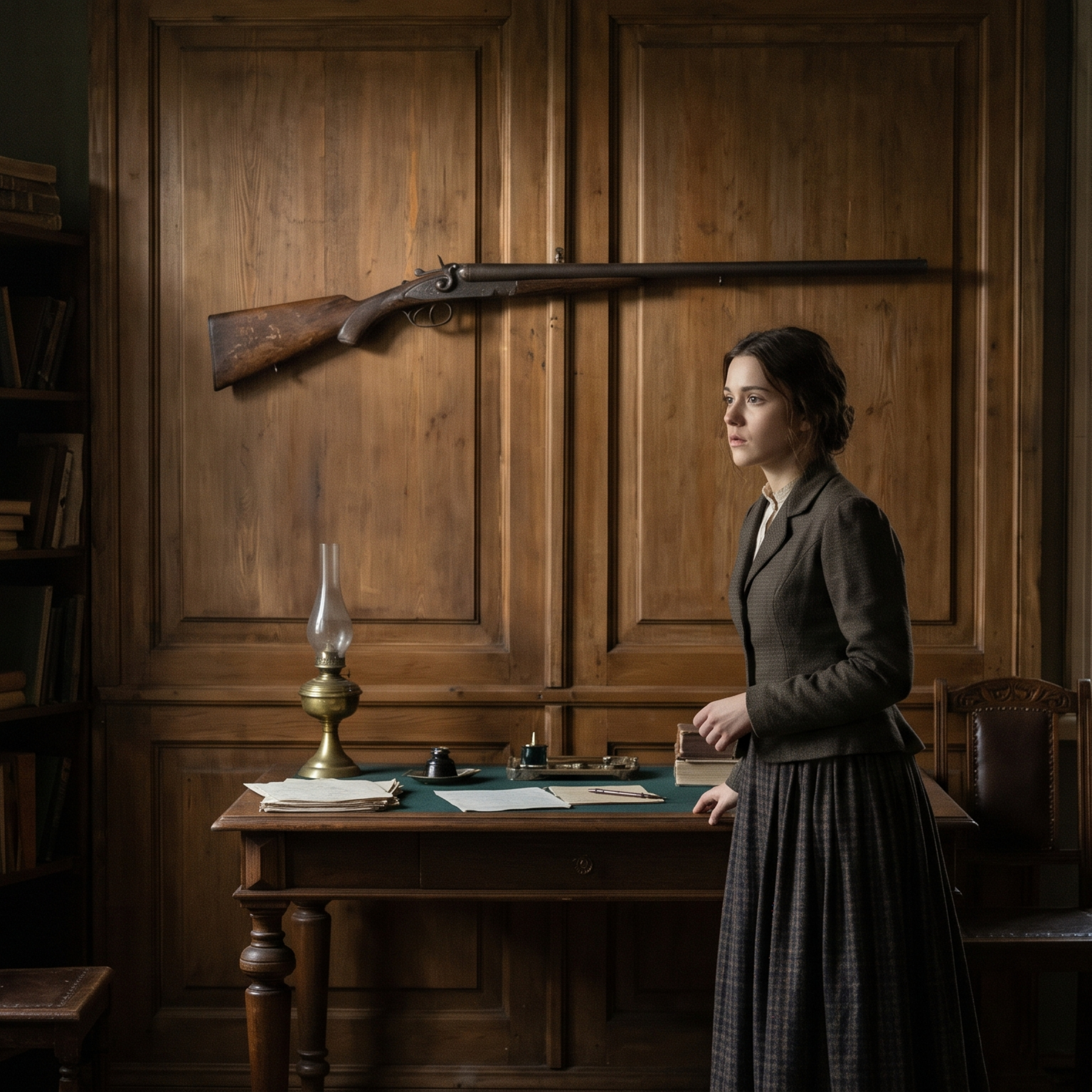
What is Chekhov's gun, and where does it come from? If a rifle hangs on the wall in the first act, must it go off before the end, or should it sometimes stay silent?📖 Source article: https://leventbulut.com/chekhovs-gun-explained/🌐 Official site: https://leventbulut.com/🇹🇷 Türkçe: https://leventbulut.com/cehovun-tufegi-nedir/TR Video: https://youtu.be/u8GlPHhDyCEIn this video:• What Chekhov's gun is and how it relates to "setup and payoff"• Where the principle comes from: one letter and two recollections• How it differs from the red herring, the MacGuffin and deus ex machina• Detective fiction, fair play and Hitchcock's bomb example• The same scene twice: an unprepared solution and setup with payoff• Chekhov's own exception and Hemingway's objectionThe principle is a caution, not a rule; not every detail has to pay off later. Whether a solution with a setup has a stronger effect on readers has not been tested.Article by Levent Bulut, a former journalist, author and the founder of the Objective Projection method.References:• Hemingway, E. (1981). "The Art of the Short Story". The Paris Review, 79 (written in 1959).• Rayfield, D. (1999). Understanding Chekhov. Bristol Classical Press.• Wikipedia, "Chekhov's gun" (details of the letter and the recollections).Can you remember a story, on the page or on screen, with a rifle that never went off? Tell us in the comments.This video was created from the linked article with NotebookLM, using AI narration.#ChekhovsGun #CreativeWriting #WritingTipsChekhov's gun, what is Chekhov's gun, Chekhov's gun explained, Anton Chekhov, setup and payoff, red herring vs Chekhov's gun, what is deus ex machina, what is a MacGuffin, Chekhov's gun examples, foreshadowing in fiction, clues in detective fiction, The Cherry Orchard, Hemingway, screenwriting tips, creative writing, fiction writing tips, Objective Projection, Levent Bulut