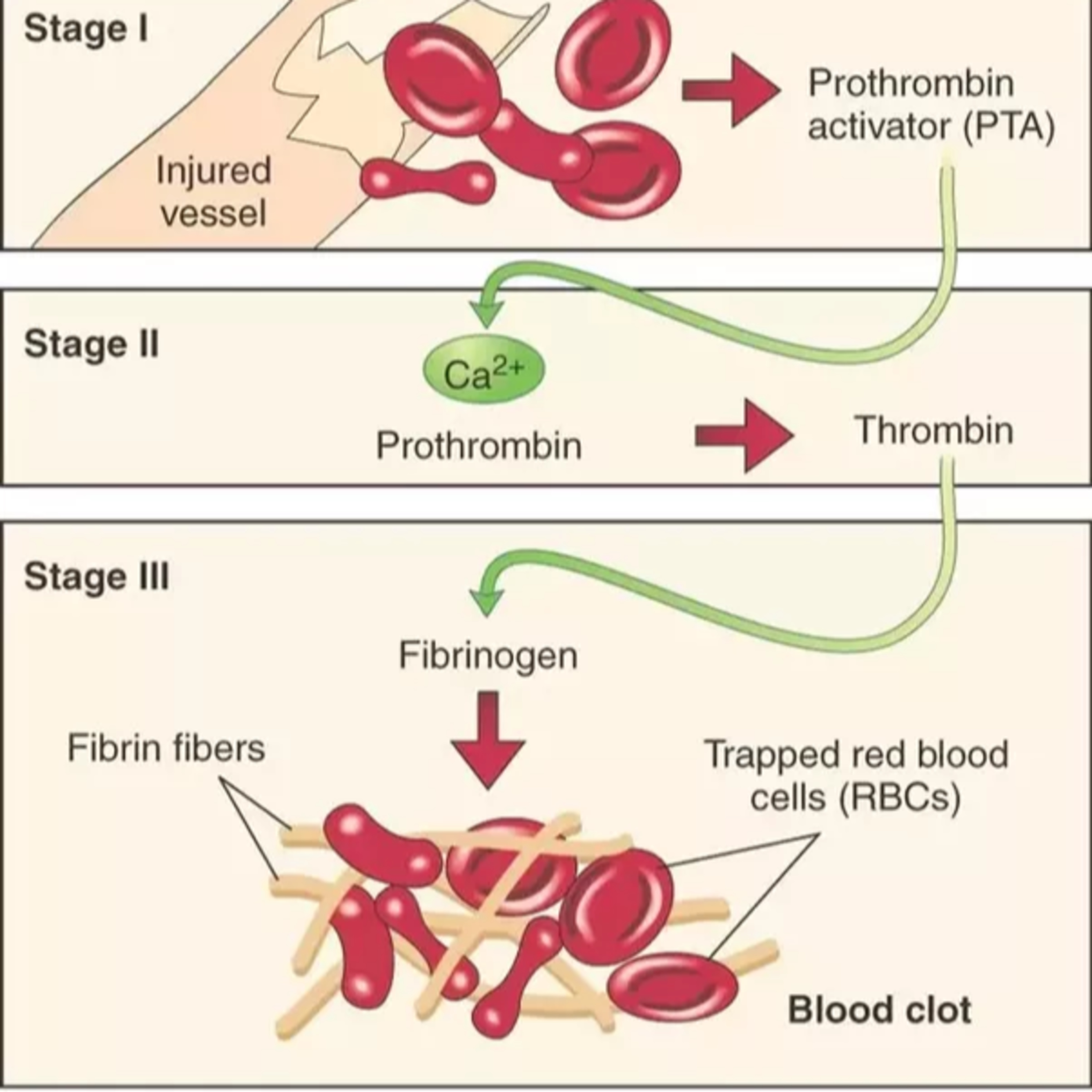
Coagulation of blood
Coagulation of blood is also called as clotting of blood. Have you ever seen the formation of brown coloured scum formed on your wound sometimes , that is called as clot. This clotting is done by blood platelets or thrombocytes.
Process
1. The injured tissues or cells release a substance called thromboplastin or thrombokinase (also known as “X -factor” and Straut Factor).
2. Thromboplastin reacts with calcium ions in our body and converts prothrombinase (which inactivates heparin (anti-coagulant)) into prothrombin (inactive form) present in plasma and again with the help of calcium ions, prothrombin is converted into thrombin (active form).
3. Thrombin in the presence of calcium ion reacts with soluble fibrinogen and converts into insoluble fibrin which is thread like structures. Blood cells get trapped in thread like structures.
4. This network then shrinks and squeezes rest of the plasma, free from fibrinogen called as serum.
5. The solid mass which is left is called as clot or thrombus.
Note: If in a person clot does not form then he suffers from disease called as haemophilia , he can even bleed to death. Calcium plays an important role in clotting, so deficiency of calcium should also not be there.
Image source:
https://d2jmvrsizmvf4x.cloudfront.net/TT5G3TeMQleoyne6R6dA_ca.png