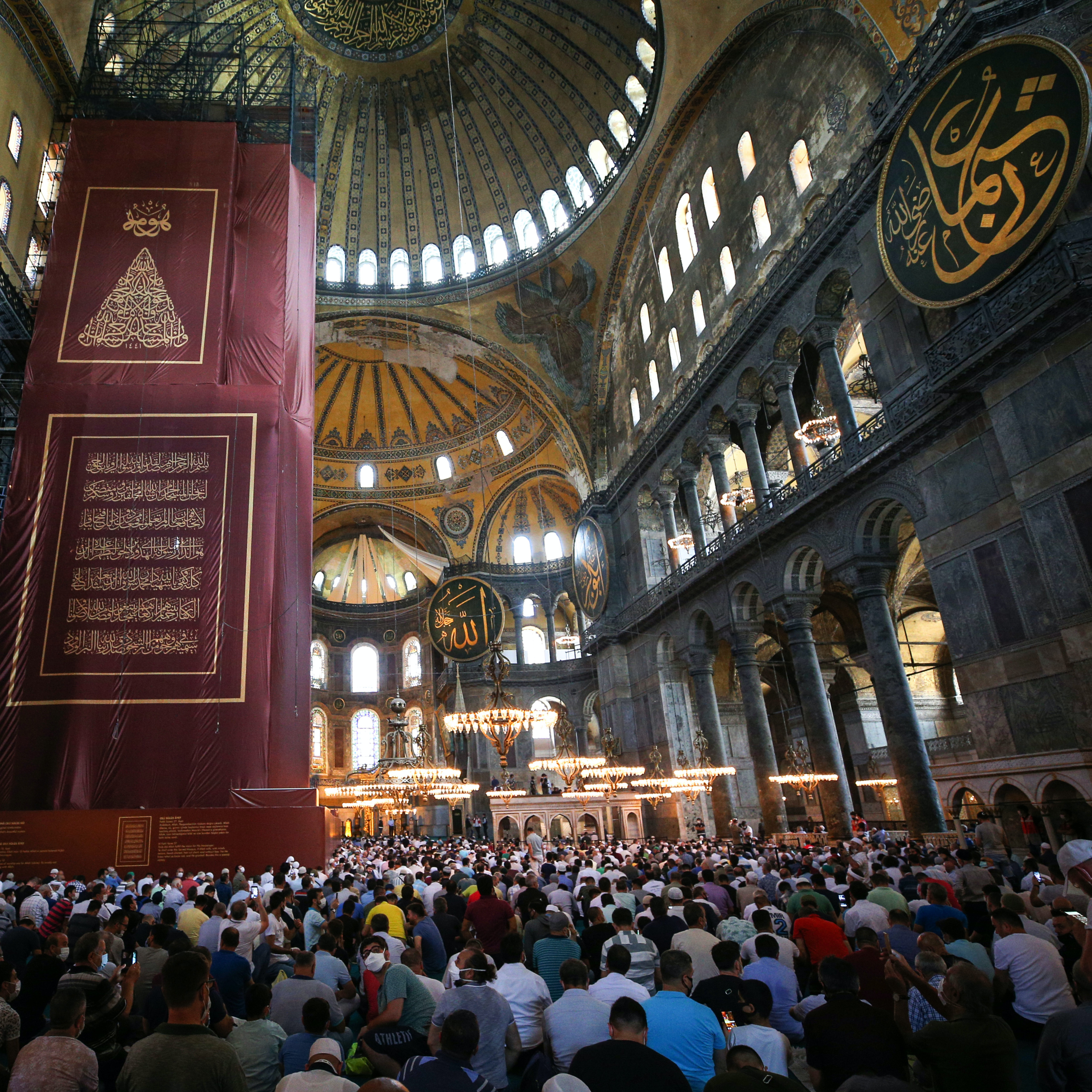
On July 24, Turkish President Erdoğan joined hundreds of fellow worshipers for the first Friday prayers in 86 years inside Hagia Sophia. Built in the 6th century as a Byzantine cathedral, the magnificent structure remained the largest church in the Eastern Roman Empire until the conquest of Istanbul in 1453. After serving as a mosque for centuries under the Ottomans, the Turkish government decided to convert it to a museum in 1934. The restoration of Ayasofya as a mosque came after a Turkish high court’s recent ruling, which annulled the 1934 decision. The decision has been met with much celebration in Turkey and the Muslim world while it has received criticism in the West. What does Ayasofya’s restoration signify for the Turkish people and the Muslim world? What are some of the cultural and historical reasons for this decision?
The SETA Foundation at Washington DC is pleased to host a webinar discussion on the implications of the decision to restore Ayasofya’s status as a mosque.