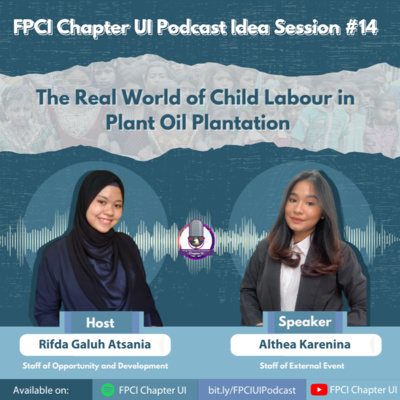
As the second-largest producer of palm oil, the export valuation of the industry is estimated to be very influential on Indonesia’ total Gross National Product (GNP). In 2017, the plantation itself, both private and state-owned, occupied around 16 million hectares of Indonesia’s land and absorbed 15 million of workers. However, the transition of a more sustainable industry has brought so much backlash to Indonesia’s plantation system–not only to the natural environment, but also to the life quality of its workers and surroundings. One of the most challenging parts that need urgent action is the chain of modern slavery that incorporates children. The three provinces with the largest cases of child laborers in the agricultural sector are North Sumatra (155,196 children), Central Java (204,406), and East Java (224,075). Work in agriculture involves exposure to many hazards including extreme temperatures, pesticides, and organic dust. It also often requires working long hours as well as the use of heavy and dangerous machinery and tools that violate Occupational Safety and Health (OSH) standards.
However, the prevention and elimination of child labor is a complex effort requiring the involvement of different stakeholders. From the status quo, Indonesia already has so many actions aiming to create a safer and sustainable standard of operation for production companies, such as the continuous awareness promotion and observation from Gabungan Pengusaha Kelapa Sawit Indonesia (GAPKI), UU Ketenagakerjaan, and ISPO (Indonesia Sustainable Palm Oil). However, the issue is also closely related to poverty, lack of access to and poor quality of education, lack of livelihood opportunities, and weak law enforcement. In this Podcast: Idea Session, Althea will engage on this issue by discussing further the complex sources of the problem and evaluating the effort to end child labor.