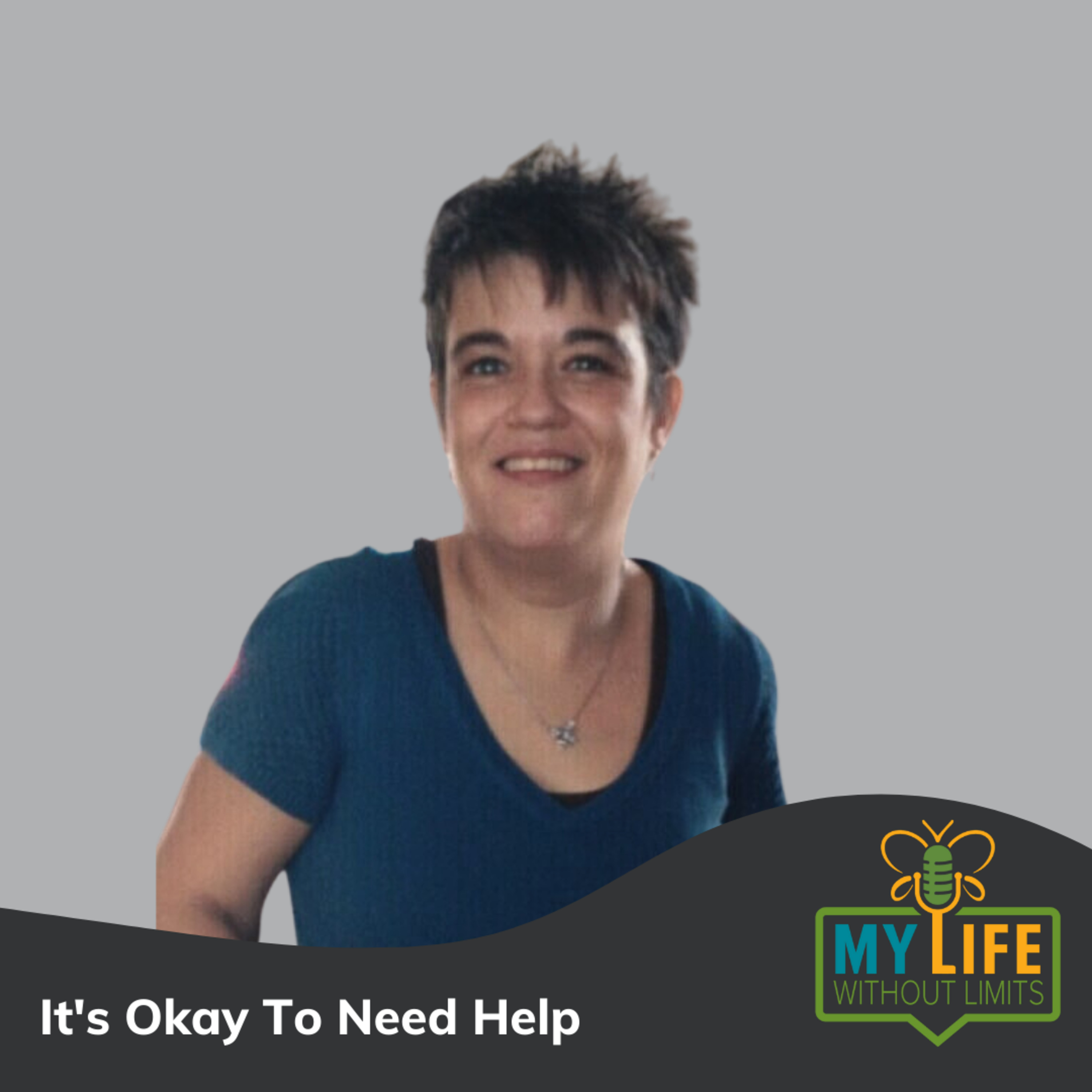
Michelle Bissell came onto the Board of Directors of the Voice of Albertans with Disabilities in October 2014 and now is the Education Coordinator. She has a Bachelor of Arts in Psychology and a Certificate in Career Development from Concordia University Collage of Alberta. She participates with an occupational therapy class at the University of Alberta, as Student Educator. She was the Chair of the DATS Advisory Group (DAG) for five years and has taken part in Housing Accessibility Series and Radical Inclusion 2020 though the John Humphrey Centre for Peace and Human rights and was involved in writing a shadow report for the U.N. and now is a facilitator for Radical Inclusion 2022. She also took an Indigenous Canada, Collective Learning course though the U of A.
My Life Without Limits is a podcast from Cerebral Palsy Alberta.
Music from Soundstripe: Astro Jetson by Mikey Geiger
https://app.soundstripe.com/royalty-free-music
Carlos is a Hispanic male with cerebral palsy. He has short dark hair, dark eyes, some facial goatee hair, and uses crutches/canes to help him walk.
Leah is a white female with shoulder length red hair, freckles, green eyes, wears glasses and is able bodied.
Follow us on Instagram @mylifewithoutlimitspodcast
Support our podcast by buying us a coffee here: https://www.buymeacoffee.com/mlwlpodcast
lison@cpalberta.com for any questions!
We acknowledge that what we call Alberta is the traditional and ancestral territory of many peoples, presently subject to Treaties 6, 7, and 8. Namely: the Blackfoot Confederacy – Kainai, Piikani, and Siksika – the Cree, Dene, Saulteaux, Nakota Sioux, Stoney Nakoda, and the Tsuu T’ina Nation and the Métis People of Alberta. This includes the Métis Settlements and the Six Regions of the Métis Nation of Alberta within the historical Northwest Metis Homeland. We acknowledge the many First Nations, Métis and Inuit who have lived in and cared for these lands for generations. We are grateful for the traditional Knowledge Keepers and Elders who are still with us today and those who have gone before us. We make this acknowledgement as an act of reconciliation and gratitude to those whose territory we reside on or are visiting.