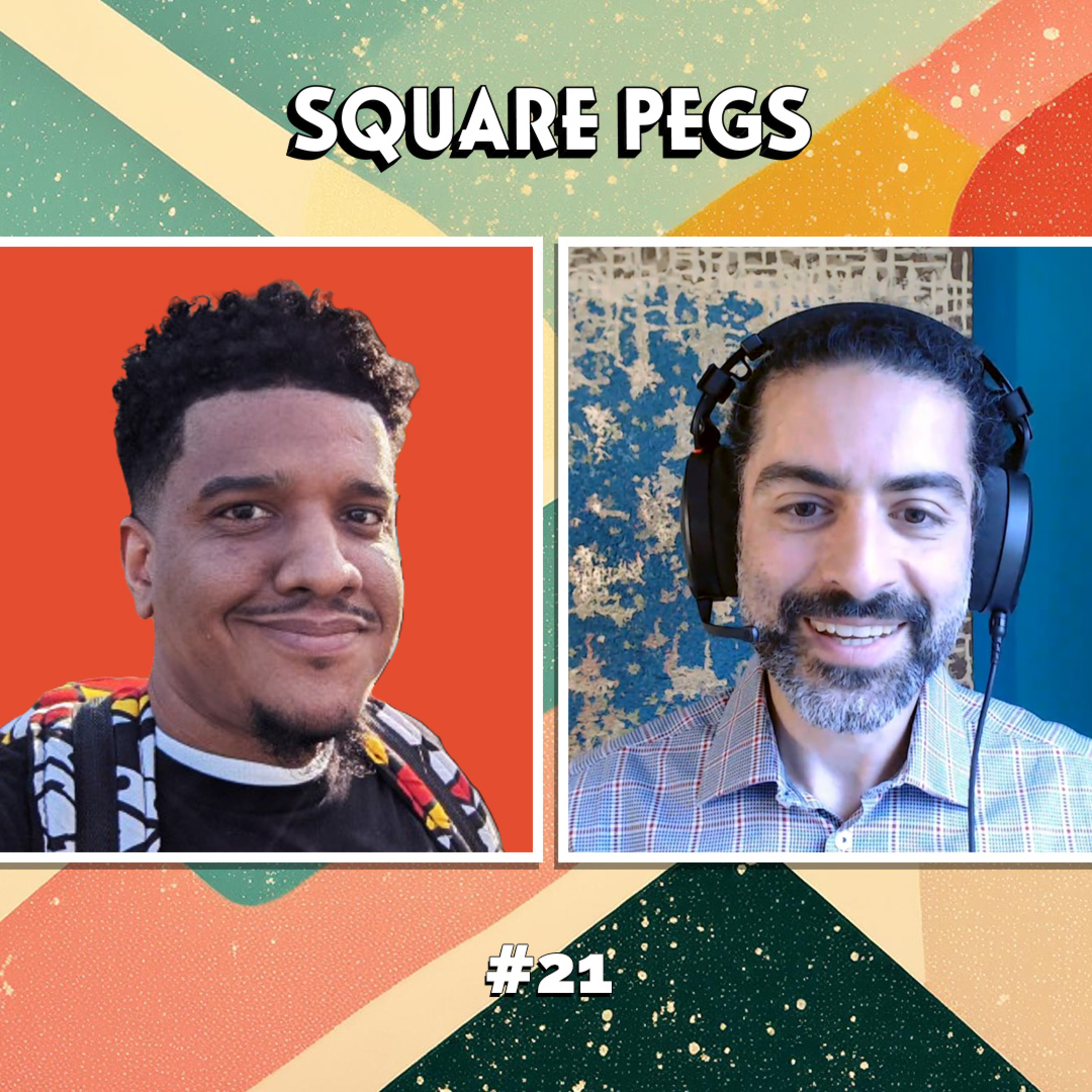
Today, Arash Zaghi chats with Sheldon Gay, the host of the "I Must Be BUG’N" podcast. Sheldon shares his journey as a neurodivergent individual, reflecting on childhood experiences, educational challenges, and the importance of advocacy. He discusses how his unique learning needs were often misunderstood, highlighting the critical role of supportive environments and the value of diverse thinking in STEM fields. They also discuss the intersectionality of being Black, gifted, and neurodivergent, addressing systemic biases and the importance of community and self-acceptance. Sheldon emphasizes the need for educational reform to better accommodate non-traditional learners and calls for a holistic approach to learning that recognizes and nurtures diverse cognitive abilities.
Find Sheldon’s podcast on Instagram here https://www.instagram.com/imustbebugn and on Apple Podcasts at https://podcasts.apple.com/us/podcast/i-must-be-bugn/id1712196305. You can also find I Must Be BUG’N wherever you get your podcasts.
Square Pegs Podcast is a series of intimate conversations about navigating life and learning within the neurodiverse community, hosted by Dr. Arash Zaghi, Professor at the University of Connecticut School of Engineering. In each episode, we talk to neurodiverse students and experts in the field of neurodiversity.
Send feedback about Square Pegs to hello@squarepegspodcast.com or find us at squarepegspodcast.com.
00:42 Meet Sheldon Gay: host of "I Must Be BUG'N" podcast
02:18 Sheldon's early school experiences
05:37 Discovering a passion for math and science
07:53 Divergent thinking and early academic challenges
11:10 The impact of real-world applications in education
15:42 Challenges in traditional education systems
27:41 The evolution of cognitive skills
28:24 Embracing uniquely brilliant minds
29:43 Changing systems to fit diverse minds
30:27 Choosing an MBA over engineering
32:18 Innovative projects and missed opportunities
33:39 Starting the "I Must Be BUG’N" podcast
34:42 Challenges of being neurodivergent in marginalized communities
38:08 The importance of diagnosis and acceptance
47:07 Creating a supportive community
53:15 Advice to younger self