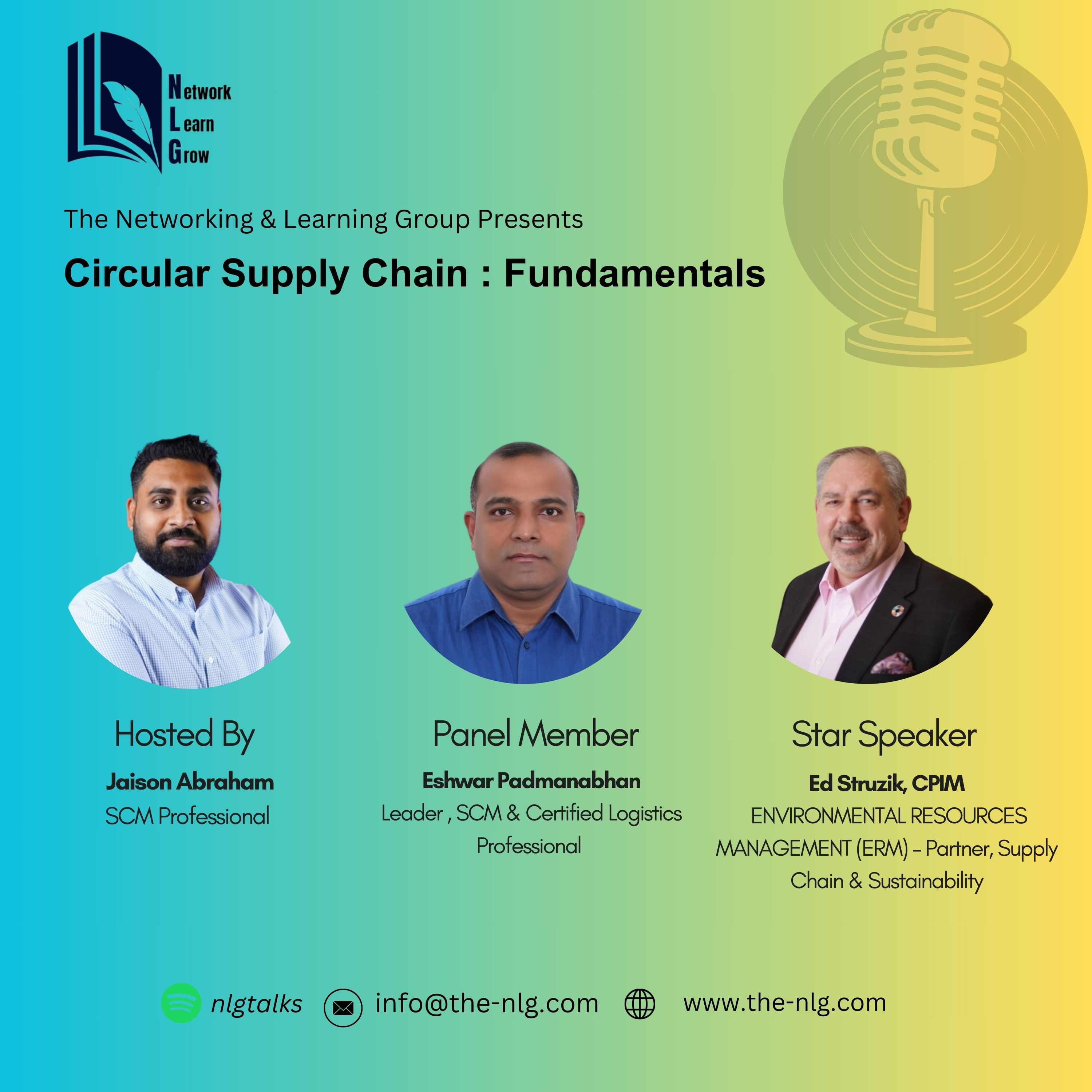
Listen to the podcast with Ed Struzik, CPIM and Eshwar Padmanabhan
1️⃣ What is a Circular Supply Chain?
Simply put, it's a system where products, materials, and resources are continuously recycled and repurposed to minimize waste and maximize value. It's about closing the loop from production to consumption.
2️⃣ Key Principles of Circular Supply Chains
Reuse: Extending product life through refurbishment and repair.
Remanufacturing: Creating like-new products from used materials.
Recycling: Transforming waste into valuable resources.
Resource Efficiency: Minimizing extraction and maximizing use of existing resources.
📊 Industries Embracing Circular Supply Chains From automotive to electronics, and even fashion, industries worldwide are adopting these principles to reduce environmental impact and foster economic resilience.
🌱 Contributing to Sustainability Circular Supply Chains play a crucial role in achieving sustainability goals:
1. Reducing carbon footprint by minimizing waste.
2. Conserving natural resources through efficient material use.
3. Creating new economic opportunities, including over 700,000 potential jobs in Europe alone by 2030.
🚀 Challenges Ahead Implementing Circular Supply Chains isn't without hurdles:
1. Designing products for circularity.
2. Scaling up infrastructure for recycling and remanufacturing.
3. Collaborating across industries and supply chains.
🔍 Future Trends Looking forward:
1. Advancements in technology facilitating easier material recovery.
2. Regulatory incentives driving adoption.
3. Consumer demand for sustainable products influencing market dynamics.