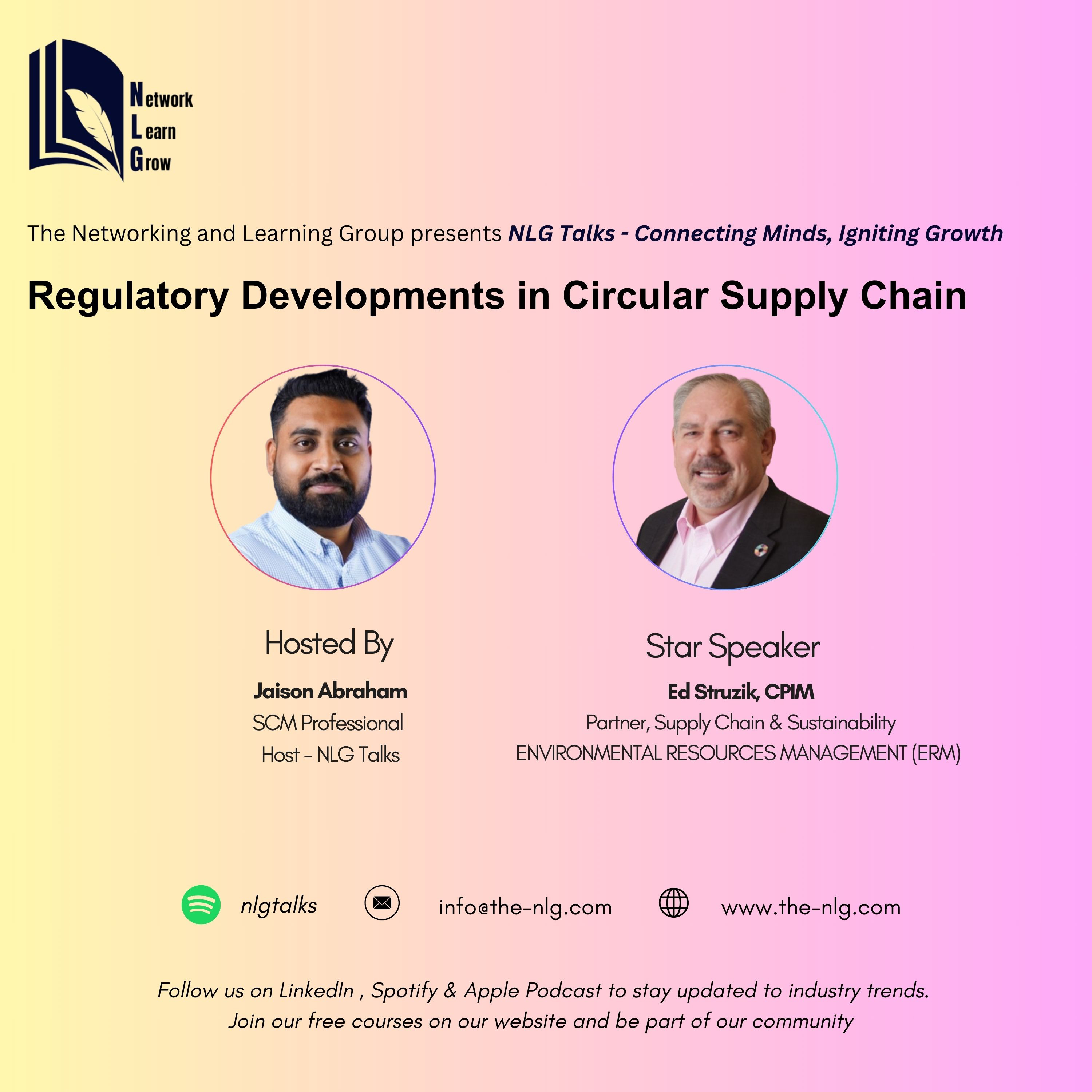
In this podcast , I am speaking to ED on the regulatory and certification side of the circular supply chain function.
As businesses increasingly pivot towards circular supply chain models, understanding the regulatory landscape becomes essential for success. Circular supply chains focus on sustainability through resource recovery, waste reduction, and product lifecycle extension. However, implementing these practices requires navigating a complex web of regulations and standards that differ globally.
🔑 Key Regulatory Frameworks and Standards:
🌐 Impact of Regional Regulatory Differences:
✅ The Role of Certifications and Labels: Certifications such as Cradle to Cradle (C2C) and ISO 14001 play crucial roles in verifying sustainable practices. C2C ensures products are designed for recyclability and safety, while ISO 14001 confirms a company's commitment to effective environmental management. Additionally, labels like Fair Trade and organic certifications significantly influence consumer perceptions of sustainability.
As we navigate this evolving landscape, collaboration and adherence to these regulations and standards will be key to unlocking the full potential of circular supply chains. Let's embrace sustainability together! 💚
#CircularEconomy #Sustainability #SupplyChain #Regulations #ISO14001 #CradleToCradle #Innovation