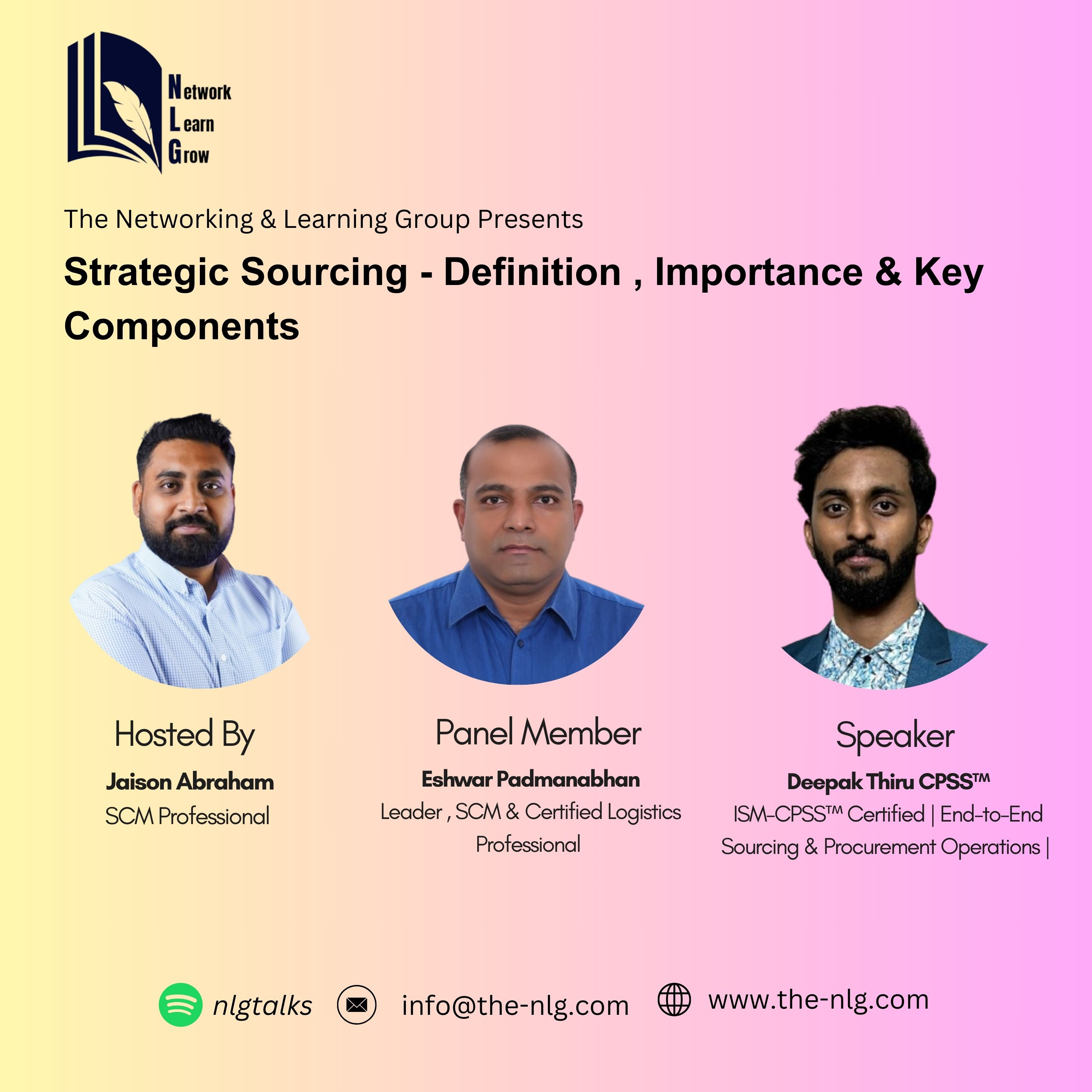
In this episode , I am speaking to Deepak and Eshwar on the strategic sourcing and its key components.
Strategic sourcing is a procurement process that involves analyzing and managing a company's purchasing activities to maximize value and reduce costs. It goes beyond traditional buying practices by focusing on long-term supplier relationships and overall supply chain efficiency.
Here are some key aspects:
Supplier Evaluation: Assessing potential suppliers based on criteria like quality, cost, reliability, and sustainability.
Market Analysis: Understanding market trends, pricing fluctuations, and the competitive landscape to make informed sourcing decisions.
Collaboration: Building strong partnerships with suppliers to foster innovation, improve quality, and reduce lead times.
Cost Analysis: Evaluating total cost of ownership, including acquisition costs, maintenance, and disposal costs.
Risk Management: Identifying potential risks in the supply chain and developing strategies to mitigate them.
Technology Utilization: Leveraging procurement technologies and data analytics to enhance sourcing decisions and streamline processes.
Continuous Improvement: Regularly reviewing and refining sourcing strategies to adapt to changing market conditions and organizational needs.