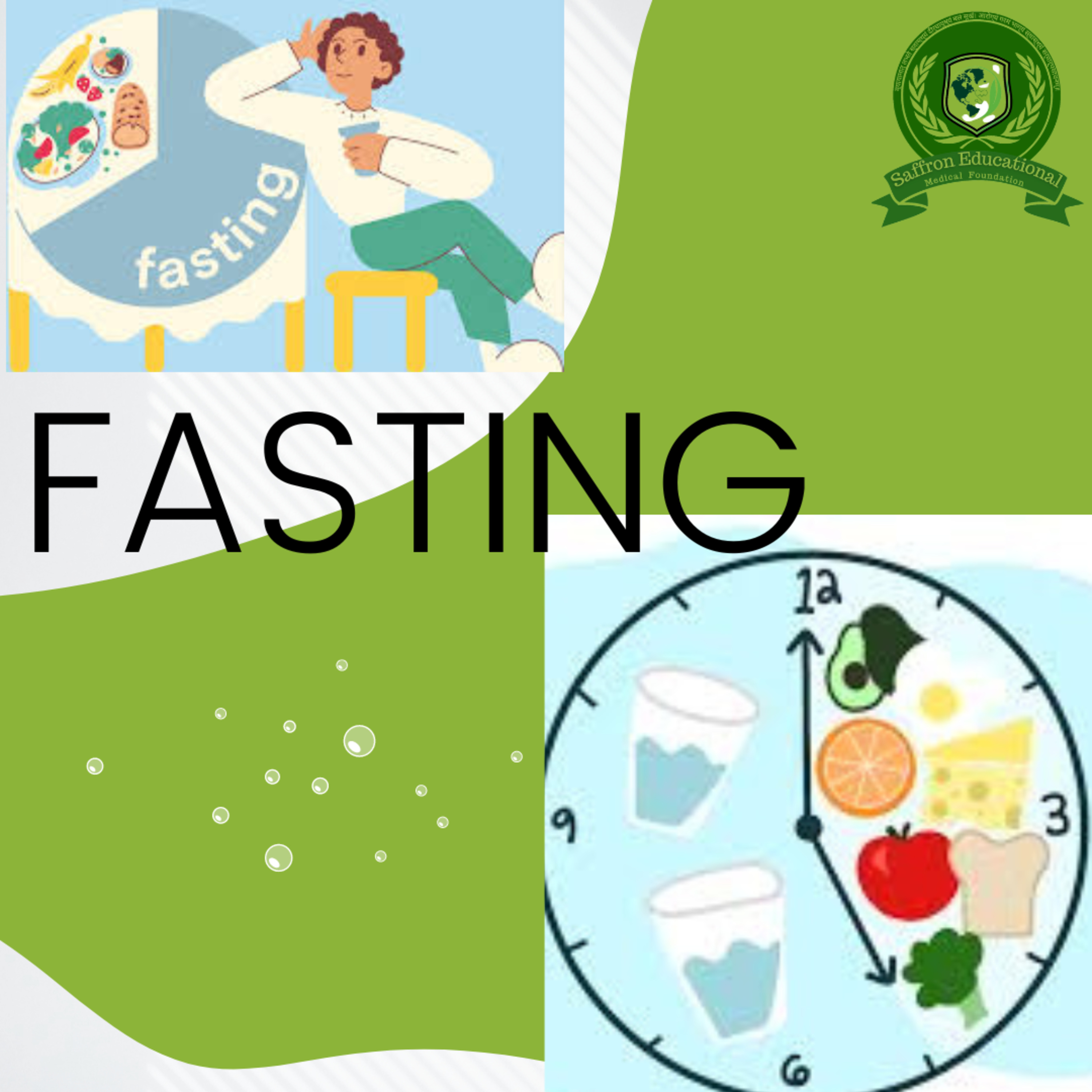
WHAT IS FASTING
Fasting is the practice of refraining from eating and, in some cases, drinking. Froma purelyphysiological standpoint, "fasting" can refer to a person's metabolic state after not eatingovernight (see "Breakfast"), or it can refer to the metabolic state achieved after completedigestion and absorption of a meal.
In the fasting state, metabolic changes begin after a meal is digested (typically 3-5 hours after eating). A diagnostic fast is a period of fasting lasting 1 to 100 hours (depending on age) that is done under medical supervision to aid in the investigation of a health complication, most commonly hypoglycaemia. Many people fast before a medical procedure or check-up, such as a colonoscopy or surgery, or before certain medical tests. Intermittent fasting is a weight loss technique that is sometimes used. IMPORTANCE OF FASTING Fasting is a practice that has been observed for thousands of years, and it has been utilized for a range of purposes, including spiritual, cultural, and health-related reasons. Over the years, researchers have explored the potential benefits of fasting, and they have discovered that it may offer several advantages for those who choose to engage in it.