“Maturity in Christ: Sainthood for Today”
Main point: We are not yet what we shall be. Sainthood for today is growing into our maturity in Christ.
INTRODUCTION
On this Feast of All Saints, we remember the saints of the past as well as those in our congregation who have passed into their eternal rest. They are not gone. They join us today in the lighting of the candles and we join them in the breaking of the bread - in the feast of victory for our God.
We may wonder, what do we do now? They have passed before us. We will join them at some point in the future. What do we do now? To honor them. To please God. To live out our lives with meaning and purpose during the short time we have in this world. What do we do now?
I have one word as an answer for you this morning. That word is found in our second reading.
Maturity: That is, growing up into the measure of the fullness of Christ.
We have been called to be saints.
This is what that means: We have been placed into Christ in our baptism. And we wait for the perfection that will come to us and to the world when Jesus appears. In the meantime, we grow into what we will be in the future. That is sainthood for today.
Saint John said it this way in his first epistle:
1 John 3:2
Beloved, (friends), now, (today), we are children of God; and it has not yet been shown to us what we will be, but we know that when Jesus is revealed, we will be like Him, for we will see Him as He is.
What a joyful promise from God! We will be like him, for we shall see him as he is.
What do we do today? In one word: maturity. We grow into what we will be. That is sainthood for today. This is our calling in our baptism. This is our duty and our joy.
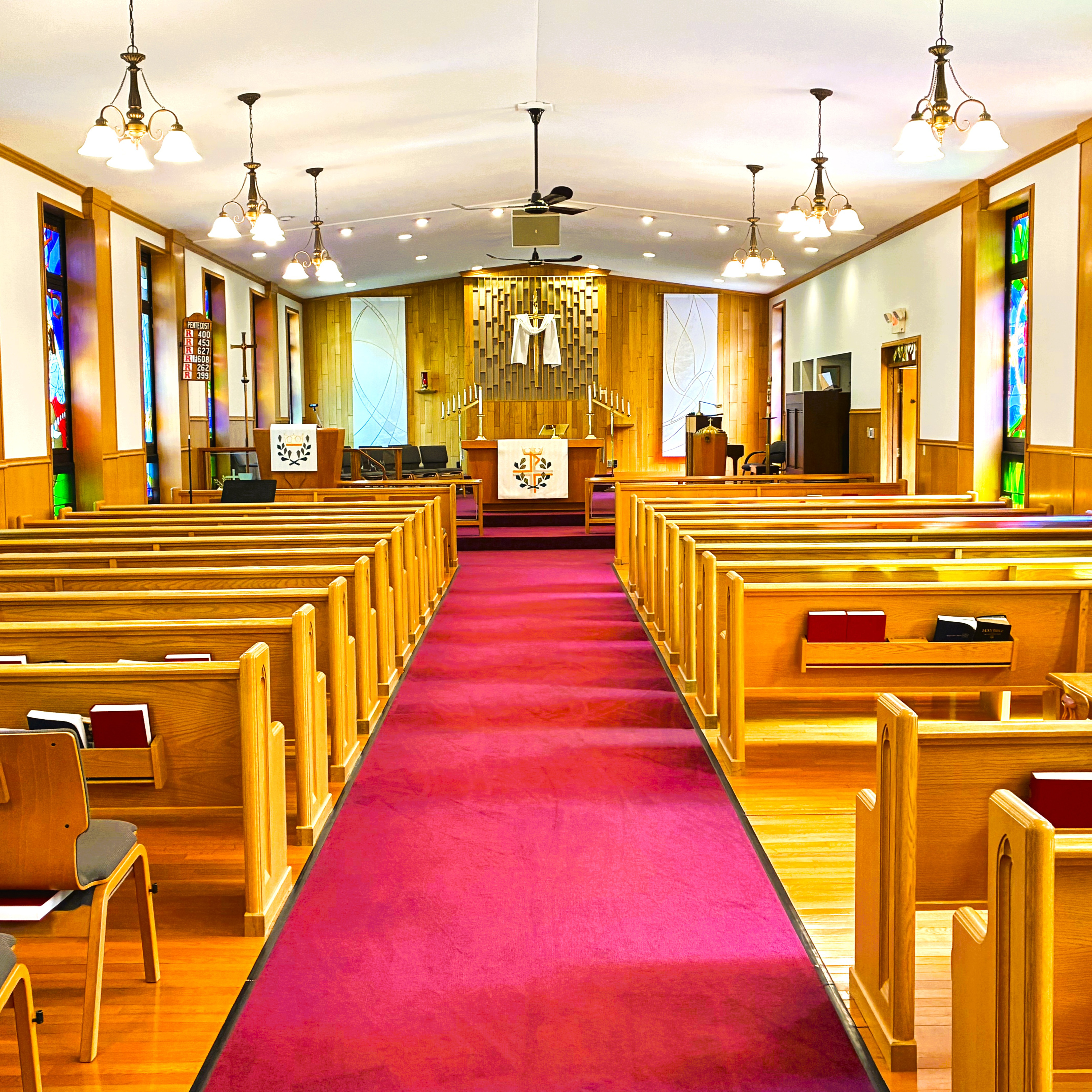
My next question: What might it look like if all of us here at St. James Lutheran Church began to live right now like the saints we will be in the future?
A Story
Some of you will remember a story I shared at a midweek Lenten service about a monetary that has fallen on hard times. I don't like to repeat stories if I can avoid it, but this story so perfectly illustrates the lesson that I think we can bear hearing it again. I found this story from a book by M. Scott Peck entitled The Different Drum. The story is called, The Rabbi's Gift.
Once a great monastic order, as a result of waves of anti-monastic persecution in the seventeenth and eighteenth centuries and the rise of secularism in the nineteenth has fallen on hard times. All its branch houses were lost and it had become decimated to the extent that there were only five monks left in the decaying mother house: the abbot and four others were all in the late stages of life. Clearly it was a dying order.
In the deep woods surrounding the monastery there was a little hut that a rabbi from a nearby town occasionally used for a hermitage. Through their many years of prayer and contemplation the old monks had become a bit psychic, so they could always sense when the rabbi was in his hermitage. "The rabbi is in the woods, the rabbi is in the woods again " they would whisper to each other. As he agonized over the imminent death of his order, it occurred to the abbot at one such time to visit the hermitage and ask the rabbi if by some possible chance he could offer any advice that might save the monastery.