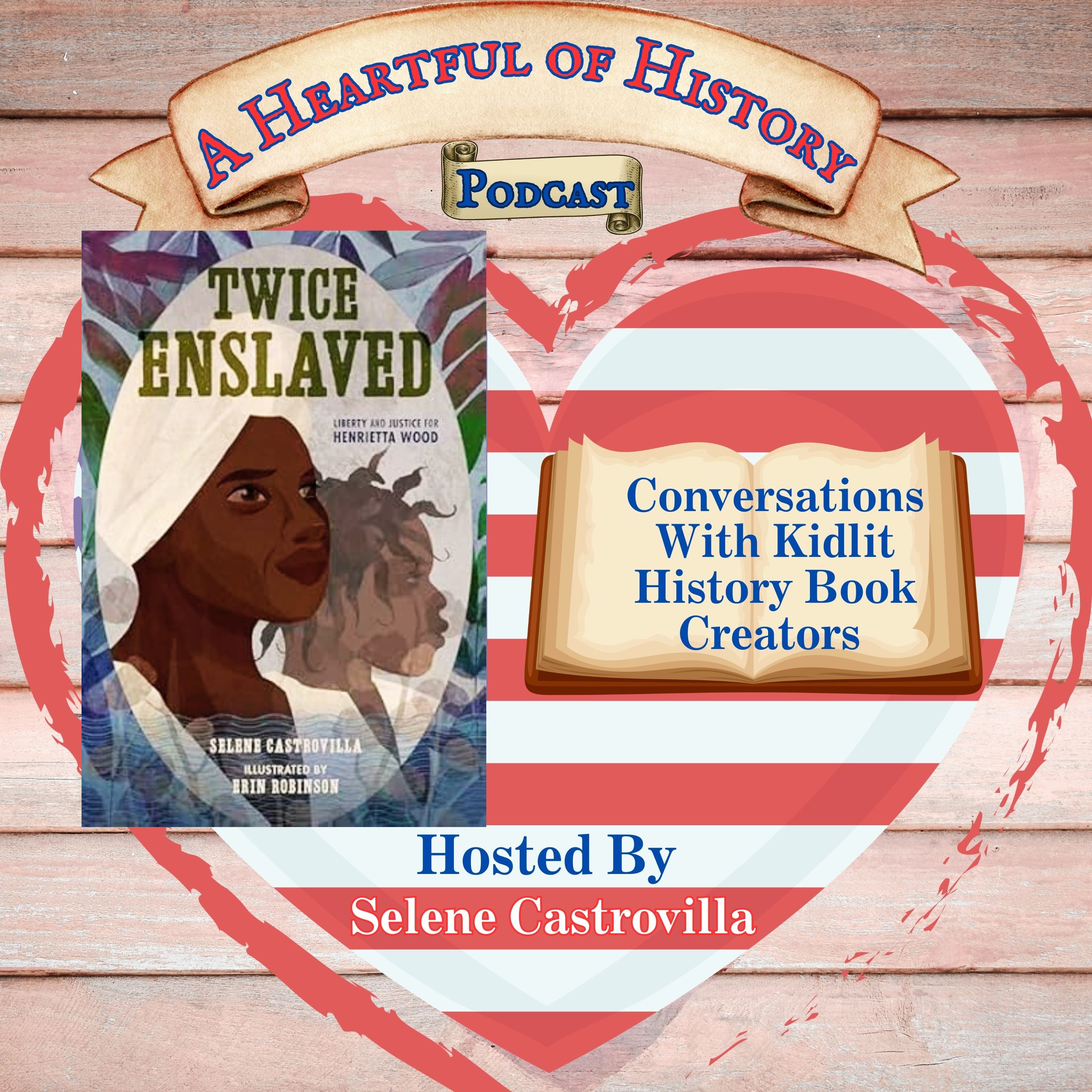
This episode introduces listeners to Henrietta Wood, a woman who was enslaved twice and later secured the largest reparations award in U.S. history. Essential for Black History Month and Juneteenth, this conversation affirms that middle school readers deserve the full truth about American history.
In this powerful conversation, author Selene Castrovilla and illustrator Erin Robinson discuss the making of Twice Enslaved: Liberty and Justice for Henrietta Wood, their nonfiction book for middle school readers that tells the extraordinary true story of Henrietta Wood—a woman born into slavery, freed, kidnapped back into bondage, and ultimately won a landmark court case against the man who abducted her.
Largely unknown until recent historical research brought her story to light, Henrietta Wood’s life challenges the way we teach slavery, freedom, and justice. This episode explores how her story moved from archival obscurity to the page, and why it matters now more than ever.
Selene shares how the writing process unfolded over more than two years, including the decision to write in free verse and the emotional weight of shaping a narrative centered on injustice and resilience. Erin Robinson discusses the year-long illustration process and the responsibility of visually representing heavy historical truths for young readers with honesty and care.
Listeners will hear how the metaphor of the Ohio River became a structural and emotional current in the book—symbolizing both division and possibility—and how the pandemic period unexpectedly fueled the urgency to tell stories that had been silenced.
This episode examines:
– Henrietta Wood’s life and legal fight for justice
– The creative and ethical challenges of writing children’s history books about slavery
– The role of art in navigating trauma and hope
– Why Twice Enslaved belongs in every middle grade classroom
– How storytelling fosters empathy, historical accuracy, and resilience
For educators building Black History Month curricula, for families discussing Juneteenth, and for writers interested in the craft of historical nonfiction, this episode offers insight into how research, storytelling, and illustration work together to transform overlooked history into literature that informs and endures.
Because some stories were buried. And some are powerful enough to reshape how the next generation understands justice.