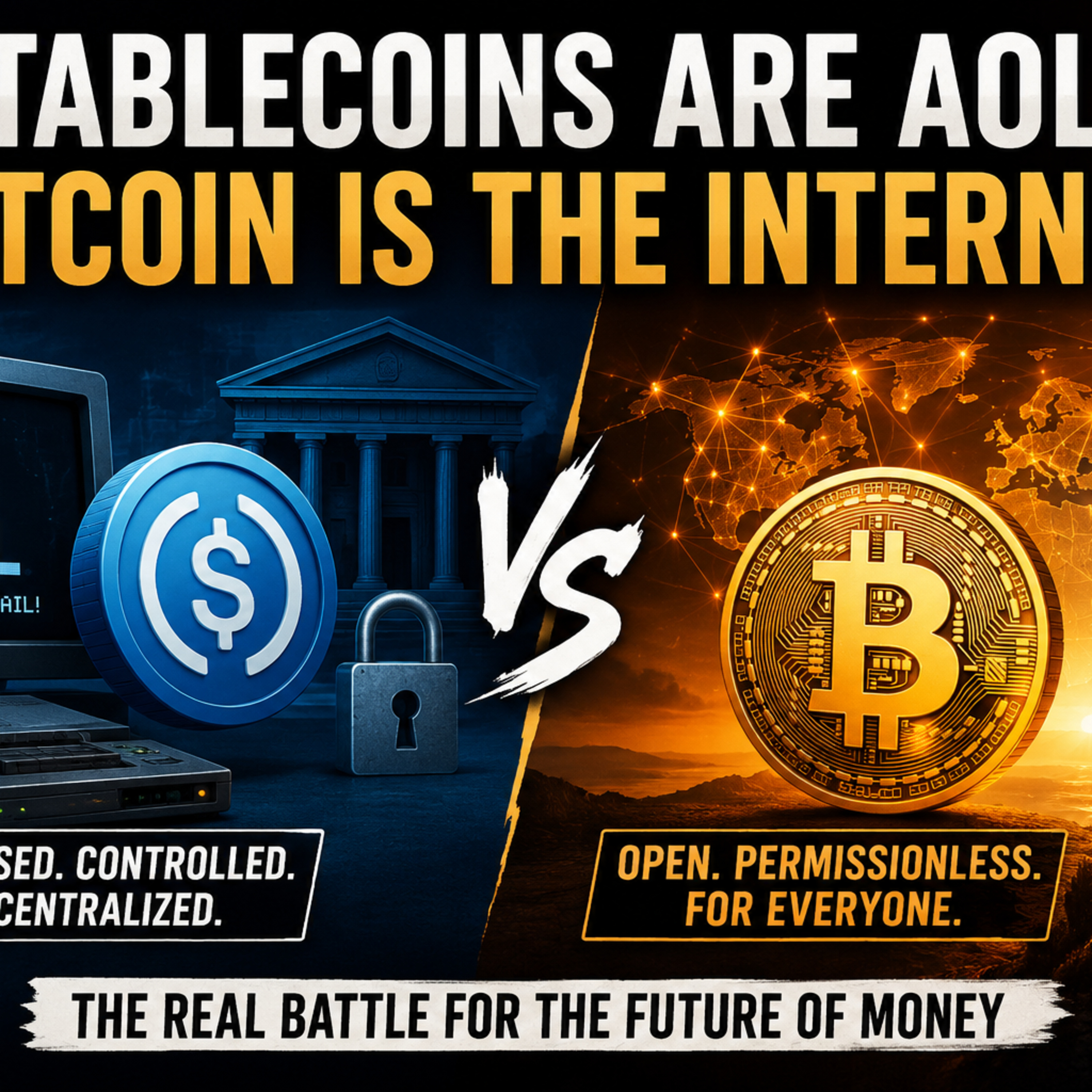
Are stablecoins the future of money—or just the AOL of a much bigger financial internet?
In this episode of Tales of Abundance, Randy and Anthony break down stablecoins, Bitcoin, inflation, bank-created money, and why the real battle may not be stablecoins vs Bitcoin at all. It may be closed systems vs open protocols. Using the early internet as a frame, they argue that stablecoins are a simpler, centralized bridge into digital money, while Bitcoin is the open, permissionless network that could outlast them all.
They walk through how stablecoins like Tether work, why they’ve exploded in countries facing currency collapse, and how they make money by holding U.S. Treasuries. Then the conversation shifts to the darker plumbing underneath modern banking: fractional reserves, money creation through lending, and why the current fiat system starts to look a lot like a legal Ponzi scheme once you really understand it.
From there, the episode goes deeper into Bitcoin as “freedom money.” Randy explains why Bitcoin’s decentralization matters, why governments can freeze stablecoins but not easily stop Bitcoin transactions, and how Bitcoin mining is pushing cheap energy and infrastructure into places that traditional systems ignored. The discussion also covers self-custody, Coinbase risk, KYC tracking, capital gains questions, and why more investors are starting to treat Bitcoin as a hedge against long-term currency debasement.
If you’re trying to understand stablecoins vs Bitcoin, the future of money, inflation, banking risk, digital sovereignty, and why open financial networks may matter more than most people realize, this episode will help you think about it from first principles.
Show Notes
00:01 – Stablecoins, Bitcoin, and the future of money
00:30 – Why AOL is the frame for understanding stablecoins vs Bitcoin
01:52 – Open protocol vs closed system: why it matters
03:12 – How stablecoins help people escape inflation in places like Venezuela
05:10 – How Tether works and how stablecoin issuers make money
08:19 – Why someone might trust a stablecoin more than a traditional bank
09:55 – How banks “create money” through lending
14:57 – Is the banking system basically a legal Ponzi scheme?
16:52 – Stablecoins are still dollars, just on new rails
17:54 – Why almost all stablecoin demand is still tied to the U.S. dollar
19:20 – Silicon Valley Bank, audits, and hidden bank risk
19:45 – Why the U.S. could freeze stablecoins but not Bitcoin payments
21:37 – Why Bitcoin is so hard to stop
22:04 – Decentralization, miners, nodes, and the size of the Bitcoin network
23:36 – How Bitcoin mining can unlock cheap energy in overlooked regions
26:17 – Privacy, regulation, and why governments struggle to control Bitcoin
29:55 – KYC, taxes, and how governments track crypto on-ramps and off-ramps
32:11 – The case for self-custody vs leaving Bitcoin on Coinbase
35:05 – What private Bitcoin transfers governments can and cannot see
37:00 – Why centralized crypto platforms may be winning now—but not forever
37:47 – Anthony explains Randy’s Bitcoin thesis
39:02 – Freedom money, sovereignty, and why Randy made Bitcoin his plan A
44:46 – Why Anthony bought Bitcoin too
52:26 – What has changed as Bitcoin became mainstream
55:22 – Final takeaway: stablecoins may matter, but Bitcoin is the bigger system