🎙️This episode is sponsored by an unrestricted education grant from Eli Lilly Canada
Advice like “prep your meals,” “build a routine” or “just be consistent” can sound straightforward in a clinical setting. But for someone living with ADHD and obesity, that advice may carry a much higher cognitive cost than it appears to on the surface.
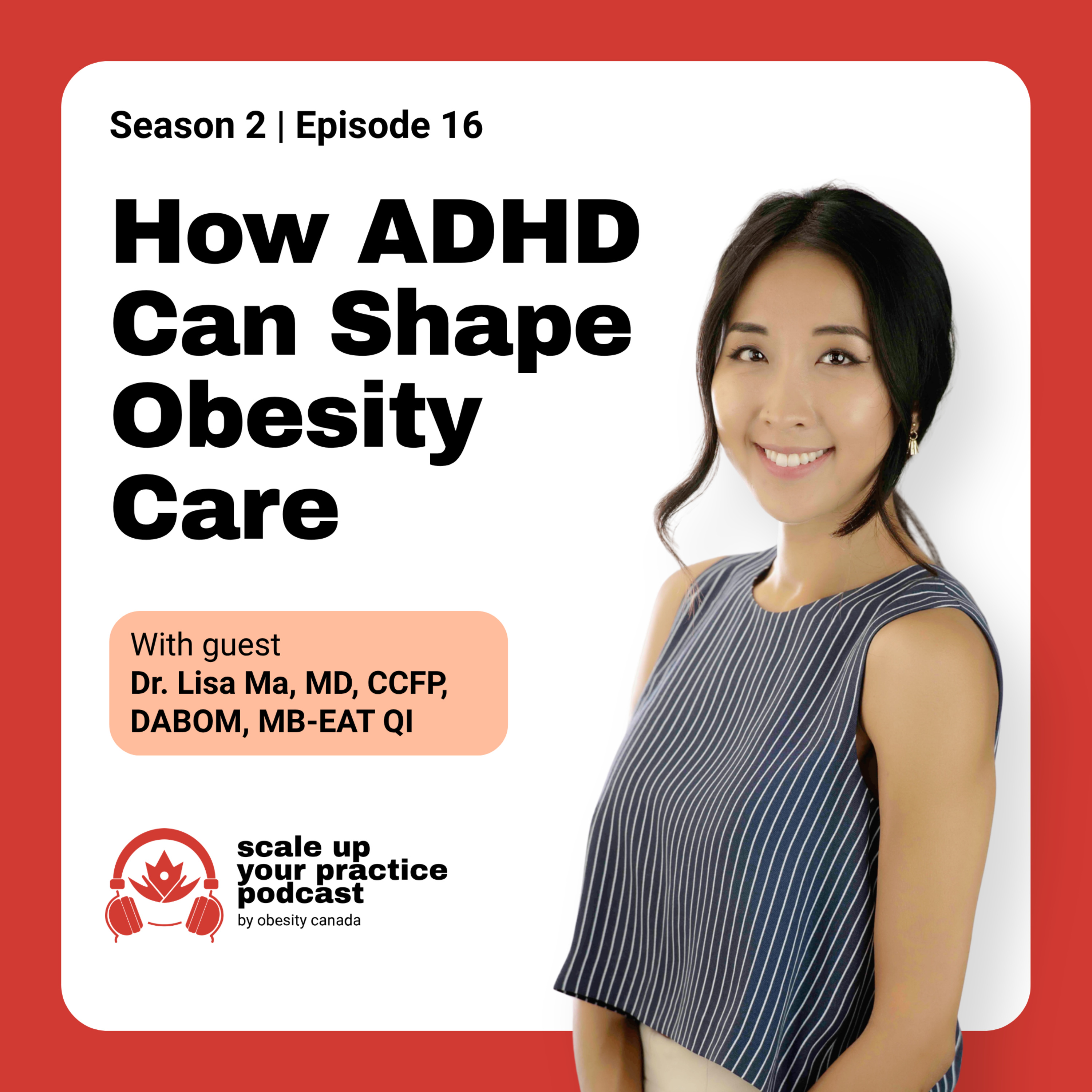
Dr. Lisa Ma joins us on the podcast to explore how ADHD can intersect with obesity care through attention, executive function, reward processing, impulsivity and emotional regulation. We talk about what can happen when difficulties with execution are mistaken for a lack of knowledge or motivation, and how clinicians can make treatment plans more realistic for the person in front of them.
In this episode
Additional resources
Become a Certified Bariatric Educator
Today’s conversation is a good reminder that obesity care takes knowledge, compassion and a commitment to reducing stigma. For healthcare professionals with experience in obesity care, Obesity Canada’s Certified Bariatric Educator exam is one way to have that knowledge recognized and stand out in the field.
The next CBE exam takes place on November 28, 2026 and applications must be submitted by November 2 to be eligible to write.
Learn more and apply: https://utm.guru/utGWo
Learning objectives
Enjoying the podcast?
Support Scale Up Your Practice by:
Have a question or a topic you’d like us to cover?
Email us at scaleuppod@obesitycanada.ca
Disclosures
This episode script was developed using NotebookLM to synthesize complex source materials into a structured educational format. The tool was used to analyze the Canadian Obesity Education Competencies (COECs), the Obesity Canada Strategic Plan, and guest-specific research. Specific prompts were utilized to extract relevant learning objectives, map them to CanMEDS roles, and generate competency-based interview questions.
While NotebookLM assisted in drafting the narrative arc and educational framework, all content has been reviewed, fact-checked, and refined by the podcast hosts and Obesity Canada's clinical experts. This ensures the script aligns with current Clinical Practice Guidelines and authentically represents the lived experience perspective.