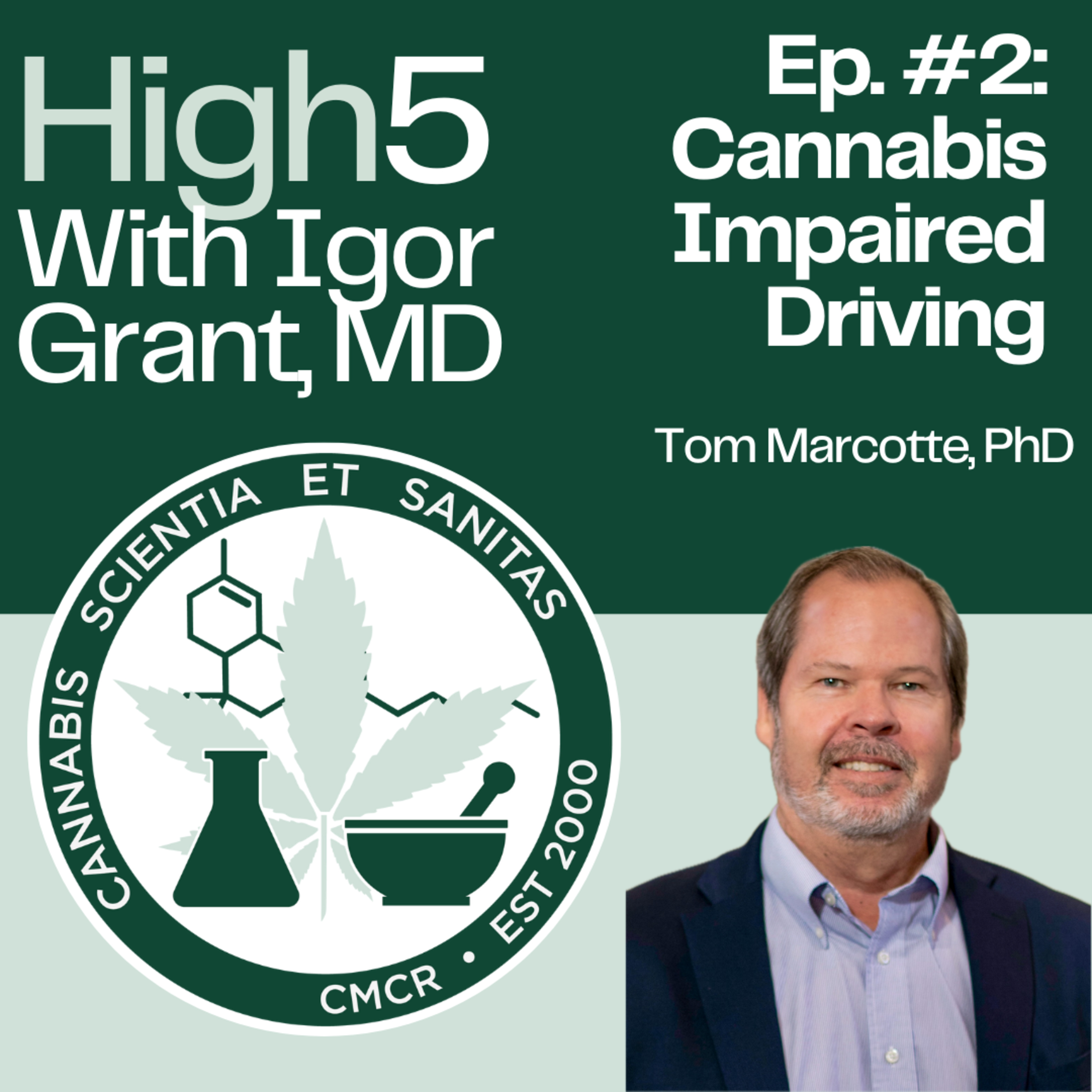
In this episode, Dr. Tom Marcotte discusses a significant study on the acute effects of cannabis on driving impairment, detailing the methodology, findings, and implications for public safety and law enforcement. The conversation explores how THC levels affect driving performance, the perception of impairment among users, and the challenges of conducting cannabis research in a regulated environment. Future research directions and participant recruitment for upcoming studies are also highlighted.
Takeaways
- The study was the largest randomized double-blind clinical trial on cannabis and driving. Participants showed similar levels of impairment regardless of THC content. Behavioral tolerance plays a significant role in driving performance among frequent users. Perception of impairment can be misleading; users may feel safer to drive before they are actually recovered. Blood THC concentrations do not correlate with driving impairment, unlike alcohol. Future studies will explore real-world cannabis products and their effects on driving. The research aims to improve understanding of cannabis use and public safety. Participants will be recruited from the community for upcoming studies. The driving simulator is designed to replicate real-world driving challenges. The study's findings have important implications for law enforcement and public policy.
Chapters
00:00 - Preview
00:30 - Intro
01:15 - Cannabis & Driving Impairment
13:35 - New Observational Study - Real World Cannabis Study
18:17 - New CMCR Mobile Driving Simulator & Clinical Lab
19:22 - Outro