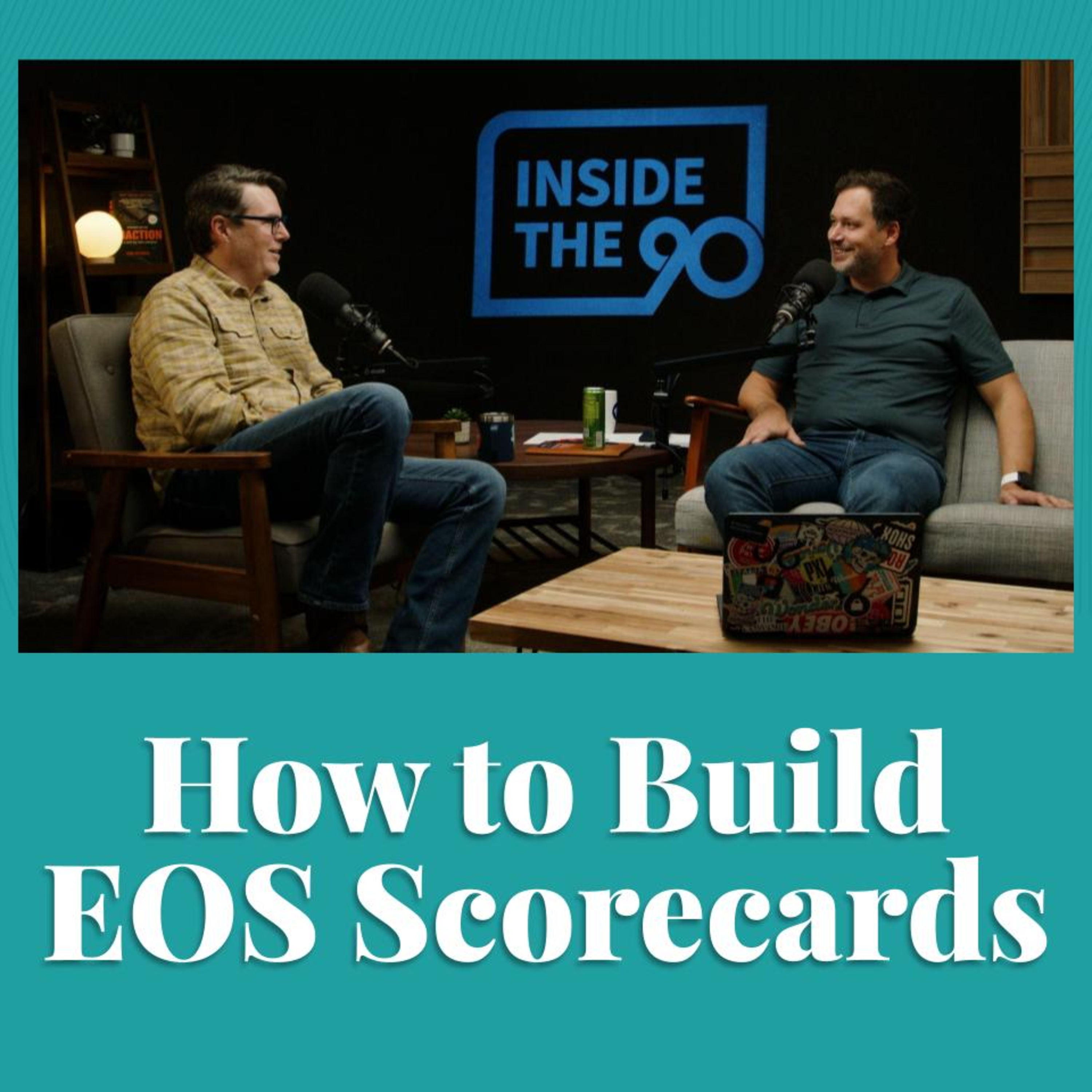
This episode breaks down how to build and use EOS scorecards without overcomplicating them. The hosts explain where teams should start, how to choose meaningful metrics, and how scorecards drive clarity, accountability, and better decision-making. Through real-world examples, they show how simple, well-chosen measurables create alignment, surface issues early, and help leaders focus on what truly matters each week.
Key Topics:
- EOS scorecards and the five foundational EOS tools.
- How to choose the right measurables.
- Leading vs. lagging indicators.
- Using scorecards in weekly Level 10 meetings.
- Accountability and “everyone has a number”.
- Avoiding over-automation and over-analysis.
- Real-world examples of effective metrics.
- Scorecards as a tool for alignment and clarity.
Chapters:
00:00 – Why scorecards are one of the hardest EOS tools to implement.
03:45 – Where to start: building scorecards by organizational flow.
08:30 – Choosing simple metrics and avoiding perfectionism.
13:10 – What to do when data doesn’t exist yet.
18:20 – How scorecards should be used in Level 10 meetings.
24:00 – When a red metric becomes an issue to solve.
29:15 – Avoiding bloated scorecards and focusing on what matters.
34:40 – Connecting individual roles to scorecards (“everyone has a number”).
41:10 – Creative and powerful real-world metric examples.
49:30 – Scorecards, rocks, and weekly to-dos working together.
56:20 – The “napkin test” for leadership scorecards.
01:01:30 – Final takeaway: don’t overthink it—use the scorecard as designed.