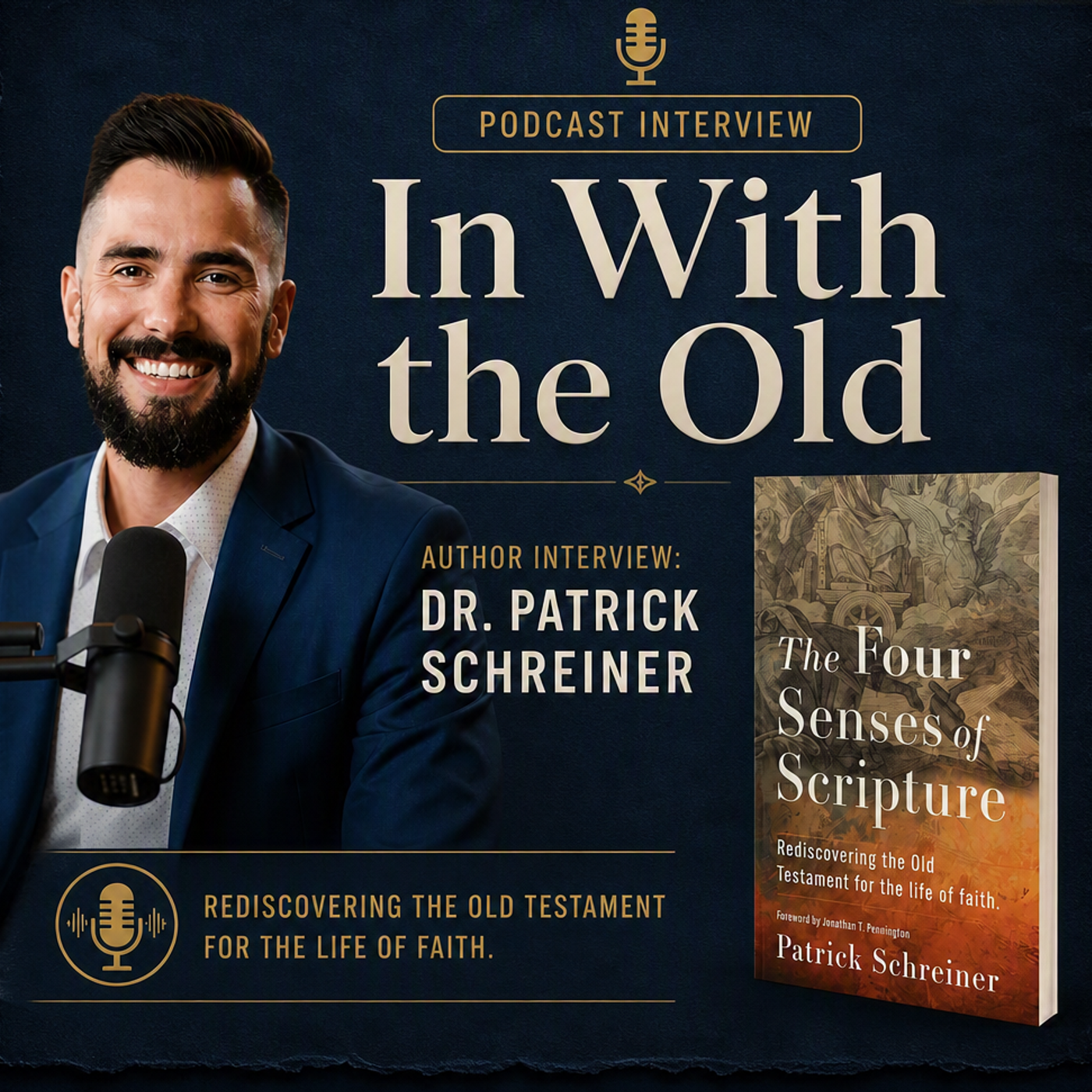
In this episode of In with the Old, host Tim Howe talks with Dr. Patrick Schreiner, professor of New Testament and Biblical Theology at Midwestern Baptist Theological Seminary, about his book The Four Senses of Scripture: Learning from Ancient Ways of Reading the Bible. They explore why Scripture should be read differently from other books, how divine authorship shapes interpretation, and why the church has historically recognized multiple senses of meaning in the Bible. The conversation focuses on the relationship between the literal sense and spiritual interpretation, with attention to Old Testament examples, New Testament usage, and the risks of subjective readings. It is especially useful for readers who want a more canonical, Christ-centered way of reading Scripture without abandoning historical context.
You can purchase the book at https://www.amazon.com/Four-Senses-Scripture-Learning-Ancient/dp/1540968790.
Key topics
Timestamps
0:00 — Welcome and Introduction
0:33 — Introducing The Four Senses of Scripture
1:08 — Divine and Human Authorship of Scripture
5:13 — What Is the Fourfold Sense?
13:00 — Can We Read Scripture Spiritually Today?
16:21 — The Old Testament’s Use of the Old Testament
19:34 — Moving from Literal Meaning to Spiritual Meaning
25:17 — Christ, Canon, and the Meaning of Words
29:32 — First Readings, Rereadings, and Progressive Revelation
35:50 — Why Spiritual Reading Must Not Dismiss the Literal Sense
43:13 — When Symbols Help—and When a Tree Is Just a Tree
46:30 — Holding Canonical Reading and Historical Development Together
51:23 — John’s Gospel and the Depth of Biblical Symbolism
53:46 — Four Guardrails for Reading the Spiritual Sense
56:04 — Confidence, Certainty, and Canonical Interpretation
61:05 — Final Reflections
63:16 — Closing and Farewell