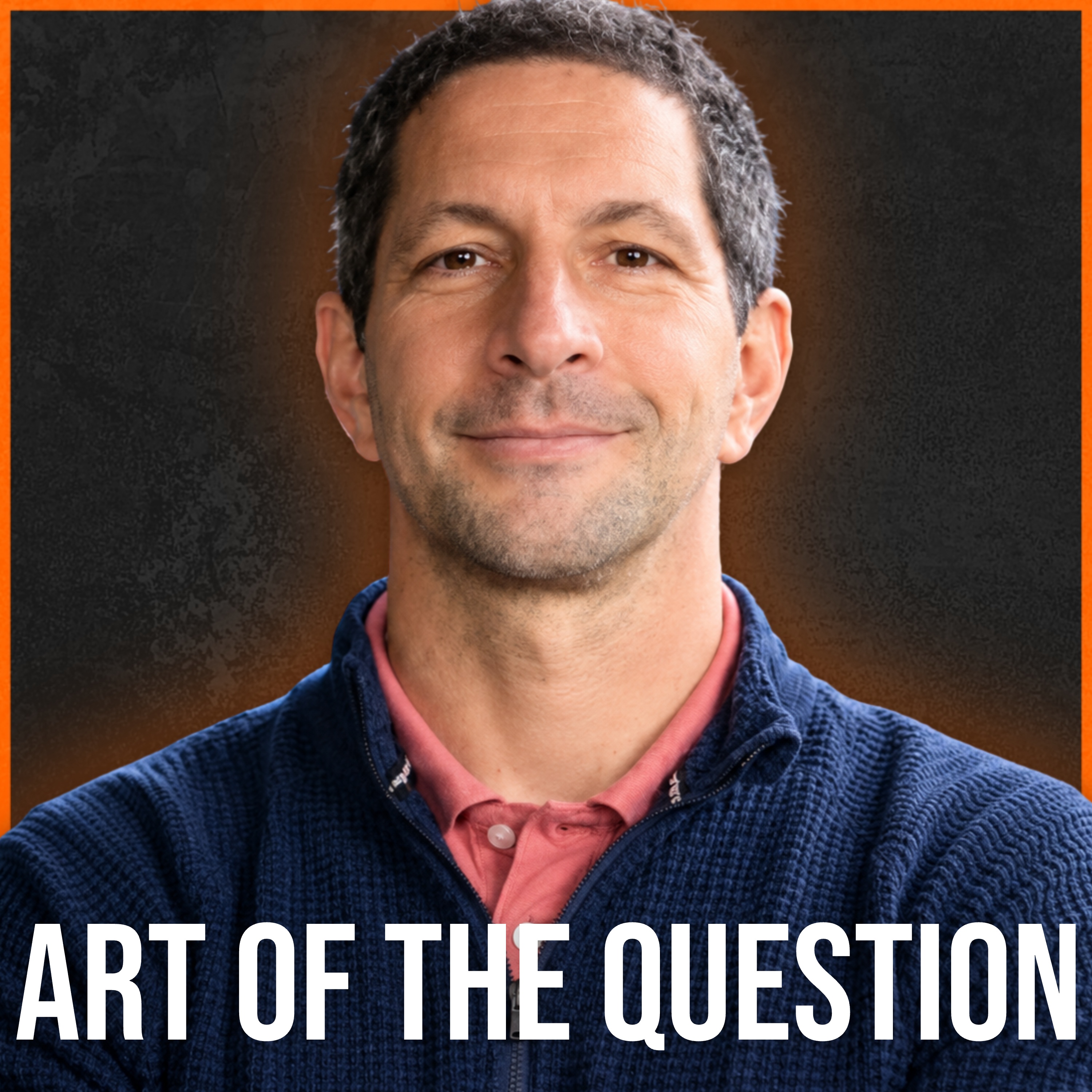
Adam Green is a professor and cognitive neuroscientist at Georgetown University in Washington, DC, where he directs a lab studying how the brain produces creative ideas. He earned his PhD in cognitive neuroscience at Dartmouth, did postdoctoral training at Yale, and serves as Editor-in-Chief of Creativity Research Journal. He co-founded the Society for the Neuroscience of Creativity and, with James Kaufman, leads the Creativity Ontology Project, a collaboration of 200 creativity researchers working to pin down what the word creativity actually means. His lab helped turn creativity into something measurable through semantic distance and showed that electrically stimulating the frontopolar cortex can make people more creative. His recent study of hundreds of thousands of college application essays found that after ChatGPT arrived, students' life stories became more alike even as they looked more creative on the surface.
Expect to learn how creativity can be defined as a process rather than a product, how semantic distance turns creativity into a number, what happened when researchers zapped the frontopolar cortex with electrical stimulation, why a walk or run in a familiar place helps ideas come, why creativity feels so rewarding, why creativity may be humanity's biggest evolutionary advantage, whether anyone can learn to be more creative, why almost every creativity intervention works, how a strict constraint gave us Green Eggs and Ham, whether AI can truly be creative, how ChatGPT made college essays more alike while fooling the experts, and why thinking for yourself is worth more in the AI era.
Adam Green online:
Lab: cng.georgetown.edu
Society for the Neuroscience of Creativity: tsfnc.org
0:00 Intro
1:07 Defining creativity
8:27 Internally directed attention
10:53 The Creativity Ontology Project
12:20 Measuring creativity with analogies
18:50 The brick test
19:57 Zapping the brain for creativity
23:15 From observation to intervention
25:43 How to be more creative
28:38 Why walks spark ideas
31:13 Why creativity feels good
35:23 Why creativity is so desirable
39:21 Malevolent creativity
40:43 Can anyone be creative
41:44 Creativity is a state
44:35 Creativity anxiety
46:37 Constraints and Dr. Seuss
52:04 Can AI be creative
56:12 Using AI in creative work
1:00:44 Start with your own ideas
1:02:08 The college essay study
1:06:57 AI blind spots and homogenization
1:08:37 Socratic learning with AI
1:10:05 Thinking for yourself with AI
1:11:50 Where to follow Adam's work