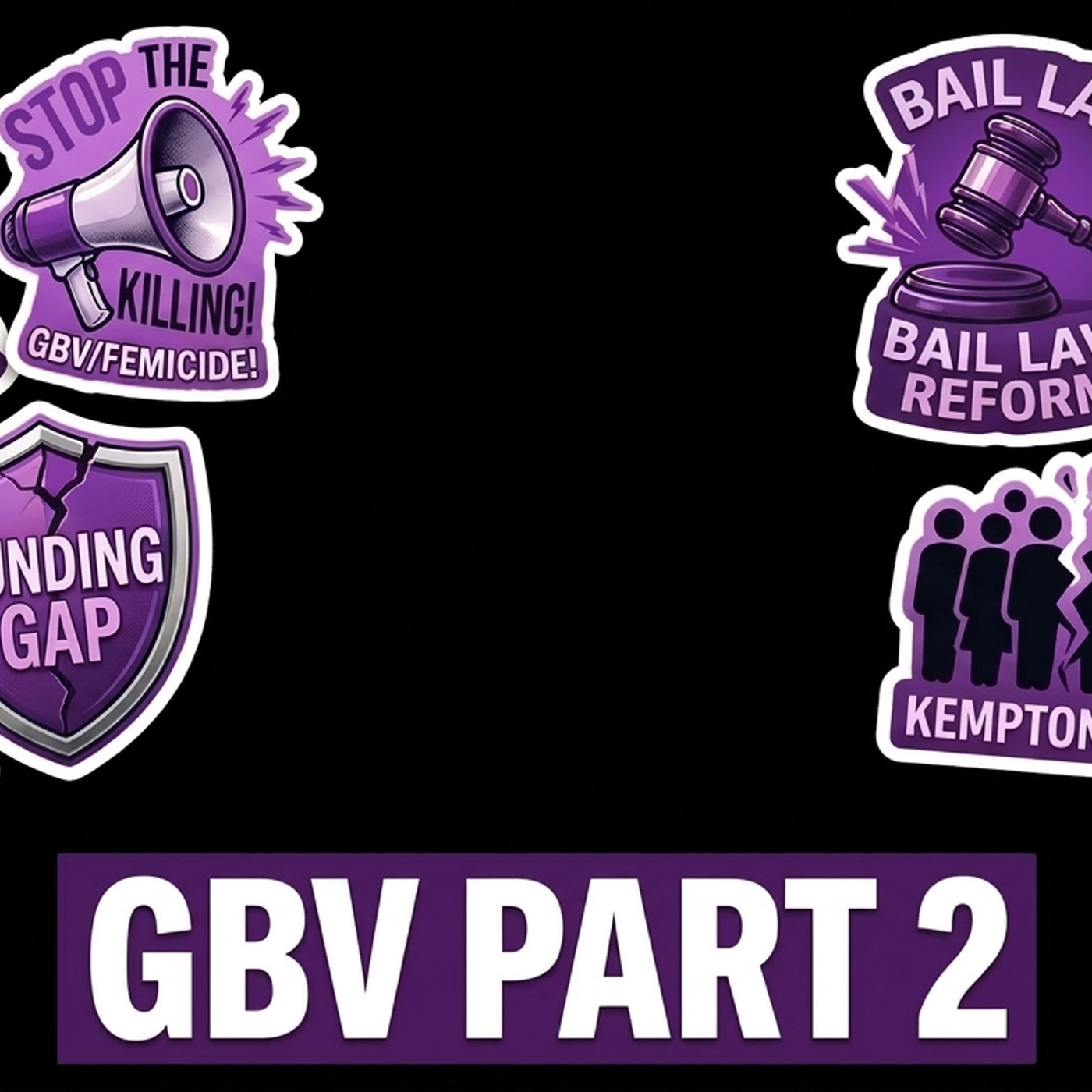
Ten months after South Africa declared gender-based violence and femicide a national disaster, the numbers still do not match the promise. Rehana Levesque breaks down what has changed, what has stalled, and why the most urgent official message to women is still, somehow, “don’t walk alone.” This episode traces the gap between emergency language and emergency action: the Women for Change shutdown that helped force the declaration, the government’s five-part program of action, and the legal powers that have still not been fully used. Rehana unpacks the funding problem, the reporting gap, and why shelters, prosecutions, and public accountability remain the real test of whether the declaration means anything. You’ll hear how the Kempton Park killings became the latest flashpoint, with nine women found dead since July in and around the area, plus roughly 10 additional reported cases involving women allegedly lured through dating platforms. Rehana also examines the public backlash to police safety warnings, the institutional victim-blaming women are pushing back against, and the exhausting pattern of outrage, statement, repeat.
Rehana also grounds the episode in hard statistics: 50,511 GBV and femicide cases were reported in the 2025–2026 financial year, with only about 61% leading to arrest or referral for prosecution. She connects those figures to the larger reality campaigners have been warning about for years: strong laws mean little when enforcement is uneven and survivors are still carrying the burden of prevention. Essential listening if you want the full picture behind the headlines, the legal framework behind the headlines, and the uncomfortable truth behind the phrase “national disaster.” If this episode affects you or someone you know, South Africa’s Gender-Based Violence Command Centre is available 24/7 on 0800 428 428.
#GBV #GenderBasedViolence #Femicide #SouthAfrica #KemptonPark #JusticeForWomen #EndGBV #WomensSafety #Accountability #OnTheBeatenPathPod
KEY TOPICS
South Africa's declaration of gender-based violence as a national disaster
Government initiatives and priorities post-declaration
Legal and law enforcement responses and gaps
Funding shortfalls and resource allocation
The Kempton Park serial murders and investigation updates
Public and political reactions to GBV crisis
Legal standards for bail in GBV cases and recent amendments
The gap between policy and practice in GBV response
Impact of societal attitudes and victim-blaming
Role of activism and public outrage in driving change
CHAPTER
00:00 Introduction to South Africa's GBV crisis and episode overview
02:10 Government response: progress and ongoing challenges
05:18 Legal analysis: benchmarks not triggered, unspent powers
07:03 Public and political reactions to the disaster declaration
10:10 Current state of shelters and funding gaps
11:20 Kempton Park murders: latest developments and concerns
14:34 Patterns, online lures, and societal responses
17:54 The debate: could the perpetrator be a woman?
18:40 Government advice and victim-blaming criticism
22:07 Reporting and prosecution: the grim statistics
26:50 Bail laws and recent amendments in GBV cases
30:46 The gap between legislation and enforcement
32:39 Overall crime trends versus GBV-specific murders
33:00 The ongoing struggle and societal resilience