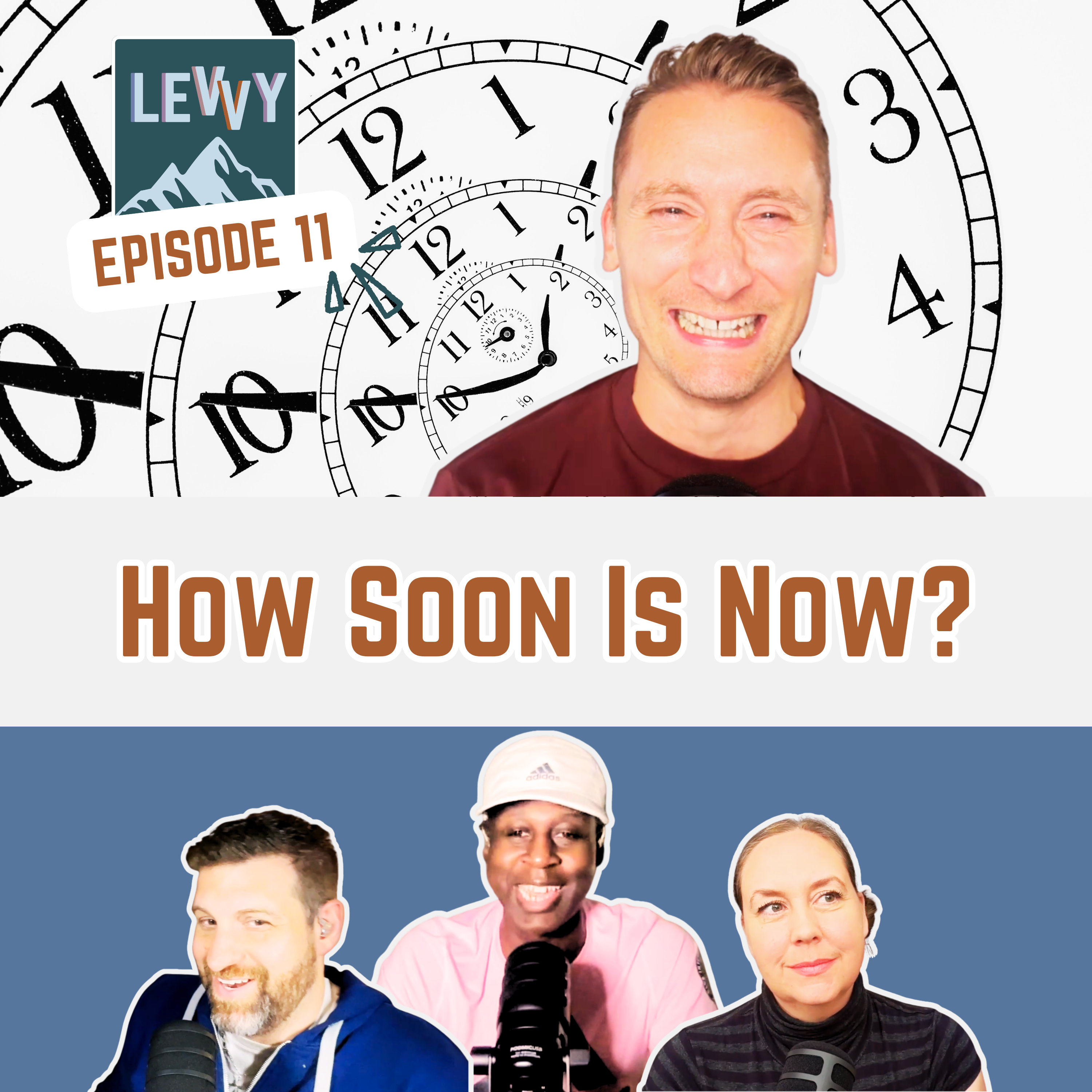
Every desire carries a timestamp. You know what you want. What you don't know is when. In this episode the Levvy hosts sit inside one of the most universally human experiences — the gap between longing and receiving. Lindsay shares for the first time the story of praying for her mother's healing through childhood, watching her die anyway, and the long prodigal journey back to a God she felt had failed her. Leroy shares a twenty-year wait for a person he believed God had promised him — and the stunning, unexpected way it resolved. Ralph names the temptation to get creative when God says wait. And Adam names the question underneath it all: why does waiting matter? The answer the episode arrives at is both simple and costly. What makes waiting bearable isn't answers. It's surrender.
00:00 Intro highlights, welcome & episode question
01:36 Veruca Salt and the desire for it now
03:27 Wanting and waiting — the universal tension
04:50 The practical side of waiting is the hardest side
07:18 What kinds of things do we desire categorically
08:37 God allows the wait to build faith and appreciation
13:05 Why is waiting difficult — and what we learn from Abraham and Sarah
17:42 Praying for a mother's healing that never came
22:45 The long road back to God after walking away
32:25 Does waiting produce maturity?
37:26 Desire is the gravity that gives our souls density
38:19 When God gives a desire we didn't ask for — David's story
41:23 What makes waiting bearable is surrender
45:10 Tamar — taking matters into your own hands when wronged
48:41 Takeaway: trust grows in the waiting
Mentions:
Next Step: Entrust your desires to God.
Connect:
Patreon: https://patreon.com/LevvyPodcast
Instagram: https://www.instagram.com/levvypodcast/
Website: https://www.levvypodcast.com/
Email: levvypodcast@gmail.com
Listen on: SPOTIFY | APPLE | AMAZON
About: Join Leroy Case, and co-hosts Ralph, Lindsay, and Adam for curious conversations about Christ-centered integration individually, relationally, and culturally.
Credits: Andrew Springman - Music