I did not plan to stop in my tracks at the Humanoids Summit. But then a man wearing four robotic arms started high-fiving strangers. Summit goers stopped in awe, and he received rockstar treatment. People kept asking for selfies.
The company is Psyonic. The founder is Aadeel Akhtar. What he was wearing was a costume, but it functioned as a wearable demonstration of a serious idea about how robots will eventually learn to use their hands.
Akhtar calls it his Doc Ock suit, and it is an outstanding replica of the Marvel character. But, even if you don’t know anything about Doc Ock, you’d be hard-pressed not to be drawn in by the suit. Four robotic hands moved with intent, controlled by his own hands through gloves. Right hand controlling the right side. Left hand controlling the left. The setup was intuitive enough that you understood it before it was explained.
That is when the conversations started.
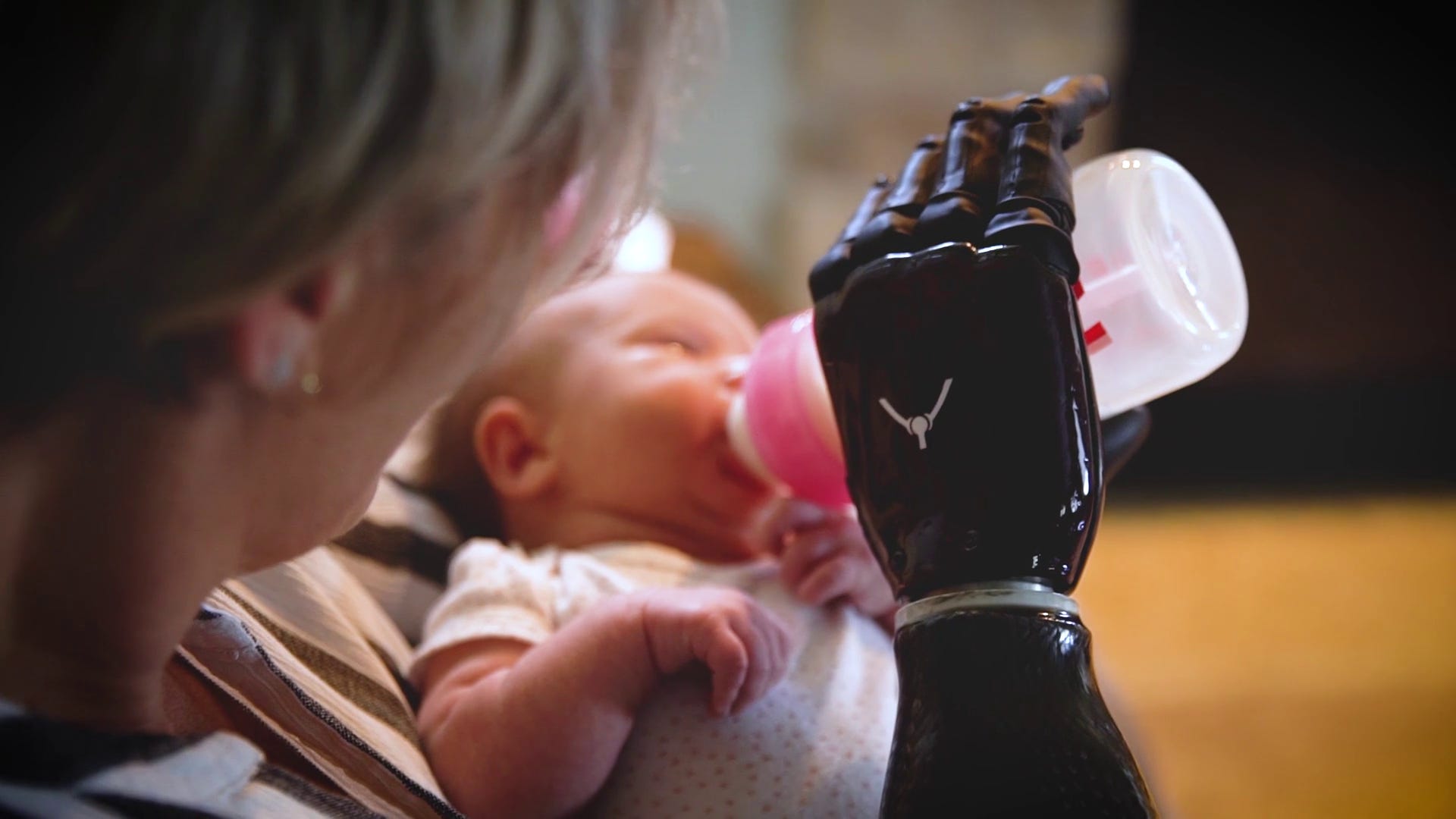
Psyonic builds advanced bionic hands that are used by both humans and robots. This is not a theoretical claim. Nearly 300 patients use the Ability Hand as a prosthetic, covered by insurance and Medicare. At the same time, more than 50 robotics companies use the exact same hand on robots, including NASA, Meta, Google, Amazon, and automotive manufacturers working through humanoid platforms.
That overlap is the point.
When I asked Akhtar where he sees the industry going, he did not talk about better motors or more parameters. He said the hand problem is a data problem. Robots struggle with dexterous manipulation not because we do not know how to build hands, but because we do not have the right training data. Especially when it comes to soft, deformable objects that require constant force adjustment.
A human knows how to pick up a fragile object without crushing it. Not by calculation, but by feel.
What makes Psyonic different is that the same hand goes on a human and on a robot. Human users are already doing the tasks robots are trying to learn. Picking and placing. Sorting. Folding laundry. Cooking. Working in industrial environments. Because the hardware is identical, the data transfers cleanly. This is real to real learning without translation loss.
That distinction matters more than it sounds.
Most robotics demos show hands mounted to tables, performing narrow tasks under ideal conditions. Psyonic’s hands live on real bodies. They experience friction, hesitation, mistakes, and recovery. They generate data shaped by the messiness of the real world. That data is what robots actually need.
In 2024, Psyonic won a rare three-shark deal on Shark Tank. It was a brief moment in the spotlight for a company that spends most of its time solving hard problems far from TV cameras.
Seeing a PYSONIC limb in action is very impressive when it is worn by a patient making use of the technology in their everyday lives.