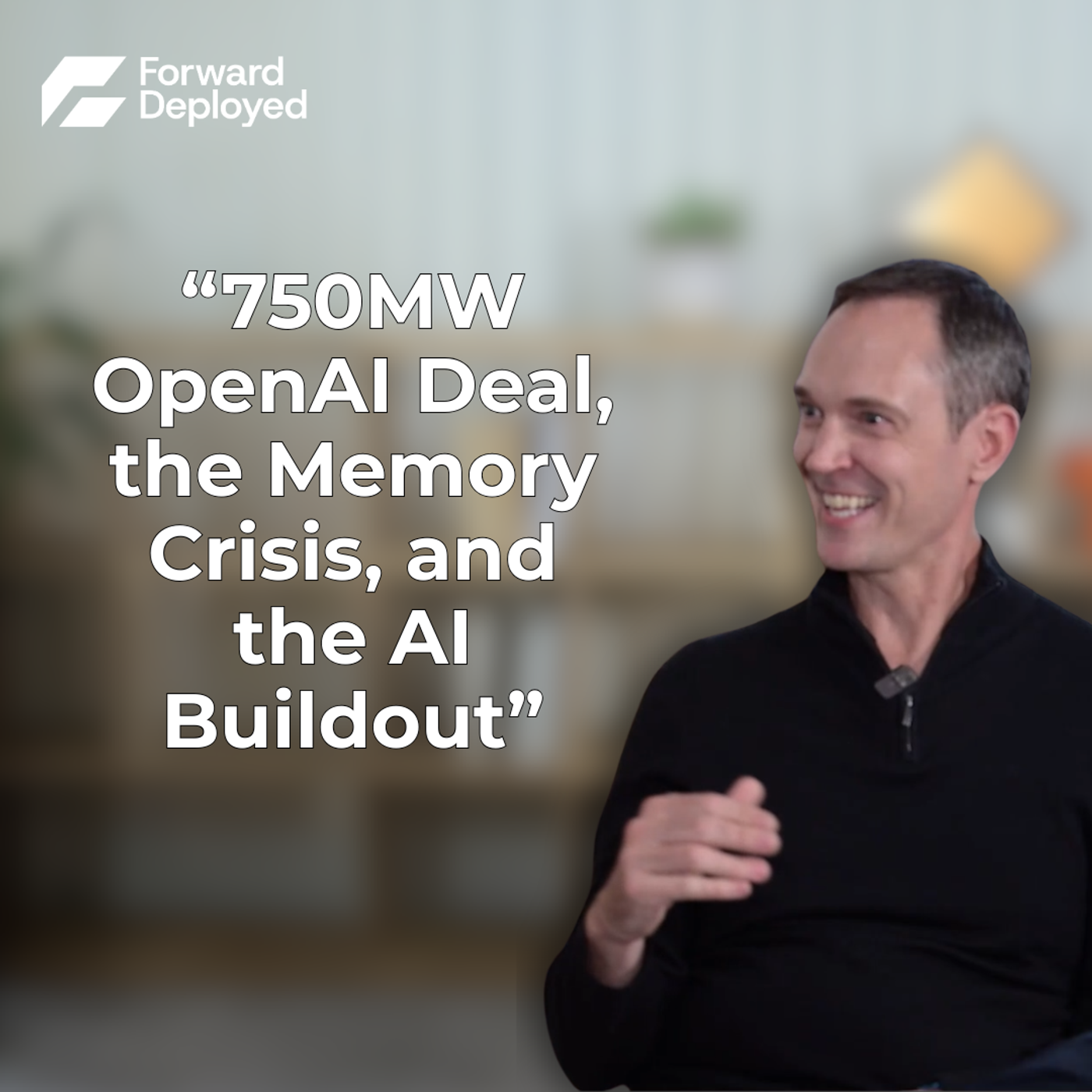
Cerebras IPO'd just a couple months ago and has already locked in a 750MW compute deal with OpenAI. Andy Hock's pitch: the GPU is the wrong chip for where AI is going.
I sat down with Andy Hock, Chief Strategy Officer at Cerebras, whose chips are the size of dinner plates instead of postage stamps — which lets them run inference up to 15x faster than even the latest Nvidia GPUs. We got into how that architecture works, the 750MW OpenAI deal (the 2x-faster Codex option runs on Cerebras), and why the memory crisis spiking GPU prices actually benefits Cerebras, since all their memory sits on the chip. Andy also argued the AI buildout isn't a bubble, that "training is a cost center and inference is where you make the big bucks," and why that "95% of enterprise AI pilots fail" stat measured the wrong thing at the wrong time — plus their supercomputer work with governments like the UAE, and why they turned down selling chips to China.
We covered all that and much more. Subscribe for more on AI and the infrastructure behind it, and follow me, Basil Chatha, for everything AI agents.
Chapters
00:00 Intro
01:06 What Cerebras Actually Builds
03:41 Before LLMs Existed
06:09 The GPT Wake-Up Call
10:45 First Principles of AI Compute
15:40 One Giant Chip
18:43 So Why Do We Still Use GPUs?
20:59 Why Inference Took Over
22:27 Where Fast Tokens Win
25:07 Is AI Infra a Bubble?
29:56 The Memory Shortage, Explained
32:35 The Energy Problem
35:34 Rolling Their Own Data Centers
38:20 What a Chip Actually Costs
40:18 AI Designing AI Chips
41:40 The Supply Chain Reality
43:45 Cheap Tokens vs Fast Tokens
46:11 Why Every Millisecond Matters
48:56 Inside the OpenAI Deal
51:56 The Gigawatt Future
54:00 Selling to the Government
58:36 Exporting the US AI Stack
01:03:17 Should We Sell Chips to China?
01:06:00 Why Europe Is Falling Behind
01:07:59 Why Enterprise AI Moves Slow
01:13:05 "I Haven't Read Code in Months"
01:14:32 The Next Cerebras Chip
01:16:50 Closing Thoughts