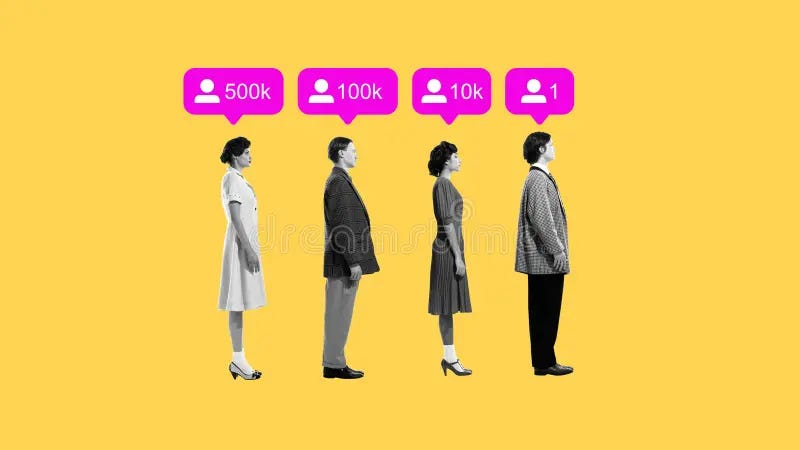
Are we confronting violence, or simply competing to narrate it?
I need not provide examples of our culture’s mixed responses to the brutal murder of Iryna Zarutska, or the wicked assassination of Charlie Kirk. Peruse through any social media platform you’re guaranteed a fit of rage, regardless of your political affiliation.
Thanks for reading honestly unorthodox.! Subscribe for free to receive new posts and support my work.
Every shred of me aches to remind others of how entirely deranged, pathetic, sickening, and appalling the left is as a political party--- a tendency which would make me guilty of exactly what I’ll proceed to explain. I’m human, and, despite my keen awareness of tactics for remaining objective, I still proceed to make judgment calls that are questionable and riddled with personal bias. In that respect, it’s important you, the reader, exercise your tolerance and humanity in reading the remainder of this piece.
I shared my visceral reaction. I am not making the argument that we must alter our visceral reaction, as doing so is impossible. What I do hope to get across is the importance of responding to these impulses. We cannot censor our thoughts, and our thoughts may come about for reasons entirely outside of our control. But our subsequent behavior is our responsibility, and that includes what actions we take in response to how we feel.
My instinctual, internal response to events such as those in the past week tends to demonize the entire left-leaning cohort as a pitiful, abhorrent monolith undeserving of the privileges they so desperately cry for. This is misguided, as I’ve spoken to countless people self-proclaimed as “lefties”, or who claim to be liberal, that I share very much common ground with. I frankly have little experience (at least in person) with a “left-leaning” person that has ended with even a trace of negativity. It’s unimportant for people to understand me as right-leaning; this is admittedly the first time I’ve ever shared so publicly, although my views have left many diagnosing me as a right-wing extremist or Jordan Peterson disciple. This doesn’t matter to me. It’s more important I behave in way that others see me as someone they can talk to regardless of their stance on any problem.
Avoiding conversations entirely with some, though, is a truth not lost on me. Sometimes it really is best to keep your mouth shut, move forward without the thirst for the last word, and go about your day-to-day.
The core of this piece is our nation’s gamification of grief. We consume the representation of grief, trauma, etc. through the lens of social media and our political party more so than the tragedy itself. We minimize the effect on the victim so we can offer up our “hot take” on the discourse. And personalizing such events into confirmations that we’re “on the right side of history,” or as emblematic of our noble character, is a problem which begets only further acts of narcissism-fueled madness. We avert our eyes from what people may be going through and shift our attention toward, “What does this tragedy mean for me?” Don’t get me wrong--- there are public events which can trigger changes in our behavior despite our being completely uninvolved in them. While widespread campaigns for behavior change almost never work (e.g., “Don’t Do Drugs!”, “Have Safe Sex!”, “Be Terrified of HIV!”), there are certainly people either vulnerable or gullible enough to attribute some broadcasted message to their own need for change. Importantly, though, these instances are few and far between, and long-term changes resulting from generalized “Just Say No” type campaigns tend to be trivial. To this point, I’d also be remiss if I didn’t bring to light the occasional-transformative-nature of empires like social media.
There are aspects of social media that are inarguably powerful. It’s a force which has resulted in societal change, some on meaningful levels (I attribute much of the banning of transgender “treatment”, aka puberty blockers and genital surgeries on minors, to social media influence, as well as the removal of biological males from female sports) and others less so (Kellogg’s and other public-facing corporations removing food dyes from cereal, or boycotting Bud Light because of Dylan Mulvaney’s face on a six-pack). On a psychological level, we’re undoubtedly affected by the algorithm itself, even if it’s void of graphic images or disturbing content. I’m looking forward to a book about the etymology of the English language, and how the algorithm has forever changed the literal words we speak (the book is called Algospeak and is not yet published.)
Social media in the past four days is rife with commentary comparing Kirk to Osama Bin Laden, with Stephen King and others claiming Kirk advocated for stoning gays to death, with conservative spearheads highlighting the absence of news coverage for Zarutska’s death, and with theoretical debates as to how this would have played out had Kirk’s murderer not been a White, Christian son of law enforcement. And, even for those statements made which expressed condolences for Erika Kirk and her two young children, or for Zarutska’s family in the wake of her brutal death… I just wonder what we hope to gain with such public pageants that are our beliefs. We’re self-serving humanoids who are motivated by social status; posting our condolences must come with wondering how if it would make us feel better about what occurred (because we’re definitely not trying to get in touch with Erika or Zarutska’s family).
I again refer back to the question we’re compelled to ask ourselves: “What does this mean for me?” Personally, I don’t know what any of this means for me. It’s a tad alarming that I could rewatch Charlie’s carotid spurting the last ounces of his life repeatedly without much other response than, “People are so fucking crazy.” I can’t imagine chronic access to this sort of content is beneficial to any adult or child, to any liberal or conservative.
My admittedly cynical assumption is that, within a week’s time, we’ll have fully re-integrated back into the mundane nature of our everyday lives, widely shielded from most forms of harm, inconvenience, and difficulty. Our pathetic little engagement statistics will quickly rise to first-place importance above the deaths of people we don’t know and have never met, much like our time lamenting the irritants of everyday life will deplete any energy we would’ve otherwise allocated toward national misfortune. Yes, those slain this year represent a vile turn America has taken; but did you hear the way my boss told me I couldn’t take an extra day of PTO?
It's sad. It’s sad that we’re all (yes, this includes me) so spellbound by our stories that true tragedy fades to that of commentary, even mockery. And to make sense of these spoofs of reality, we begin to believe our voice must be what’s missing from the public discussion. The Spotlight Effect forces us to imagine our “takes” as essential to what everyone is talking about, particularly if the conversation is contentious or political in nature. Of course we need to remind people not to follow us if they’re left-leaning or right-leaning or Trump Supporters or Trump Haters--- that clearly positions us as useful in the violence gossip. Of course it’s making some sort of meaningful difference in the lives of people who rely on us for support, guidance, or mentorship if we synchronize our battle cries for or against the left, the right. Of course, of course, of course.
Even if you condemn violence against a person for their beliefs (which, personal bias here again, I think we all should), turning your report into micromanaging who follows you and who doesn’t seems… well… exactly what many of us would agree as textbook narcissism. I’ve seen an expansive handful of comments exactly like this, all demanding others behave in a specific way based on their beliefs. It’s understandable in that it feels important. But it’s a fool’s errand nonetheless.
When confronted with tragedy, us humans tend to white-knuckle representations or symbols of it versus the actual event. George Floyd? Black square. Ukraine? Yellow and blue flag in bio. Autism awareness? Not even sure anymore, but it’s probably something blue.
It’s as if we’re more concerned with our public display and cultural reaction to something like a death (whether a tragic death or one more natural) than with the context behind the person leaving this world, leaving people that love them to hedge against their grief and their sorrow for a lifetime while the rest of us move on, move on to think almost exclusively about ourselves and what all of this havoc means for us and our “mental health”.Social media has dilated upon this compulsion to be “seen” as belonging to X group or Y group--- instead of upholding the virtues of X group or Y group. Being a person of virtue is very difficult. Pretending to be is not.
At Columbine High School in 1999, two students murdered 13 students and a teacher before shooting themselves. Until December 2012’s Sandy Hook Elementary School shooting, Columbine was considered the deadliest mass shooting in our country. With our nation’s collective soul tattered, the masses held vigils for the lost students, and teachers proceeded to rehaul their safety protocols. While news coverage was still perverse in its obsession with recounting every detail of those slain, it still remained largely focused on institutional responses (i.e., religious communities, educational policies and protocols, student safety) versus “takes” or political briefs. Outrage remained rightfully within communities most affected by the disaster versus divvied into 140-character write-ups accessible from Colorado to Cameroon. There was no such thing as a “like” or a “hashtag” for the swell of support for Columbine High.
The same can be said about 9/11. Prior to social media, raising American flags and celebrating the greatest country in the world was not labeled as “right wing”. We honored those who made the grave decision to either suffocate from smoke inhalation or plunge to their death from the World Trade Center without mention of them being liberal or conservative--- and definitely without talk of whether or not they deserved it. Because our collective mourning and rebuilding resulted assumedly from our country’s shared values, it was unheard of to label supporters as Nazis, as extremist bigots, as right-wing, or to assign the suicide bombers to categories like “marginalized folx” or “people of color”. Remember when right-wing used to just mean you were a normal person with common sense who respected the basic humanity in all of us? Ah, there goes my bias again.
Below is a short portrayal of how all political parties (Republican, Democrat, Independent), and their attitudes, have changed with the culture.
Columbine, 1999: “What does this mean for our schools and the safety of our students and teachers?”
9/11, 2001: “What does this mean for our country?”
Charlie Kirk, Iryna Zarutska, 2025: “What should I post about this?”
Narratives from all media sources, left and right, personalize hardship into a delicate story as to a person’s political affiliation, their mental diagnoses, their skin color, or any other characteristic which bears little meaning in the broader scheme of nationwide disaster. According to Social Comparison Theory, we’re consumed by others’ perceptions of our goodness versus actually being good. It perfectly explains our fetish for explaining away adversity as an opportunity for healing or teaching, or mental illness as a normal response to “the way the world is right now”, or how we cannot just allow people to be completely fucked up. Writer Freddie DeBoer, one of my absolute favorites, describes this as “a scam with a smiling face” in one of his most recent pieces, where he goes on to explain our blatant intolerance of true mental illness amidst the backdrop of slogans like “mental illness is just a different way of thinking,”, or “end the stigma of mental illness.” This snippet I’ve pulled from the piece, “Sick People Are Sick”, will hopefully function as a reality check:
“We talk about mental illness all the time, but the discourse is so abstract, so mediated by aesthetics and identity politics and social branding, that when it comes into our lives in its actual form we don’t know what to do. Hey! What are you doing, acting like a crazy person? Don’t you know schizophrenics are merely differently-abled? Don’t you know it’s stigmatizing for schizoaffectives to act the way that schizoaffectives have always acted?”- Freddie DeBoer
We’re committed not to aligning our values with our behavior but with others’ gullibility, and their assuredness that we are who we say we are. Why do good when others can just think that we do good? Why expose ourselves to hatred, searing criticism, or even physical harm with our socially unacceptable beliefs when we can piggyback onto those like Charlie Kirk, who did the grueling work for us?
There is nothing brave about posting to “your followers” statements like, “Don’t follow me if [insert conditional statement here that has absolutely nothing to do with death or tragedy or hardship but instead with how you hope to be seen by people].” Such is the culture of visibility; we’re apparently only in mourning if millions of others witness it.
All of this to say, your gut reactions are real and true to you just like mine are to me. It doesn’t make us arbiters of what is real to others or how we’re perceived by others. Our penchant for recognition is understandable, and I must tame the same habit.
I do ask you exercise your patience and your self-control in reading this, as I’ll do mine. I’m certain someone will deliberately misinterpret what I’ve written, as I’ve grown accustomed to with the fantasy world that is online banter. That’s the real hitch that is being a virtuous person of substance: it’s usually not fun, it’s usually not inspiring, and it almost exclusively occurs in private. But even still, your favorite social media outlets will generate some lovely hashtags to distill down all the horror that has struck the American populace in the past week. To again quote Freddie DeBoer… “What else are allies for?”
Thanks for reading honestly unorthodox.! Subscribe for free to receive new posts and support my work.