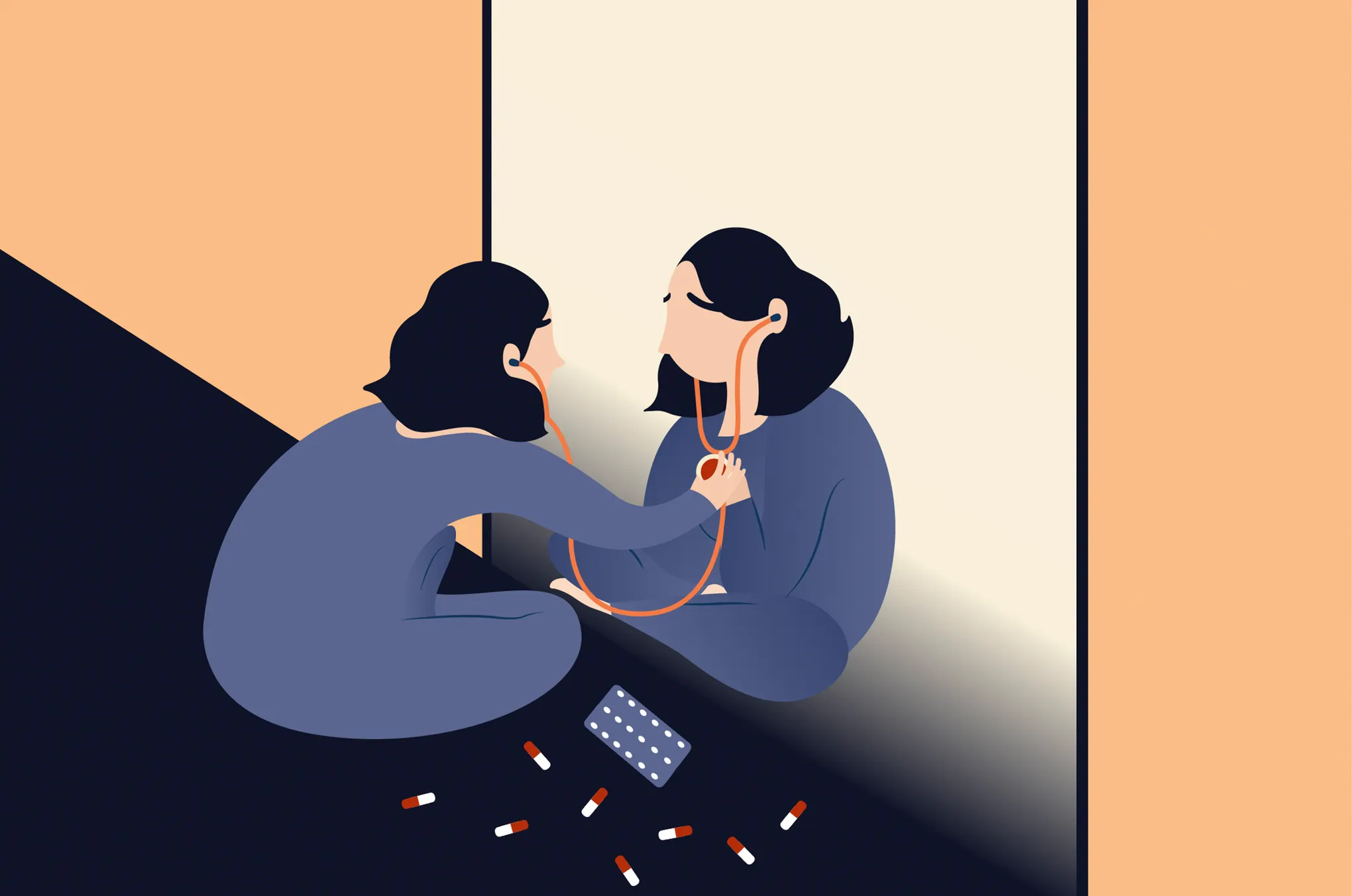
My profession makes oodles of money off of overreacting to problems. The behavior plans we’re compelled to write because of insurance companies? Largely useless and unworkable in real-life. If you’re not a clinician, allow me to give you a brief overview of what a behavior plan is.
A behavior plan attempts to find the “why” behind undesirable behavior. It then provides interventions based on this “why”. I would love to work on more “everyday” and even preventative sorts of concerns instead of only reacting to shit behavior, much of which could’ve been addressed by responsible parenting. But I digress. The reason why plans do not work for anyone over the age of 4 is because they rely too heavily on the world accommodating a client’s symptoms and responding in a very specific way.
Thanks for reading honestly unorthodox.! Subscribe for free to receive new posts and support my work.
As an example, let’s take a client who is triggered by people greeting him in a particular decibel. He has autism, so it’s a near-guarantee that most people in his life have placated his strange and irrational preferences. His behavior plan insists on this, as a matter of fact:
“Do not make eye contact with Mike, as it triggers him. Ask him kindly if he would like to follow the instruction and give him the option to say “no”. Honor his requests whenever possible.”
If you’re a sane person, you’d probably think this is unreasonable and perhaps neurotic. We can’t look at him? Because he gets mad? And we must honor his requests whenever possible? Why, because he has autism? Zero skills are taught here, other than appeasing Mike’s behavior and therefore rewarding neuroticism on the part of adults. Perhaps the more logical option would just be to keep Mike home, since nobody is obliged to avoid eye contact with him simply because professionals like me said so.
It’s in this God-complex-overreaction that people believe we’re experts on matters of childhood anxiety, oppositional behavior, or autism.
We are not. But you know who, or should I say, what, is an expert? Pain.
Don’t get me wrong. Relieving symptoms just enough to think more clearly and make sense of our options is life-changing in many cases. Drugs that work immediately, like benzodiazepines for panic attacks, can dampen the fear response (i.e., the panic) to a manageable level, which helps the individual actually develop skills to accept the discomfort of panic and move on without medication use. When I had shoulder surgery, I prayed that someone would accidentally punch me in the face with a chair. The enduring pain so close in proximity to my thinking mind made it feel all-encompassing and inescapable. My every conscious moment was at the whim of my symptoms.
I imagine this is what junkies experience when forced into detox, or what people with schizophrenia feel when their delusions of fire ants scuttling across their legs come to life. When we eliminate the urgency of the sensation, there’s space and “bandwidth” to tend to the discomfort in a more appropriate manner. In this respect, pills are awesome.
Psychiatrists are in the game of symptom-management, though, so will typically continue to prescribe without much energy given to root cause or intervention. The chemical compound is the intervention. Sure, we can eliminate the panic attack entirely with the gooey warmth of Xanax. But this same anxiety will persist and manifest in other ways if left to avoidance.
Perhaps this is evidence that we’re not in a crisis of mental health, but of modern psychiatry and psychotherapy. I often wonder what might happen if we moved away from symptom management entirely and instead only offered preventative services.
Our fear of fear, and our fear of stress, has led to widespread prescribing of drugs. It has also convinced non-medical practitioners that medication is the missing facet of treatment, and if only those corrupt psychiatrists would just give kids Ritalin, they wouldn’t be playing The Floor Is Lava with their classmates’ faces. Research efforts are aimed at treating “complex trauma” that doesn’t exist instead of searching for root causes for hellish disorders like Autism, Fragile X, and Prader-Willi Syndrome. It’s this very reason that I wonder what we believe our efforts to be doing, knowing we’ll never keep up with these soaring disability rates.
We can start by shifting away from symptom management and looking instead toward skill building. This may be beneficial for parents, too, who have been told by professionals like me that their kid’s emotional problems require an entourage of therapies and homeopaths and sensory tools and essential oils. They do not. They need a hobby and a parent who does not allow feelings to dictate the course of consequences.
“Independence Therapy” is a newer approach developed by Dr. Camilo Ortiz which nixes symptom management and instead focuses all of treatment on doing things we’re scared to do, every day. There is minimal talk of anxiety, and he has not once utilized the “gold standard” in treating it (i.e., exposure therapy). Ortiz makes a stunning point, one which even I hadn’t considered until attending one of his talks: children are incapable of forecasting how they’ll feel when something difficult is over. It’s primarily for this reason that kids cannot legitimately or even thoughtfully participate in something like exposure therapy. For those of us adults in therapy, we understand that the hard things our therapists suggest we do will help us long-term. Kids lack this cognitive sophistication. With this in mind, then, exposure therapy may not make sense; they’ll only see it as unwarranted punishment, which will be an emotional drain on parents who are already being told they need scripts and classes and drugs and sociologists.
Independence Therapy asks kids what they’ve always wanted to do but have been afraid of. Some kids are terrified of walking to school by themselves. Others are fearful of cooking because of the potential for burning or cutting themselves. The therapy encourages kids to try these “hard things”---- without parental supervision. While they’re committing to conquering the day, their parents are learning about the dangers of accommodating anxiety. They’re being taught that responding to urgency with urgency only reinforces a sense of threat.
Dr. Camilo Ortiz is putting his new “Independence Therapy” approach through current clinical trials and seeing fantastic results. Granted, this is a small sample size. But it does make for a compelling argument. What would happen if we referred families out and didn’t use them to line our wallets? What would happen if we understood that there’s beauty and confidence-building in mastery of a skill? What if anxiety and similar diseases of civilization were seen as lifestyle problems managed with very acute, common-sense “intervention”? And what if frying a goddamn egg lessened our anxiety just by virtue of proving to ourselves we could?
So here’s my proposal with step three. We move toward a preventative model which offers basic strategies and self-management techniques, and continued implementation of these strategies falls entirely on the individual to accomplish. One of the main barriers to improvement is God-complex-riddled therapists taking over the role of Mommy and Daddy and proceeding to treat them for years at a time. This robs the child of countless opportunities for competence, and steals from parents the opportunity to foster resilience in themselves when they’re compelled to “fix” their child’s pain or fear. No more! We remove ourselves from the equation from jump, reminding people they can do this without our help. They’ve come this far, after all.
Maybe instead of Xanax we teach kids to breathe to reset their fear response. We use scientific thinking (which I spoke about in parts one and two) instead of “stress management” in improving emotional wellbeing. We use debate and public speaking skills to crush social anxiety. We teach the power of self-composure by looking at athlete meltdowns and developing healthier alternatives during sports competition. We teach kids to pitch an idea to a venture capitalist instead of directing them to the Calm Down Corner. We help kids monitor their use of “um” and “like” and “uh” when speaking instead of forcing them into useless-but-billable “social skills groups”. Imagine the good that can come from simply withholding attention to grievances!
I’m willing to believe I’m not a slave to how I feel. Are you?
Thanks for reading honestly unorthodox.! Subscribe for free to receive new posts and support my work.