To avoid semantic arguments and/or confusion, any reference to optimist or pessimist throughout this piece will be based on the below definitions.
Optimist: a person who tends to be hopeful and confident about the future or the success of something.
Thanks for reading honestly unorthodox.! Subscribe for free to receive new posts and support my work.
Pessimist: a person who tends to see the worst aspect of things or believe that the worst will happen.
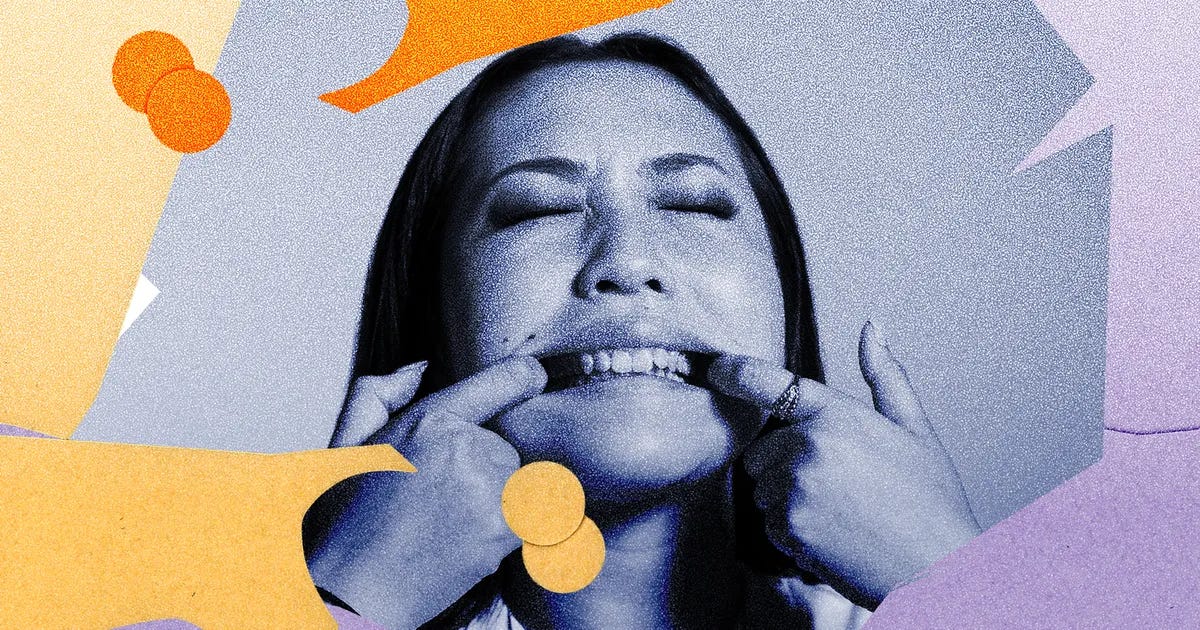
Perhaps the best place to begin is by examining the great bastardization of optimism, commonly dubbed “toxic positivity” or “fake happiness”.
Counterfeit optimists rely on platitudes and vapid language swaps to trudge through their day. They’re the ones chirping at you to “just be mindful” after your leg has been severed in a horrific lawn-mowing fiasco. They’re present to gently demand you “don’t say that!” when you reference anything brutally honest about your worst traits. And doggone it, counterfeit optimists will be damned if reality gets in the way of their overly-positive reframe on the world. Their pursuit of happiness becomes the very thing which makes happiness an impossibility. From a clinical standpoint, people who are depressed actually have a more accurate perspective on reality than non-depressed people.
With the advent of social media, we’ve tainted the concept of happiness, or even meaning, to that of entertainment. I’m no stranger to entertainment or to its benefits, as I see a general thirst for more joy in our lives, our lives which have become medicalized to the degree of data-tracking breaths, blood, steps, and heart beats via wearable devices and apps. There’s a fine line between self-awareness and self-obsession, I suppose.
George Orwell feared that our existence would be one of oppression; our every decision would be controlled by fear and pain. Aldous Huxley, conversely, argued that it would be our perverse obsession with triviality and distraction that would secure our decay. In looking to modern culture, I ruefully accept the latter as more accurate. To pull from behavioral science, our behavior is largely influenced by our environment. While I hate to rely on external circumstances as being so powerful in our decisions, they play a larger role than we believe in why we almost instinctually thumb toward Instagram or pound on the keyboard like an ape when our computer freezes.
The magical and often times invisible linchpin in our decisions comes down to one word: contingencies. If-then. This then that, or if that then not this. If I drive 58 miles per hour in a 35 past a cop lurking in a Baskin Robbins, then I will get pulled over. If I do not show up to work, then I will not get paid. These more mundane examples run amok in everyday life with little effort in looking. To speed things up, I’ll focus on social contingencies: how quickly we can modify our behavior based on social approval or rejection. Counterfeit optimists? Highly attuned to exactly what you think of them.
Outwardly, counterfeit optimists may appear well-adjusted. They make so many lists! They’re so organized and resourceful! They’re always jumping up and down and squealing in a high-pitched voice! They’re so bubbly and inspirational! With some clinical prowess, and a childhood lead by older parents with an allergy to merriment, allow me to assure you: while there is a rare portion of people who are genuinely excited to seize each day, many who rely on pop-psychology to appear happy are wildly insecure, terribly avoidant, and neurotic. Their fear of negativity, in both experiencing it and responding to it, is repeatedly rewarded through the escapism of inspirational quotes and mantras in times of distress. Who knew not feeling bad was as easy as telling myself that there is no “bad”? If this sounds familiar, rest assured: I’ve been this person countless times throughout my 33 years of being alive. I may have even been one this morning. What’s more important is how we respond to negativity when our behavior is taken as an average across time.
It's with my somber-yet-sarcastic outlook on reality that I’ve come to revel in what may be referred to as “cheerful pessimism”, or the Stoic realization that we should expect everything and be certain of nothing.
In some circles, to expect any event to go awry is textbook pessimism. I, in many ways, disagree. There is something to be said about the negativity bias, which spotlights only those negative events and assigns greater weight and prominence to unpleasant thoughts and feelings. You've experienced this before if 1) you're a human being and/or 2) you've received an overwhelming amount of positive feedback and one negative comment, and you proceed to stew in the pungent marinade of criticism for days following the blow, entirely dismissing all of the good. Negativity is a hell of a drug.
I still contest, though, that to be realistically negative bears greater resilience than the air-headed optimism we come across so frequently in younger populations. The determining factor in psychological wellbeing is our response to negativity and positivity, rather than the ratio of total positive-to-negative events. It’s this very reason some experience tragedy but do not go on to develop Post-Traumatic Stress Disorder (PTSD) while others claim their roommate being mad at them is “little t” trauma and cause for calling the campus counseling hotline. It’s a matter of acceptance and action.
Failure to accept what reality is is the carrot frantically guiding so many delusional bunnies toward hopeful happiness. Fixating on a sensation (i.e., happiness), which we’ve long since known is fleeting, should unsurprisingly result in a person always fiending for a high that never quite “hits right” like the first time. This incessant loop of chase-almost-there-why-don’t-I-feel-better is what causes persistent frustration and despair. Existential depression, a low mood characterized by traditional depressive symptoms, arises from a sense meaninglessness and feeling that life lacks purpose. This is a bit of a double-edged sword. Those with depressive symptoms are more realistic judges of reality compared to their bubbly counterparts, as mentioned earlier. They’re philosophical thinkers, hence their somber belief in their existence and what “this” all means. Society has come to value thoughts of philosophers like Socrates or Aristotle, which leaves us in a bit of a pickle: thinking can be good, aside from the times that it’s bad.
Viktor Frankl, well-known author of Man’s Search for Meaning, pulls from his theory that is logotherapy to help us “dereflect”: turn attention away from our problems and toward something of larger importance or meaning. To hyperfocus on a problem and its negative implications is to actively avoid the action necessary to resolve that problem, a cluster of events that often happens subconsciously. One of the best ways to do so, especially for the person who feels that life lacks substance? Shift toward an act that will benefit another person, and expect nothing in return (there it is again--- expect nothing!). Create a hierarchy of events that typically lead to excessive introspection, and commit to calling someone on the phone and only ask about how they’re doing. Make a note of what it felt like to sustain attention toward something/someone outside of yourself.
The more we age and cognitively mature, the greater likelihood our demands for joy increase. Watch a preschool classroom for even 15 minutes and you’re sure to find yourself nostalgic in observing the unfettered glee over things we’ve deemed trivial: an extra-big balloon, someone making a silly face, a new Hot Wheels track. In watching what makes a marionette of their wee, playful hearts, I find myself muttering, “I wish I got that excited about anything anymore.” Pessimist!
Or am I? Because being an adult means much of your everyday life will be rife with pain, frustration, irritability, or downright cynicism. Perhaps disorders or even mild impairment from these depressive symptoms aren’t the problems, but are manifestations of what we’re truly struggling with: accepting the gradient of human experience. The quote I’ve included as the subheading for today’s piece encapsulates this idea. It’s entirely possible to acknowledge the positivity of a situation while closely monitoring and preparing for the negative. And willful ignorance of that which is icky? I’d argue this is a greater demonstration of “believing that bad things will happen” than simply accepting bad news is always a possibility.
I heard a statistic recently which cited a need for 3% of the American populace to have to be licensed therapists to supply the demand for mental health disorders. The estimated population of the United States is currently 335 million people, which implies 10 million needing to become licensed clinicians to supposedly make a dent in our One Nation, Under Therapy. To illustrate the impossibility of this: between mental health counselors, marriage and family therapists, psychologists, social workers, and substance-and-drug-rehab counselors, we have about 811,000 licensed professionals. Now what?
Instead of demanding we license more professionals to meet an ever-increasing need, I propose a radical shift in understanding mental distress. The rise in mental illness, with depression and anxiety reigning supreme across all age brackets, genders, and even socioeconomic status, is born of our intolerance for reality. We recognize that a fetish for optimism is about as equally damaging as simply being a sad sack, but we’re still unsure how to strike a thoughtful balance between accepting the difficulties of life while preserving hope for a better future. My one suggestion is to learn to become “happy” with being unhappy. And It doesn’t even require a professional!
1. Pause more often. To become accepting means we must first become aware, and to become aware, we need to slow the hell down and get in tune with our everyday behavior. This is an argument for some form of continued practice in mindfulness/meditation.
2. Choose a behavior you regularly engage in that you’d like to change. Your task is to first become aware of whenever you’re about to engage in the behavior, and proceed to complete 60 seconds of box breathing every single time you catch yourself. Getting annoying? Good! That’s the point. Change does not feel good. It will never feel good.
3. Expect negativity, discomfort, and distress in your day-to-day life. Instead of desperate attempts to reframe them as “learning opportunities” or “teachable moments” or some brand of grit fetish, just sit still with the gunk. Don’t try to fix it, argue it, ruminate or rehash. Sit there. I find it helpful to say, out loud, “Huh!” when I’m tempted to overreact to something (like this morning when my sourdough bread didn’t rise in the oven.)
4. Understand that feeling “better” does not mean you’re improving--- or that feeling “bad” does not imply you’re doing something wrong. This is why myself and so many others have dropped out of mindfulness practices: it doesn’t “feel right”, we don’t “feel centered”, our “thoughts go all over”, we “can’t relax or find peace.” These are commercial, brilliantly-marketed-but-inaccurate concepts of mindfulness. It does not feel cathartic or calming in the moment, and it is not supposed to. Expect that it will feel wildly uncomfortable (see #3), commit to practicing regardless, and reap the benefits only after consistent practice despite the feelings.
5. If you’re someone who does not know how to respond to someone else’s negative remarks, so usually reverts to saying something like “Don’t say that!” or “Stop it!”… YOU stop it. Maybe you simply respond with “huh!” when someone says something to you. How does that feel?
I’d love to hear your experiences with these experiments, as usual, and please feel free to use some of the free resources I’ve put on the website!
Thanks for reading honestly unorthodox.! Subscribe for free to receive new posts and support my work.