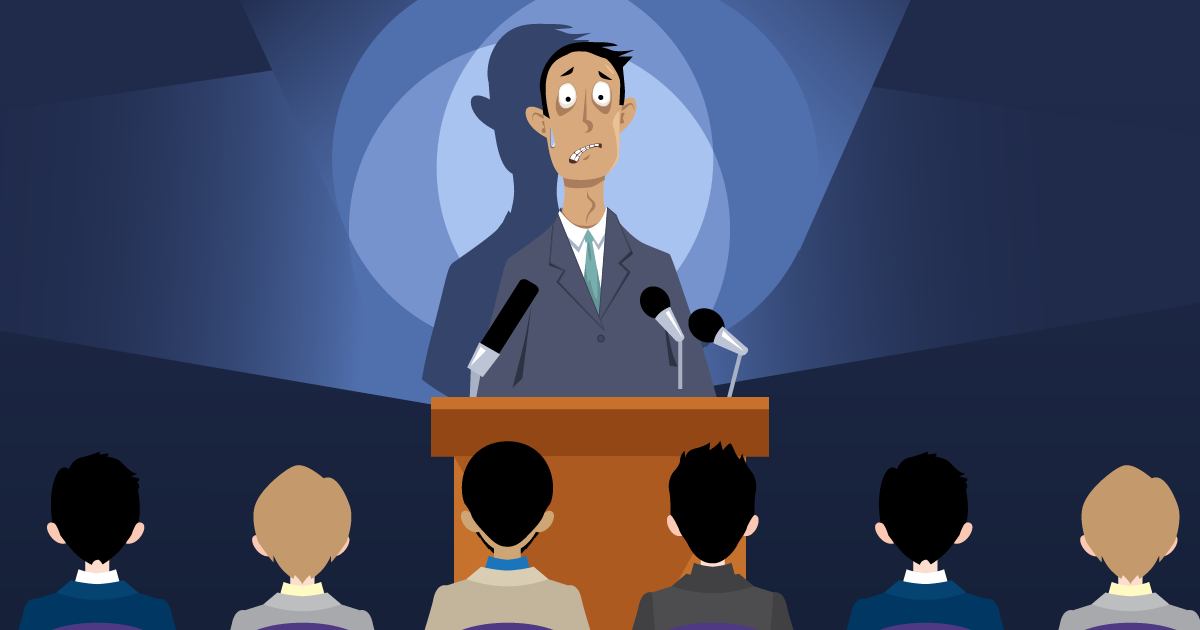
I take an unconventional approach to treatment. And by “unconventional”, I mean common sense, common sense which is largely condemned in mental health and behavioral health fields. When I first suggested a student with social anxiety be required to take public speaking, her treatment team responded, “Won’t that just make her anxiety like, so much worse?” This was nearly 5 years ago, right as the tide turned toward likening mental illness to Pokémon cards. Our delusion has grown worse since then.
Thanks for reading honestly unorthodox.! Subscribe for free to receive new posts and support my work.
One feature of academic dialogue is the advent of AI, the general decay of universities, and how technology is destroying young peoples’ personalities and learning. I’m unsure these conversations are constructive in that a profound focus on fear rarely tends to end in solutions. Continuing to talk about how med students are getting through med school via ChatGPT, for example, is a futile endeavor. Is it imperative we understand any problem thoroughly should we hope to develop a solution? Of course. But we must not mistake complaining about a problem for solution-focused action toward resolving the problem. Bitching is the ultimate social enchanter, casting a spell of productivity or catharsis without any proof of outcome that the spell is working its magic.
ChatGPT isn’t being used as a tool to enhance thinking, but to replace it. For those with sense, this is a dilemma which has culminated year after year with each technological advancement. In our understanding of how swiftly technology advances, though, is it realistic to assume that fear-stricken discussions of AI’s command are beneficial? Will they move us closer to healthier alternatives? Have we seen positive changes in literacy skills or academic skill acquisition through slowly-increasing removal of “EdTech”? Can young people make eye contact with another professional and speak clearly and respectfully? While school primarily serves the supposed purpose of acquiring foundational numeracy, literacy, and thinking skills, it also provides valuable social lessons. These fringe benefits, like critical thinking, conflict resolution, and perspective-taking, cannot occur if social exchanges are replaced with screens--- of if their teachers aren’t modeling the skills.
Jonathan Haidt, much of whose work I deeply respect, has gained traction with his plan to ‘Free the Anxious Generation’--- by getting phones out of schools. This is, according to his book and theory, the linchpin in turning around our nation’s “mental health crisis.” While I agree that smart phones have removed countless opportunities for social and intellectual growth, as mentioned earlier, I’m not entirely sold on the notion that their removal will guarantee improved well-being. This lends a hand to a deeper portion of the matter: that people do not seem to know how to teach critical thinking, perspective taking, or conflict resolution, as they’ve opted out of these opportunities in their own lives. Even in the absence of all technological devices, we’re not born with the ability to think clearly, let alone teach this art to a group of wide-eyed whipper snappers with attitude problems and Asperger’s-like social skills.
With this in mind, I propose a stupidly-simple avenue toward combatting the cheaters and the socially inept: require only in-class, written essays and oratory exams. It will certainly take more time on the part of the student and the educator. It may also aggravate or “trigger” the students who have grown accustomed to deciding for themselves what brand of “hard thing” they’re willing to tolerate in their personal, professional, and academic lives. This is expected and certainly not a cue to stop your efforts. No form of mastery arrives devoid of difficulty, and that which does is not mastery, but entertainment.
I’ve taught hundreds of undergraduates using this method and have had only one student across the years drop my class--- and this was before I’d even written this requirement into my syllabus. Must have been a personality mismatch. While some griped about my teaching methods (i.e., I do not follow textbooks, rote schedules for learning, and I do not post predictable notes so the kids can passively ‘learn’), I’ve had overwhelmingly positive feedback about my “style”. As educators or people responsible for instilling virtuous behavior in the next generation, it’s imperative we first understand how the human mind works, and how our behavior is largely shaped by arbitrary cultural expectations, norms, and shifts.
First of all, modern culture has taught us that any slight hint of the word “no” is to be immediately honored without question, sans a trace of skepticism. This bold verbal stand is the person’s “choice”. But what if we didn’t take “no” as a sacred permission slip to avoid all that we dislike? And since when did people paying to be educated or mentored or coached become the arbiters of rulings regarding discomfort? If it were the case that young people were competent to make choices for their own self-betterment, we would not need schools, coaches, parents, pediatricians, or child psychologists. People paying to be educated (let’s specifically focus on K-12 students), whether financially or simply through their attendance, should expect that their educator is not at the whim of their insecurities. This entitlement, although sadly normalized, is not lost on me. But do not think for a moment it’s something we, the adults, must submit to.
What if we tell our students, respectfully, “Thanks for sharing, but I wasn’t asking”? There are such things as expected behaviors and standards, and hurt feelings are poor metrics to use in deciding what those standards should be. To behave virtuously is to do so when we least want to and when we feel least prepared to do so; that is what makes it virtuous. We’ve fallen into an emotional trap of asking permission to be authoritative, as if the people relying on us to guide them are equal to us in their pursuit of growth. This is not true and never has been true. I realize it’s a noble idea, that children are “allies” or “partners” or even “friends”. They are not, and you will not help them with this idea in mind. Ever. Their hatred of public speaking, or even your own, is irrelevant. To be an adult of substance is to be an adult that gets over themselves.
I have friends at more progressive universities who are told they must accommodate all of their students’ discomforts and unreasonable requests, including “don’t call on me in class because I get anxious,” or “I get triple the test taking time because I have anxiety” or even “I have a full-time job so I want an extension on my paper.” These students do not need an accommodation--- they need a public speaking requirement and a cognitive kick in the pants. The same goes for most forms of the modern “accommodate and sedate” paradigm: we amplify how good an initiative feels versus understanding how it relates to our goals. Our goals as educators, therapists, coaches, or even parents is not to help the next generation feel good, especially if doing so comes at the expense of any form of personal growth. Our overarching value is, I hope, that of instilling cardinal virtues in the next generation so they behave as aligned, self-composed, self-aware individuals who do not feel entitled to request the world tailor its day-to-day to their irrational fears.
Oratory exams are a wonderful start, specifically for those educators who have reached out to me asking for advice on how to stop their students from using ChatGPT for all of their assignments. I frequently implement Peter Boghossian’s Street Epistemology (SE) to foster back-and-forth conversations about any topic of mine or the students’ choosing. SE is simple: a claim statement is made, such as, “Fast food should come with warning labels”, and participants are required to rate their beliefs on a scale from “strongly disagree” to “strongly agree”. In the natural divergence of opinions, educators model how to employ Socratic-based, open-ended questions to gain a better understanding of why someone may agree or disagree with the claim statement. In regards to education and learning itself, here is an oral prompt that you can provide to your students or staff:
“Is it more important to teach you all (students) what to think, or how to think?”
Socratic Probes:
· Is it possible to teach information without shaping someone’s beliefs?
· Are facts neutral, in and of themselves?
· How does the current education system reflect your view?
Students are expected to prepare a 3-5 minute opening argument in response to the prompt, a prompt they are not given ahead of time. They are permitted to prepare their argument for 10-15 minutes as soon as it’s delivered at the beginning of class; this is the only instance in which use of technology is permitted. When it’s “go-time”, though… no PowerPoints. No bullet points given to the students listening. Paper to pencil, pencil to speech.
Public speaking and oratory exams are not only beneficial in that they teach us to speak more persuasively, but it builds a person’s belief in their ability to engage people and lead them toward alternative thinking. The more we age, the more difficult it is to sway our beliefs. To motivate divergent thinking, then, is crucial should we hope to reform or revolutionize any institution, theory, or practice. In expected succession comes critical feedback or even hostile skepticism, all to be expected when we present ideas that diverge from the social norm. In repeated practice under these in-situ, potentially high-stress, high-pressure, on-the-spot conflicts, students better learn to manage symptoms of adrenaline or anxiety--- and overcome them with an audience. Want to build confidence in your kid? Make them talk in front of people. Ditch the therapist.
In the same vein as psychological adaptation, oratory exams ultimately desensitize students to rejection and failure, two aspects of being social creatures that forge avoidance far into adulthood, for some. I still receive emails, texts, and calls from professionals who ask for advice as to how best to manage negative reactions or “hate”. It’s become abundantly clear to me throughout the years as a clinician who is out of practice in their oratory and emotional regulation skills. Employers clearly don’t see these as virtues.
To further enhance the benefits of public speaking, I propose a mass revival of the written essay. On a surface, executive functioning level, the slower speed of handwriting versus typing forces us to better organize our thoughts. This dually functions as a buffer against plagiarizing and idea-shopping on the Internet. Further, without apps and computer functions like Grammarly, spell-check, or predictive text, the student is forced to refine these skills as they go along. Repetition rewires the brain, and such repetition builds stronger neural pathways--- for better or for worse. Choose your repetition wisely!
Handwriting, in my clinical opinion, is a complete non-negotiable. It’s both fascinating and baffling that schools still feel compelled to provide Chromebook-and-Wi-Fi-access-only assignments and proceed to complain that their students are passive, fragile, and seemingly unfit to think independently. I’m not a teacher, so perhaps I’m speaking out of turn on this matter. But I am a former college instructor, and my students hand-wrote nearly every single assignment given--- in tandem with debate practice, frequent technology-free class discussions, and final projects which require speaking in front of their peers. Our adult minds must shake off the rust of avoiding opportunities to think clearly. It is our moral obligation to help students understand the urgency in communicating ideas without using their feelings as yardsticks.
We write to taste life twice, in the moment and in retrospect. It’s best, then, to go do things worth writing about.
Thanks for reading honestly unorthodox.! Subscribe for free to receive new posts and support my work.