🔔 L.A. Alliance for Human Rights v City of Los Angeles had a compliance hearing with Judge Carter at Courtroom 1 in the First Street Federal Court House at 9am Thursday, March 7th, 2024.
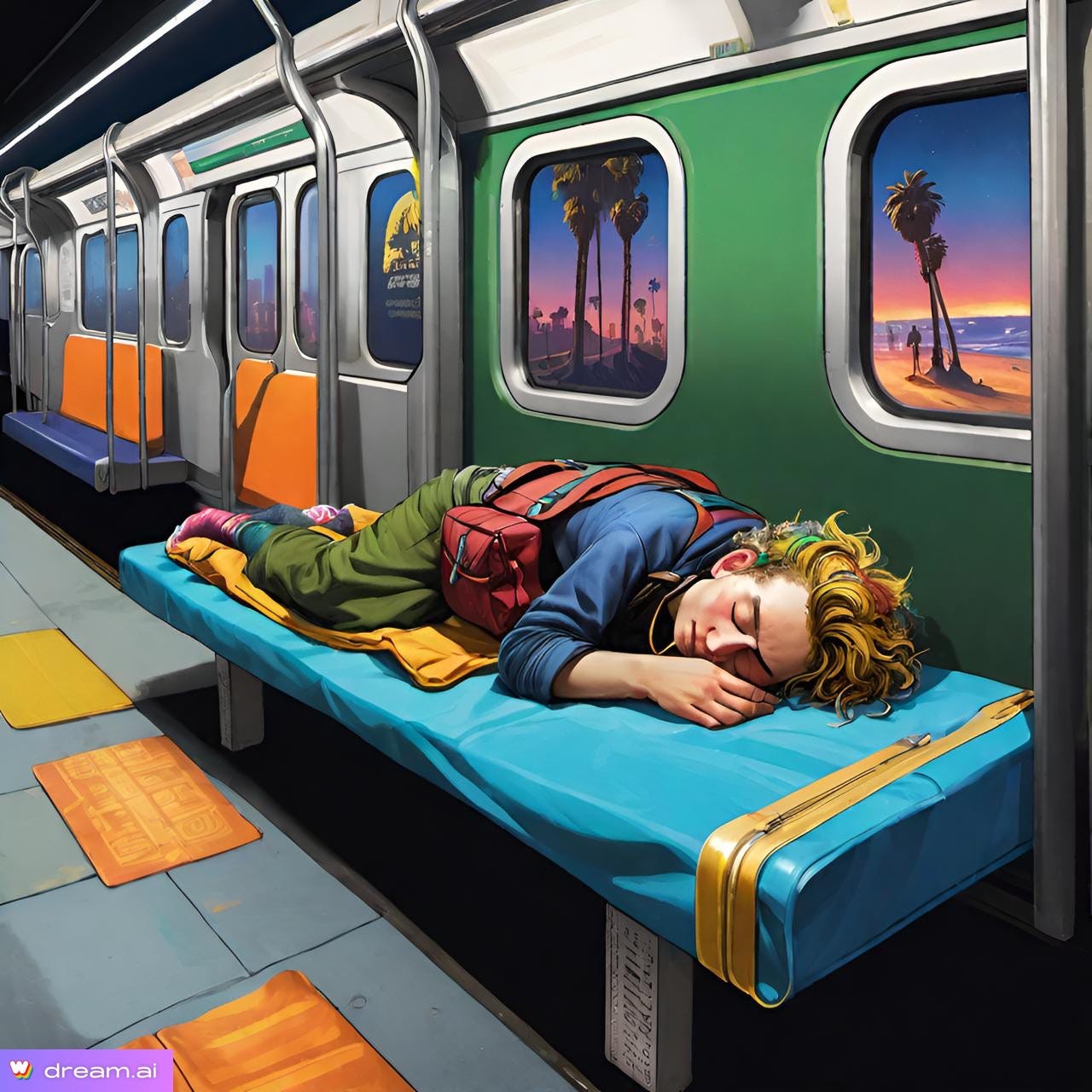
This is a map of the public places where you aren’t allowed to sit, sleep, lie, or have possessions in L.A. 👇
LAMC § 41.18 is the municipal ordinance that makes it illegal to sit, sleep, lie, keep, maintain, place or possess personal property in THOUSANDS of public “Zones” in the City of Los Angeles.
Click for interactive 41.18 ArcGIS Map from LADCP (Dept. of City Planning)
Created and enforced by LAPD,LAMC § 41.18 makes sitting, sleeping, lying, keeping, storing, placing or maintaining personal property in the public “right-of-way” punishable by fine (up to $2,500, starting at $237) and/or jail (up to 6 months).
Thanks for reading roofless! Subscribe for free to receive new posts and support my work.
LAMC § 41.18 has evolved at least three separate times after being rendered unenforceable by SCOTUS decisions.
The main targets of LAPD’s 41.18 enforcements have been:
* Vagrants/poor migrants from other states during the 1930s
* “Hippies”/Black civil rights activists in the 1960s
* Homeless peoples’ “camps” and tents, RVs/“campers” in the 2000s
* Unhoused people perceived to have mental illness and/or substance use disorder in the 2020s
Higher courts have invalidated each 4118 incarnation for being unconstitutional. Still, LAPD continues to tweak its favorite “rousting” law with help from their advocates in City Hall and the support of businesses.
Anti-“Okie”/“Arkie”
There are earlier records of LAPD criminalizing “vagrancy” and “resorting”, including reformer CD13 Councilman Carl “Jake” Jacobson being charged (in a scandalous LAPD set-up), but the oldest official version I have found of “4118/41.18” is in City council’s archived files from 1935.
The 1930s version of 4118 was called the “Bum Blockade”, and it was used to deny poor dust bowl migrants the right to travel into L.A. during the Great Depression, when 136 LAPD “Border Patrol” officers would station themselves by railroads at State borders to try to convince poor people to turn around instead. On 3/15/1936, L.A. Times reported that LAPD Border Patrol offered migrants a free sandwich for traveling back east. An additional 75 LAPD officers in the City formed the “vag(rant) detail”.
One main purpose of these LAPD assignments was surveillance, as “vagrants” were fingerprinted and recorded. Then their records could be used to label them habitual criminals next time they encountered LAPD. Another function “vag”/transient patrols served was the extraction of essentially unlimited free labor, which was typically done at a rock quarry.
The Bum Blockade didn’t last very long. The City’s main objection was not wanting to pay for “work” done outside L.A. City limits. Also, there’s no state law prohibiting migration, and if there were, it would be unconstitutional.
Although it was made to be used against poor migrants, young American-born citizens with legal Mexican immigrant parents were being “deported” or “repatriated” (those words aren’t really accurate because these Mexican-American families were legal American citizens who were being forcibly transported to Mexico by train) by the thousands between 1929 and 1939, so 4118’s tactics were utilized for racial terror back then as they still are today.
SCOTUS deemed it legal for paupers to migrate to California from other states in 1941:
Whatever may have been the notion then prevailing, we do not think that it will now be seriously contended that, because a person is without any employment and without funds, he constitutes a “moral pestilence.”
Poverty and immorality are not synonymous.
— Edwards v CA 314 US 160 (1941)
Anti-“Hippie”
LAMC § 41.18 wasn’t codified as an ordinance until the 1960s, when it was used against “hippies”, “loiterers” and civil rights protesters. Basically, 41.18 was LAPD’s multipurpose tool, used in this context specifically to segregate public spaces and suppress the advancement of civil rights.
Since its codification, 41.18 has been an instrument for anti-Black racism.
41.18 has been re-worked and re-worded several times over the past century, failing Constitutional challenges with each edition. Kind of like what eventually happened with the Bum Blockade, SCOTUS struck loitering ordinances as “unconstitutionally vague” in the 1972 case Papachristou v Jacksonville.
Jacksonville, Florida’s municipal vagrancy ordinance criminalized dozens of types of vagrants, including:
* rogues and vagabonds, or dissolute persons who go about begging
* common gamblers
* persons who use juggling or unlawful games or plays 🤹
* common drunkards
* common night walkers
* thieves, pilferers or pickpockets
* traders in stolen property
* lewd, wanton and lascivious persons 👯
* keepers of gambling places
* common railers and brawlers
* persons wandering or strolling around from place to place without any lawful purpose or object 🚶♀️
* habitual loafers
* disorderly persons
* persons neglecting all lawful business and habitually spending their time by frequenting houses of ill fame, gaming houses, or places where alcoholic beverages are sold or served
* persons able to work but habitually living upon the earnings of their wives or minor children
It was used to arrest two white women and two Black men who were all riding together in the same car under the premise that they were vagrants who were “prowling by auto”. They had drove near a used car lot which had been the subject of burglary.
Margaret “Lorainne” Papachristou, one of the white women, had one municipal violation on her record. The other three suspects’ records were clean. They were each facing 10 days in jail.
SCOTUS’ 7–0 opinion of the unconstitutional vagrancy ordinance said:
* it ‘fails to give a person of ordinary intelligence fair notice that his contemplated conduct is forbidden by the statute,’
* it encourages arbitrary and erratic arrests and convictions,
* it makes criminal activities that, by modern standards, are normally innocent, and
* it places almost unfettered discretion in the hands of the police.
— Papachristou v City of Jacksonville, 405 U.S. 156 (1972)
41.18 continues to transform in response to SCOTUS opinion in the new millennium. The modern 41.18(d) banned “camping” and the newer “Sit/Lie” 41.18 still disproportionately oppress Black people in public at the whims of LAPD and business owners.
Anti-“camping”
LAPD still can and will hassle you for sitting literally anywhere, place you under arrest, or on a W & I § 5150 hold, and fine you up to $2,500, which will be sent to collections if you can’t pay. If you’re lucky, you might only get a warning, as long as you “move along” and aren’t caught again. If you won’t take a plea, you could sit in jail for weeks or even months until you can get a jury trial. At that point, twelve members of the public will likely be too annoyed their lives were interrupted to charge you with such a petty “crime”.
The odds of a 41.18 case getting dropped, vacated or being found “not guilty” are around 90% if taken to trial.
Great Read: On L.A.'s skid row, homeless woman stands her ground to stay putAnnie Moody has been arrested 59 times in six years, as L.A. officers try to get her off the streets of skid row. But to…www.latimes.com
You can ask Annie Moody, LAPD’s #1 most arrested person, about 41.18(d). She accumulated around 100 violations of LAMC § 41.18(d), the “anti-camping” edition that became before the current “sit/lie” version.
We’re human beings…
We have a right to be stationary.
— Annie Moody
But Ms. Moody wasn’t “camping”. She lives on a sidewalk on Skid Row in a tent. If she were camping, she’d have a home to return to, once her vacation was over, according to the Oxford dictionary definition:
camp·ing
noun
the activity of spending a vacation living in a camp, tent, or camper.
“camping attracts people of all ages”
— Oxford Languages
This prior version, LAMC § 41.18(d), L.A.’s “anti-camping ordinance” was made unenforceable by a settlement in the lawsuit Jones v City of Los Angeles.
Jones argues that LAMC § 41.18(d) makes criminal what biology and circumstance make necessary, that is, sitting, lying, and sleeping on the streets…
By enforcing the ordinance, Jones contends, the City subjects homeless persons to a cycle of citation, arrest, and punishment for the involuntary and harmless conduct of sitting or lying in the street.
— Jones v City of Los Angeles, 444 F.3d 1118 (9th Cir. 2006)
The Jones settlement required the creation of 1,250 new permanent supportive housing units with half located in Skid Row before the ordinance could be reworked, but then Martin v Boise was decided and held by SCOTUS.
…does the Cruel and Unusual Punishments Clause of the Eighth Amendment preclude the enforcement of a statute prohibiting sleeping outside against homeless individuals with no access to alternative shelter?
We hold that it does, for essentially the same reasons articulated in the now-vacated Jones opinion…
— Martin v City of Boise, No. 15-35845 (9th Cir. 2018)
Sit/Lie
Most recently, L.A. City Council resurrected 41.18 as a “sit/lie” law in hundreds of Sensitive Zones in 2021 and expanded it to thousands of additional Enforcement Zones in 2022 with lots of local support and plenty of disappointing silence from designated “homeless advocates”.
Following in the footsteps of San Francisco’s Mayor Gavin Newsom (now Governor) and SFPD Chief George Gascón, (now Los Angeles County District Attorney) the City of L.A. implemented a law against sitting on a sidewalk. The argument in SF for why a sit/lie law was “necessary” was because the other laws against blocking sidewalks and disorderly typically required a complaint to be made before enforcement could occur.
Support
LAUSD & City Hall
The updated 41.18 was championed by LAUSD’s legislative affairs department and Superintendent Alberto M. Carvallo of Miami-Dade County, as well as Mayor Eric Garcetti, City Attorney Mike Feuer, LAPD, and most of L.A. City Council. There was also a lawsuit filed by DTLA developers under the name “L.A. Alliance for Human Rights” overseen by federal judge David O. Carter. Judge Carter implemented anti-camping ordinances in an OC lawsuit, Orange County Catholic Worker “OCCW” v Orange County.
Most of 41.18’s advocates in City Hall are already gone, but Enforcement Zones remain.
* Spineless ex-Mayor Eric Garcetti termed out and absconded to India.
* Mustached ex-City Attorney Mike Feuer’s mayoral campaign failed, and he just came in 4th in the primary for CA-30.
* CD1's disgraced Gil Cedillo termed out.
* CD5's potato Paul Koretz termedoutand lost a campaignfor City Controller.
* CD6/disgraced City Council President Nury Martinez resigned under Presidential direction after the Fed Tape leaks exposed her racism.
* CD10's 41.18 apologist Mark Ridley-Thomas (author of the 41.18 SOP “Street Engagement Strategy”) lost his seat after being found guilty of a nepotistic bribe with USC.
* CD13 Echo Park Lake villain Mitch O’Farrell thought he had another term left, but voters were done with him.
* CD15 ex-LAPD Joe “Buckets” Busciano, ran a miserable mayoral campaign, and didn’t even get endorsed by LAPD.
* Even LAPD Chief Michel Moore was forced into retirement last week, allegedly for investigating Mayor Karen Bass.
Their replacements oppose 41.18.
* Eunisses Hernandez, who has voted against the creation of new 41.18 Zones, impressively won in the primary for CD1.
* CD5's Katy Young-Yarlslovsky has voted against the creation of new 41.18 Zones and ordered a report about 41.18's effectiveness.
* Paul Koretz lost the Controller race to Kenneth Mejia, whocampaigned on opposing 41.18 and challenging LAPD’s budget.
* Hugo Soto-Martinez (opposes 41.18) cut Mitch O’Farrell’s term short in CD13.
Other supporters losing to candidates who oppose 41.18:
* Jillian Burgos (opposes 41.18) is running for CD2. CD2 Paul Krekorianascended to the Council’s Presidential throne after Nury Martinez resigned, but he’s termed out.
* CD10 Candidate Aura Vasquez calls 41.18 “a failed policy”. CD10’s appointee Heather Hutt is facing Vasquez and other promising challengers in the primary.
* Ysabel Jurado (opposes 41.18) is running in CD14 against embattled incumbent KDL. Kevin De León designated 41.18 Enforcement Zones at City Hall and around DTLA. He did not resign after he was exposed making racist and homophobic statements in the Fed Tapes, even when POTUS instructed him to do so. A recall attempt against him was unsuccessful, just like his Mayoral campaign (in which he tied with abolitionist Gina Viola for 3rd and 4th place after Rick Caruso and Karen Bass. Joe Busciano and Mike Feuer came in 5th and 6th).
Opposition
CD11's Mike Bonin (didn’t run for re-election in 2022) and CD4’s Nithya Ramanwere 41.18's dissenters, with CD8’s Marqueece Harris-Dawson occasionally joining. CD1's Eunisses Hernandez andCD13 Hugo Soto-Martinez and sometimes CD5 Katy Yarlslovsky also vote against the creation of new 41.18 Zones. Yarlslovsky also ordered a report about 41.18’s effectiveness that was apparently suppressed.
City Controller Kenneth Mejia, whoboldlyopposed 41.18 in his campaign and still won more votes than Mayor Karen Bass, released data on 41.18 arrests last October, revealing that the most enforcements occur in John Lee’s CD12 (Chatsworth).
41.18 Arrests by TypeThis map and analysis show details of arrests under LA Municipal Code 41.18, which criminalizes sitting, lying, and…controller.lacity.gov
Nonprofits
PATH (“People Assisting The Homeless”) and United Way of Greater Los Angeles “UWGLA” actuallyregistered as lobbyists to speak against LAMC § 41.18 during public comment at City Council’s Homelessness and Poverty Committee. Confusingly, their lobbyist registrations only say “41.18”, without clarifying that they were part of the opposition.
LAHSA silence
Not to give too much credit to these giant 501(c)s, which often act in ways that are harmful to unsheltered and unhoused people, but it was pretty impressive that they took their issue with the policy into the public forum.
It was also revealing that even the United Way, a philanthropic fundraiser, felt like public comment was their best chance at being heard. UWGLA must have contacts in City government and influence considering the huge contracts they hold, but they were limited to speaking for 1–2 minutes, just like the rest of the general public.
Los Angeles Homeless Services Authority (LAHSA), the joint-powers authority between L.A. City and County was disappointingly silent on the issue, despite having a power legislative affairs department of their own that could have challenged LAUSD and the City. LAHSA have said that “sweeps” and criminalization make it difficult form them to do their jobs because they create distrust, destroy survival supplies and documents and break connections between clients and caseworkers.
LAHSA are supposed to be “homeless advocates”, but if they were, they would have objected to 41.18’s passage and expansion at City Hall.
Luckily, real activists and advocates for the unhoused put up a fight in the council chambers, showing up in hundreds, challenging City Council’s CF20-1376 motions, which would end up becoming CF21-4118, and sometimes getting arrested by LAPD for it.
LAPD Metro & DTLA BIDs
If it seems like no one really likes LAMC § 41.18 except LAPD, who created it nearly 100 years ago and maybe some of their friends, like downtown business interests, because most civilians don’t actually support it. The lawyers enlisted by DTLA developer Izek Shomof and maverick federal Judge Carter presiding over their lawsuit are probably 41.18’s biggest fans outside LAPD.
Shomof and Carter feel comfortable embracing the designation “homeless advocate” while actively oppressing homeless people by re-implementing 41.18.
They are LAPD advocates, not homeless advocates.
Thenew 41.18 is designed to be so convoluted that the entire City of Los Angeles is turned into a giant “NO PARKING ZONE”.
Listen to “Judge Carter” pitch this idea to LAPD and the court in transcripts:
…Okay. Now, let’s go on for just a moment. Okay. I think I’ve got — I’m going to show you a sign just to leave you with kind of a smile on your face for law enforcement and for our folks out there.
Could you find that last sign that the community introduced me to. It’s a parking sign. Yes, right there. Right there. Okay. This is great.
If you ever want to see a parking infraction, here it is. I want you to try to park your car and read this sign sometime. I can give you a ticket under any circumstances because this is so convoluted, and I want to keep this sign here for a second. I just chuckled. The City might want to clean that up. Clean it up…
— U.S. JudgeDavid O. Carter speaking in a transcript from the L.A. Alliance for Human Rights v. City and County of L.A. Court proceedings
Judge Carter continues by telling an L.A. City Engineer,
We’re all trying to get to the same places. So we’re going to have huge arguments between all of the parties, but we’ll try to get to the same place just maybe in different ways.
Despite not working for LAPD, Judge Carter urgently wanted to hash out LAPD’s right to criminalize people for sleeping outside, which is why I say he’s their advocate, not the advocate of unhoused people like me.
The planned result of the L.A. Alliance lawsuit was the implementation and enforcement of LAMC § 41.18
Judge Carter presided over a somewhat similar lawsuit, Orange County Catholic Worker (“OCCW”) v Orange Countyin which anti-camping ordinances were implemented as a result of the settlement agreement, as well.
The OCCW lawsuit resulted in roughly 1,000 unhoused people being displaced from the Santa Ana Riverbed. Anti-camping ordinances were implemented. Many unhoused people were forcibly hospitalized under W & I § 5150 and their pets were impounded.
Why is it so important to Judge Carter to have regional cohesion specifically on “the sufficiency of number of beds needed to resume enforcement of certain quality of life laws under Martin v. City of Boise”?
Doesn’t having a predetermined outcome of any lawsuit make the judicial process empty and meaningless?
…having separate judges within the same district deciding the same issue may result in inconsistent rulings on crucial issues, such as the sufficiency of number of beds needed to resume enforcement of certain quality of life laws under Martin v. City of Boise, as well as the intricacies involved in siting constitutionally appropriate shelters for those experiencing homelessness. Accordingly, relating these two cases is appropriate under Local Rule 83–1.3.1.
Dated: March 11, 2020. /s/ Elizabeth A. Mitchell SPERTUS, LANDES & UMHOFER, LLP • Matthew Donald Umhofer (SBN 206607) • Elizabeth A. Mitchell (SBN 251139)
Thanks for reading roofless! Subscribe for free to receive new posts and support my work.