“I thought you were at a board meeting… what’s up with the tutus? I always pictured you as anti-tutu.” Kendall was baffled. No lie, so was I.
I’d managed to clock 57 years on this planet never sporting a tutu. I’d hazard a guess that 80% of my fellow Experience Camps for Grieving Children board members never had either. But our board retreat was designed to get us closer to understanding the experience of the grieving kids we support. So we were going all in on the zany, fun energy our camps bring to kids who have lost a caregiver or a sibling.
Tutus were part of the deal.
The day also had all the usual board meeting elements: CEO reports, growth projections, financials, sandwiches from Panera. And like every corporate event I’ve attended in my 33 years, an outside speaker. Or in this case, a panel of them.
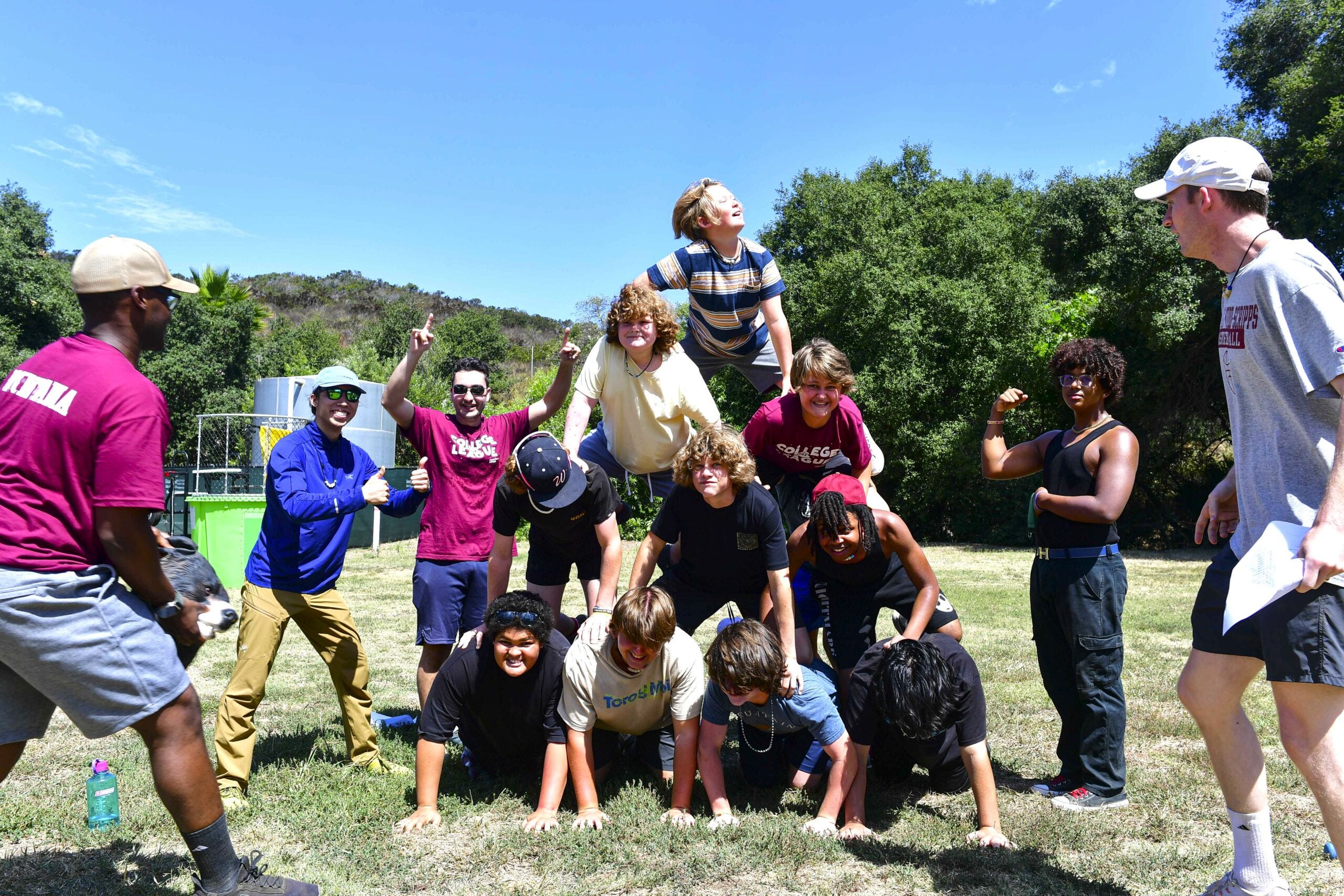
Board member Lauren acted as facilitator for three guys in their mid-twenties — Kyle, Luke, and Dylan. All had lost dads young. All had been ExCamps campers, returning year after year. And now all take one week off their jobs in the summer to volunteer as counselors. None of them wanted to come to ‘grief camp’ initially; they were too busy trying not to feel anything. Trying to just be kids. But what they found surprised them: the regular camp fun, in a place where they could also feel normal because they were surrounded by people who had gone through similar experiences.
Lauren’s last question was about the impact that camp had had on each of them personally. Kyle, being a typical young man, answered with only a few words. But his response made my jaw hit the floor.
“I don’t know what I’d be without this camp. Or without my grief.”
(Subscribe to have the Luminist delivered to your inbox every Saturday, in both written and audio format, at theluminist.substack.com.)
Inspirational speakers were part of my corporate gigs for three decades.
Blue Angels fighter pilots schooling us on teamwork and connection. Bestselling authors who overcame impossible odds. NFL quarterbacks miraculously winning Super Bowls after career-ending injuries. These folks got paid to move audiences. Sometimes they did. Other times, I found myself thinking ‘who hired this guy?’, even when the guilty party was me.
Yet none of those speakers moved me the way Kyle, Luke, and Dylan did.
Which is strange to my analytical brain, because not only were they lacking the backing of a speaker’s bureau and years spent fine-tuning their delivery, they also couldn’t even really explain how they went from “I do NOT want to go to grief camp” to a decade later, dedicating a week of their summer volunteering there. Instead, they just cracked a joke and shrugged their shoulders when they didn’t know what to say.
So what was it? What rearranged my DNA in a way no brave aviator, football legend, or Nobel laureate had before?
After spending entirely too long thinking about it, for me it comes down to three things:
1) The ordinariness of it all.
I used to put those corporate speakers on a pedestal. Look what they’ve achieved! Look what they’ve overcome! But pedestals by their very nature create distance. That distance decreases relatability. While I was inspired, I can’t imagine walking a mile in their shoes. The gap between their superhuman tenacity and my life felt like the Grand Canyon.
But these bros were ordinary. No, I’m not saying losing your dad young is ordinary (although 6.4 million children will lose a caregiver or a sibling by the time they turn 18, so it’s not as rare as we wish). But they clearly weren’t superhuman. They weren’t curing cancer, solving world peace, breaking land-speed records, illuminating the origins of black holes, all while simultaneously being Mother Teresa’s mini-me. In other words, they could be anyone.
Also, their journeys were ordinary — they literally went to SUMMER CAMP for one week, several years in a row, and now are doing great? Obviously there is way more to their stories than this. But again, nothing that you or I couldn’t imagine happening in our lives or the lives of our children. They’re just three guys in their mid-twenties who had something terrible happen, got support, and are now doing pretty well: enjoying their jobs and volunteering in the summer. Their flourishing is not out of reach.
2) They didn’t try to give us a recipe.
These dudes couldn’t articulate the top ten reasons why Experience Camps became so important to them. They couldn’t lay out the step-by-step journey of how grief transformed them. They couldn’t explain exactly what role community had played. In no way could they break it down for us.
And in doing so, they reminded me that 90% of processing grief is just leaning in to what supports you.
The friends who feel replenishing rather than exhausting. The movies that make you laugh. The book that makes you cry cathartic tears. The support group you kind of dread but always feel better after. The long walks, the therapy sessions, the facials, the journaling, the kickboxing, the milkshakes. Grief camp. WHATEVER.
Screw doing grief “right”. Just lean in to what works for you, even if you have no idea how or why.
3) They didn’t need to spin their grief.
Not one of them said, “It was terrible to lose my dad, but at least I made all these lifelong friends.” In fact, they never once said “at least”. Quite simply, they didn’t position their tragedy as the prereq to a bajillion silver linings, the reason they now have incredible wisdom or fortitude, or even the insight that life is too short.
Our culture loves to frame any struggle as “no pain, no gain”. (Ahem, guilty!) It’s so rare to hear someone share about hardship without turning their pain into the first part of an equation that eventually, obviously leads to a permanent kumbaya-style inner peace. But they also didn’t just say that their pain was solely painful.
It was simply part of their story. Not the end, not the climax, not even the training montage.
So after turning this over in my head nonstop like a kid on a trampoline who’s just mastered her somersault, I think I’ve got it.
These young men, in their goofy, sheepish way, are shining examples of what I’ve been struggling to find words for for years.
They didn’t show us what it looks like when you’ve “healed” from loss to become this sparkling new superhuman (or monk). Rather, they showed us what it looks like when you’ve just integrated it into who you are. Healing suggests completion, a before-and-after where you emerge on the other side transformed but finished. Integration suggests something ongoing, alive, woven into the fabric of who you’re still becoming.
Kyle didn’t say, “I overcame my grief and now I’m thriving.” He said, “I don’t know what I’d be without this camp. Or without my grief.” Damn, I tear up just writing that sentence.
That’s the only thing we ever really do with big grief. We don’t move past it or get over it. We just... incorporate it.
We find a new shape to take so it can live within us without consuming us.
And this is why I’m ready to launch a national ad campaign for Kyle, Luke, and Dylan: they prove that integration is so accessible. It doesn’t require Navy Seal-level resilience or a redemption arc the size of Everest or making meaning of your pain (whatever that actually means). It just requires showing up, leaning in, finding your coping methods, and trusting that somehow you’ll find yourself on the other side, living a happily ordinary life.
That’s not inspiration from a pedestal. That’s a lighthouse from someone on the exact same level as you, lighting the way.
To ordinary examples,
Sue
P.S. We are a few days past giving Tuesday, but If you’d like to help thousands of ordinary kids live a happily ordinary life, you can contribute to Experience Camps for Grieving Children here: Donate Now!!
(Subscribe to have the Luminist delivered to your inbox every Saturday, in both written and audio format, at theluminist.substack.com.)