What’s necessity?
In Shakespeare’s Henry IV, there comes a scene where the king cannot sleep. He wonders that a ship’s boy posted high on a mast as look-out can sleep at his station in the wildest of seas and yet he, in all his comfort, cannot get a wink. Henry is a troubled man. His railing is interrupted by his counsellors, who advise of rebellion fermenting in the North, and the necessity of dealing with it. “Are these things then necessities?” he asks. “Then let us meet them like necessities.”
Necessities. What are those? What is necessary? And what can be dispensed with? Across the ages, innovators and inventors and the insightful have time and again responded with that which seemed impossible, i.e. that nothing is impossible. Even the ancient Archimedes proposed a device that could lift the Earth. And, on that model, men and women have devised solutions to move, not the Earth, but Heaven and Earth. It behoves Mankind, therefore, to embrace the spirit of innovation, to apply insight to invention and redouble its efforts to do the impossible: to preserve the lives of thousands, perhaps millions; to preserve the diversity of species that is so fundamental to our existence; to instil hope and quash despondency; to lead and no longer begrudgingly follow; to not place individuals at the top of the pile, but to preserve the pile; to not save the planet, but to save itself and thereby the planet.
Is it worth saving the planet?
The single biggest stumbling block on the whole ecological movement is cost; be it measured in terms of lost opportunity, limited exploitation, augmented outlay or relinquishment of market power, ecology hits the bottom line. When government spends to save the environment, it costs, the taxpayer; when corporations invest in systems to improve procurement or limit pollution or reduce the burden posed by their products, it costs, the stockholder; when individuals take to the streets to protest, take care how to dispose of waste, take time to select inputs that will contribute to the environment, it costs, the individual. Cost is common to everything that will save the environment. In all else, this results in a cost-benefit analysis, the question being: is it worth it?
The flip side of Is it worth it? is Cost what it may. Cost what it may is the tenet we adopt when the goal to be achieved assumes an importance that outweighs cost. Examples include air-sea rescue, vaccination against disease and, occasionally, military invasions. In the ecological arena, therefore, the debate turns on the two questions: Is it worth it? and Should we do what is necessary, cost what it may?
I don’t believe that anyone has yet calculated the carbon footprint of a war. We know how many tanks are destroyed, how many ships sunk, how much cargo lost, how many lives snuffed out. But, sickened as we are at such numbers, we do not turn to the more aesthetic aspects, such as their carbon footprint. However, we do institute laws, backed with penalties, to oblige people to sort waste, to reduce travel, to fine-tune our ways of life with the mantra that every little counts; every little does count, but only the littles count that are feasible; those that are not, remain untouched. The problem is not feasibility, it is Man’s readiness to attack an issue perceived as impossible. Secondary to that is the question of whether the planet is capable of saving; and with that, whether the pile, us, Mankind is capable of saving. And on that, opinions are divided into four camps: the ayes, subdivided into the we have plenty of times and we have little times; the nays, for whom it’s not worth the effort; and the neutrals, who say there is no problem.
If saving the planet were a garden fête, we could analogise as follows:
* Let’s do it, but we can put off the preparations for a month or two;
* Let’s do it, but we need to get cracking with preparations now;
* Let’s not do it, it will cost us too much; and
* What’s a garden fête? I’ve never heard of a garden fête, can’t conceive of what a garden fête is, and am not interested even if I could.
Few would disagree but that any one of those stances would amount, globally, to an irrelevance. Whether the garden fête goes ahead, prepared for now or later, doesn’t occur or is an unknown in some people’s minds, does not matter a hoot. Does the environment matter a hoot?
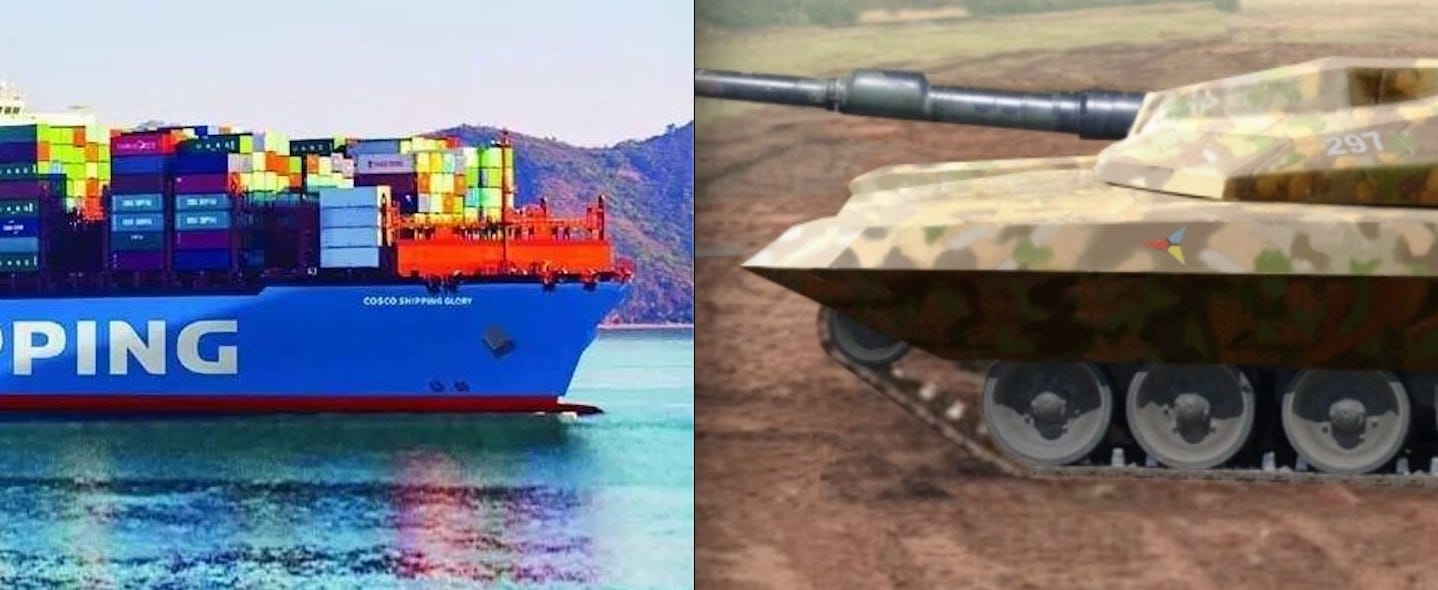
Only bullets differentiate war from trade
If warfare leaves an avoidable carbon footprint, then, quite simply, we must eliminate warfare. Or, is that impossible? We’ve not succeeded in 2,000 years of recorded history, but, then again, how hard have we tried? Warfare comes in two forms: the first, the more obvious, is as war; the second, less obvious, is as trade. Trade is warfare, conducted during peacetime. Whereas in war, one party is forced into a position whereby it concedes a victory to an attacker, in trade one party is forced into a position where, whilst the canny victor strives to ensure his defeated partner’s survival (at least until it performs its contract), it also endeavours to maximise its gain, to the cost of the other. It does this at the behest of stockholders. And those in control who obtemper the demands of stockholders have a stake in the gain, called a bonus. This works in war as well: duchies, fiefdoms and earldoms were the prize that generals could expect if they helped to win wars. It’s a system that works, although it is predicated on three factors: the greatest prize goes to him who commands; the graft is done by minions; and all parties accept the system. Acceptance can be forced by enslavement of the minions by the commanders, or it can be contracted, whether explicitly or implicitly through some sort of social contract. Either way, if acceptance is not forthcoming, it is a system that breaks down. Acceptance can fail in the case of strikes, desertions, or revolution.
Can systems be changed?
Systems get changed, be it from below or from above. One cause of change is enlightenment: an unfairness is recognised by a party who has the power to remove it, and the situation is put right. Another is force: the revolution just spoken of. And a third is a recognition by all, perhaps as the result of strikes or threats of revolution, perhaps as a result of enlightened policy, that the system needs changing. The application of forces of change rarely succeeds unless it goes hand in hand with enlightenment. The force, initially resisted, comes to assume not just physical form but moral form, and change comes not because it has no choice but to come, but because it is morally justified as well.
If warfare, be it in the shape of war or of trade, is the system that needs changing, and needs changing because it lies at the root of the climate change challenge, who, then, will be aligning with the two persuaders of change, force and enlightenment? Those who advocate force are held back because they seek an enlightened world, and their enlightenment cautions them against applying the force; the enlightened try persuasion, but baulk at force. Enlightenment is at one and the same time a sine qua non for systemic change, but needs the readiness to apply force, in at least some part, otherwise must concede its futility.
Abolish war. How?
Let me deal quickly with the question of war. We must stop it. Those with the right mind must unite and vow that if others, be they within or without their ranks, usurp the peaceful order, they will face the wrath of all and be destroyed. There is no other way. Because those who would oppose such a policy would themselves destroy the right-minded. The spectrum of war now possesses only two colours: black, and white. On or off. With us or against us. Succumb or fight.
The problem with trade is the people who trade
What drives trade is stockholders. The stockholders of corporations are akin to states: they effectively tell the corporation where to attack. The directors are the generals on the battlefield. The analogy isn’t perfect, but they stand between…