Click above for a voiceover to this article. All voiceovers are available on Apple Podcasts under The Endless Chain.
A few years ago, King Philippe of the Belgians and Queen Mathilde were fulfilling an official function at a retirement home of their realm. Their Majesties were kindly bidden to append a note of their visit in the guest book, for which an expensive fountain pen had been purchased, specially for the occasion. At the moment of signature, alas, the pen had grown legs and walked.
Thanks for reading The Endless Chain! Subscribe for free to receive new posts and support my work.
It had cost 1,500 euros, and that’s enough for a pen to cost. I wonder to what use it had been planned putting the pen, once the royal visit had been completed. Hang it by a string to mark days off on the holiday calendar? Leave it at reception for desk clerks to sign receipts? Place it in a glass case as evidence of the institution’s royal patronage? Give it to Phil for his many other visitor-book-signing duties? Perhaps no pen for a single use should cost 1,500 euros. People would still nick them, but at least they wouldn’t have cost 1,500 euros.
I don’t know if they ever caught the purloiner of the royal fountain pen that day. They maybe took it because it looked nice. Pretty colour. Or perhaps because they knew it’d cost fifteen hundred euros and they thought they could maybe fence it for a thou. Seven-fifty at least. Even a meagre ton. A hundred’s better than nothing, innit? Or perhaps, just perhaps, it got half-inched because the purloiner knew exactly where the pen would end up, and it was not destined to be his desk. It’ll have been tax-deductible, we can be sure of that.
Whilst its value may have had something to do with this pen’s disappearance, value doesn’t have to do with every pen’s disappearance. These days, the mere fact that it writes at all can presage the disappearance of a writing implement. If we can rule out anyone as possible culprit, it must surely be the King, mustn’t it? If he’d asked for it, he’d have been given it, willingly, and with thanks, even. One does that with kings, no?
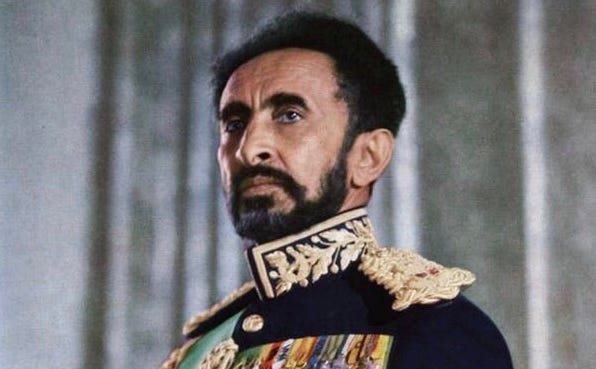
Emperor Haile Selassie of Ethiopia was by all accounts a clinical kleptomaniac. He would venture forth on state visits and, after returning home, his equerries would return miscellaneous bejewelled bagatelles, ashtrays (a time-honoured souvenir since the days of Raleigh), anything that happened to be lying around his quarters, with a note: His Imperial Majesty would appear inadvertently to have packed the enclosed items when hastening to vacate his accommodations.
Would you have trusted Emperor Haile Selassie? Would you trust King Philippe of the Belgians? Would you trust President Volodymyr Zelenskiy? In large part, trust in public figures is based on the maxim that one confers trust until one has grounds not to; in personal relations, the opposite is generally true: led by the newspapers and commentators, we give collective trust more readily than our own, personal trust. So, any individual enters an interesting zone of potential conflict when they transition from being an unknown in the personal sphere to being a public figure. Effectively, the question Why should I trust them? is answered with Because they were elected, because of who they are.
It’s the default position of trust in public figures that augments the public’s rights to know of their misdemeanours. They are not, to that extent, just like anyone else. They don’t earn respect and deference, nor do they command it. But they are generously showered with it, pretty much because they’ve been on telly.
But there is a flip side to this analysis. When those who receive trust because of who they are then go on to abuse that trust, and are well-advertised as having abused that trust, then they do more than simply get away with it, when they get away with it. They set patterns. It becomes okay to misbehave. It becomes the done thing to commit criminal acts in their behalf if not on their direct orders and, by their example, in behalf of others if not on their direct orders. Honour of character transmutes into the omertà of the mafia, the way things are done, as don’t do it becomes don’t mention it. If breached, an NDA can turn out to be less a ground for legal action than a warning of worse to come than anything a court could have dished out.
When you see images of Ku Klux Klan all dressed in white robes and hoods, it’s impossible to tell which one of them has a streak of benevolence in him. With images of clean-faced, besuited executives embracing regulation and obedience to the law, it’s likewise impossible: to tell who the cheating scoundrels are. It is, isn’t it?
Emperor Haile Selassie was more than just a kleptomaniac. He was a ruler with astonishing parallels in our modern world. Close inspection of his long reign as Ethiopia’s emperor (1930 to 1974, interrupted by the Italian occupation) offers lessons for us today, especially if we are Ukrainians.
Descended from a tribe of Israel, and one of the earliest nations to convert to Christianity (the Ethiopian imperial standard was emblazoned with five stars of David), Ethiopia’s emperors had great regard for Jerusalem, for their African heritage and for the greater international community. It is of significance that Ethiopia was a founding charter signatory of the United Nations in 1948. The Emperor had personally led his armies against the Italian invasion in 1936 and, with his army routed after the Battle of Maychew, he travelled on his own, at no inconsiderable personal risk, to Lalibela, famed for its cathedrals hewn out of living rock, where he prayed and fasted. He was obliged to flee (not without some dissent among his retinue) to conduct the anti-fascist campaign against Italy from Bath, in England. But not before going first to Jerusalem, which at the time was in British Mandate Palestine.
His edict to his people at the time of the Italian onslaught sounds highfalutin, and yet is tinged with love and concern, which Haile Selassie not only asked of his countrymen, but that he himself was likewise ready to show:
If you withhold from your country Ethiopia death from a cough or head-cold of which you would otherwise die, refusing to resist (in your district, in your patrimony, and in your home) our enemy who is coming from a distant country to attack us, and if you persist in not shedding your blood, you will be rebuked for it by your Creator and will be cursed by your offspring. Hence, without cooling your heart of accustomed valour, there emerges your decision to fight fiercely, mindful of your history that will last far into the future… If on your march you touch any property inside houses or cattle and crops outside, not even grass, straw, and dung excluded, it is like killing your brother who is dying with you… You, countryman, living at the various access routes, set up a market for the army at the places where it is camping and on the day your district-governor will indicate to you, lest the soldiers campaigning for Ethiopia’s liberty should experience difficulty. You will not be charged excise duty, until the end of the campaign, for anything you are marketing at the military camps: I have granted you remission… After you have been ordered to go to war, but are then idly missing from the campaign, and when you are seized by the local chief or by an accuser, you will have punishment inflicted upon your inherited land, your property, and your body; to the accuser I shall grant a third of your property…
This is not merely high-sounding sentiment, but it is backed with practical ordinances for the protection of the people for whom his troops fight. It’s hard to conceive, but the kleptomaniac king of kings harboured an honour that abhorred pillage and ravage by the soldiers fighting in his cause and offered real advice and counsel, just as Zelenskiy organised the sowing of grain seed with one hand, as he repelled invaders with the other. The Emperor said that wh…