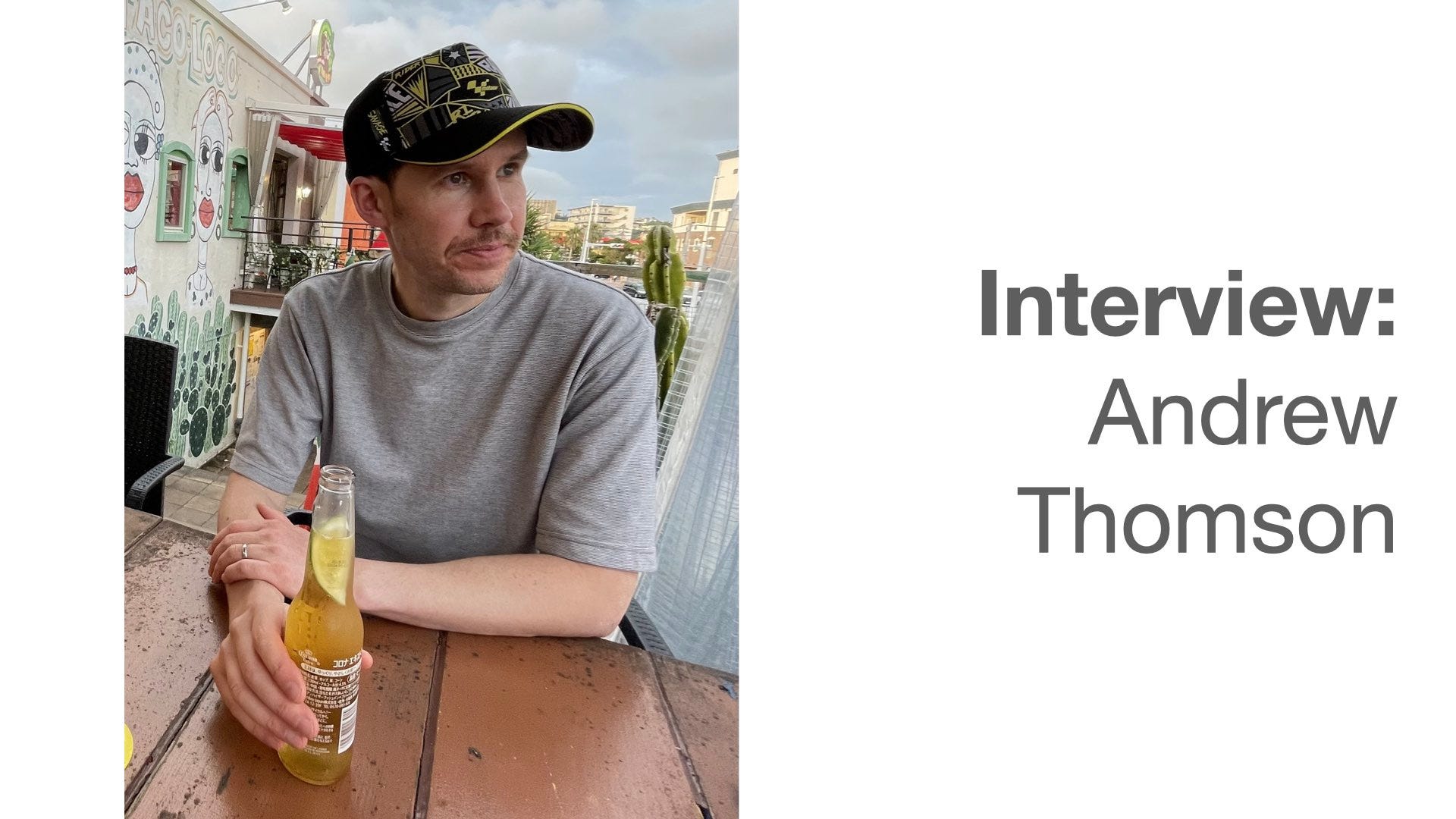
In this interview with Andrew Thomson, a Scottish seasoned professional in the energy sector, we delve into the multifaceted landscape of oil, renewable energy, and their global implications through a personal lens.
Andrew shares his journey from working in the oil industry over 20 years to recently transitioning into nuclear and wind energy sectors. Through his experiences, he provides insights into the socioeconomic impact of oil, the challenges of transitioning to renewable energy, and the complexities of global politics that intertwine with the energy sector.
Exploring Andrew's experiences working offshore in locations like Nigeria and Azerbaijan, the discussion uncovers the substantial influence of hydrocarbons and the cultural, socio-economic, and safety developments within the oil sector.
The discussion delves into the critical role of energy across modern life, impacting everything from education to communication, while critiquing governmental actions on energy policies and advocating for a balanced energy strategy, similar to Japan's where currently works in setting up Wind Turbine Platforms (using much of the same technology as oil rigs).
Furthermore, the dialogue highlights the philosophical and challenging practical shifts toward renewables, exploring political and economic challenges in this transition.
Through Andrew's perspective, one can try to better attempt to begin to understand the global energy politics, the necessity of interdisciplinary approaches in energy careers, and the shifting dynamics in the energy sector.
Time Stamps
* 00:00 The Importance of Energy in Modern Life
* 01:00 Introducing Andrew: From Oil to Climate-Friendly Energy
* 01:46 Andrew's Background and Career Journey
* 02:38 Life and Work in the Oil Industry
* 07:34 Challenges and Dangers of Offshore Drilling
* 10:54 The Culture and Lifestyle of Oil Workers
* 20:58 Global Perspectives: Working in Africa and Beyond
* 23:58 Corruption and Local Interactions in the Oil Industry
* 38:09 A Costly Mistake and Cultural Reflections
* 38:54 Corruption and Anti-Corruption Measures
* 40:09 Cultural Differences and Acceptance
* 41:13 Colonial Legacy and Historical Perspectives
* 43:41 Nationalized vs. Private Oil Companies
* 45:46 Transition to Renewable Energy in Japan
* 46:12 Challenges in the Oil Industry
* 48:22 Geopolitics and Energy Policies
* 56:43 Experiences with Government Agencies
* 01:03:56 Future Prospects and Peak Oil Debate
* 01:08:06 Final Thoughts on Energy and Policy
Highlights and Quotes of Interest
On Energy Source Mixes
Japan has a long term vision.
It has a vision of a percentage mix of nuclear fossil fuels, renewables, whereas I feel like I'm fairly against it in my home country, in the UK, because we don't have a long term plan. We've had four prime ministers in the last two years. One of them wanted to build eight nuclear power stations, the next one to start fracking.
I believe in an energy mix. I think there's a lot of irresponsibility talked about these days in terms of the energy transition. I do think there should be an energy mix.
And then the one now wants to quadruple our offshore wind capacity in eight years, which is impossible. It's quite nonsensical. It's quite short term thinking. I'm not anti wind, I'm not pro oil, I'm not anti or pro any, anything. What I'm pro is a science based, long term, non subsidy, non corruption based market solution.
On Incentives in Oil Vs “Renewables”
So right now, it seems like oil is completely negative and then offshore wind is completely positive. You look at the motivations behind companies putting in offshore wind turbines or the service companies exactly the same as motivations behind all companies.
Neither one is doing them. For anything other than to make money. And I think it's simplistic and a little bit silly to think that the boss of an oil company is some sort of J. R. Ewing, person that likes to run over puppies on the way home and the boss of an electricity company or a turbine installation company or whatever is some sort of, sandal wearing saint that doesn't care about money. Everyone in pretty much, I would say any corporation, that statistic about men are CEOs, they're psychopaths. All they care about is money. And I think there are a lot of like there's a lot of talk about subsidies in [renewables]
On Oil’s Beastly Nature
It only takes, one ignition source and then you're on top of a fireball…potential that the entire thing can blow up underneath your feet.
On Life without Oil
It's the world we have is impossible to have without oil. Sure. You can reduce it. It's going to run out eventually one day anyway.
So reducing it is not a bad thing, but to pretend that you can just press stop and then you can put in a wind turbine is nonsensical. And the politicians know it's nonsensical as well.
The sheer scale of, Hydrocarbon involvement in our modern industrial life is so incredibly difficult to untangle.
There's literally nothing more important than our energy because it ties into the availability of education and medicine and travel and communication. Right, without. some form of mass energy production. We're right back to the medieval ages.
On The British State
I speak from a very UK point of view because it's my country, it's my home. I feel As ever, the British state works against the British people, not for the British people, which is a contrast to some of the countries that we may look down our noses on a little bit more as not developed, where, and Japan is a great example of this, where Japan seems to do things for the benefit of Japanese people, which seems to be a controversial idea back home.
Learning from Travel
This is part of, traveling. You see so many countries where people are so proud of their country. Nigerians were some of the most proud people I think I've ever met, and it's the same in Japan. And I worry the direction our country's going, both the UK and the US, when we were raising a generation of children who are being taught to be embarrassed by where they come from. Though I really feel like in the West we've made a mistake over the years in trying to impose our way of looking at the world on other cultures.
Post Interview Notes / Links from Andrew
Here are some relevant links that might be of interest:
"Empire of Dust", a fascinating documentary widely referenced online, but with no major release I don't think, that shows interaction between a Chinese contractor and locals in the DRC. It's a perfect example of culture clash, the strength in the documentary being there is no western-style narrative, it's simply two very different cultures interacting honestly with each other. The film-maker is Belgian which is particularly interesting given their colonial history in the DRC.
Watch @ https://www.dailymotion.com/video/x5gdfm4
I can particularly recommend Joseph Conrad's Heart of Darkness if you're interested in the dark side of colonialism, or any history of DRC or Zaire as it was. One of my favourite films is Apocalypse Now, which along with the book perfectly makes the point I was trying to, which is how these cultures are manifestly different from ours, and any attempt to convert or run these societies in a western way will ultimately end up in failure, unless it's done by complete dominance, which of course, is wrong. It's a subject I find really interesting, and my experiences in Africa really changed how I view the world.
On Energy Prices “Strike Prices” and Renewables
Some links explaining the Strike Price for electricity set through the CfD (Contract for Difference) mechanism that guarantees a specific rate for electricity to renewables companies.
https://www.iea.org/policies/5731-contract-for-difference-cfd
https://www.eurelectric.org/in-detail/cfds_explainer/
It's quite hard to find a non-biased article explaining this, but the basic mechanism is:
What isn't always mentioned is the "top-up" when the price falls is paid to the generators by the consumer, in the UK at least, in the form of a levy on the electricity price. Which…