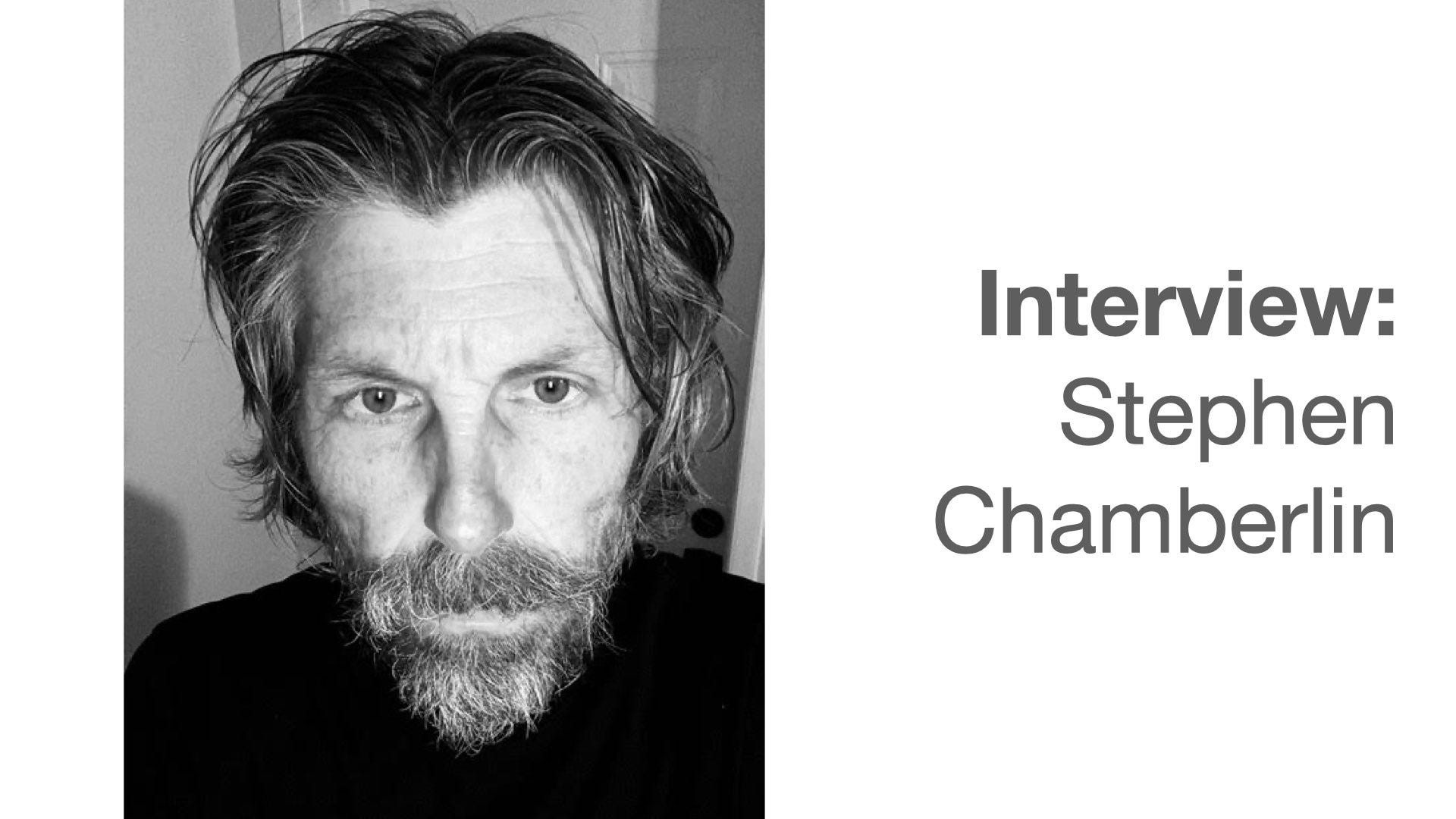
In this intimate conversation, Stephen Chamberlain, a former U.S. Coast Guard officer, small business owner, and writer, candidly discusses his personal struggles and victories. From navigating anxiety disorders to his cathartic discovery of writing and poetry, Steve opens up about his life journey. He delves into the complexities of moral injury, the therapeutic potential of psychedelics, his 40-year relationship with disordered eating and anxiety, and his pursuit of contentment through nomadic living and creative expression.
Steve's raw honesty provides a unique lens into the challenges of coping with men’s mental health issues while striving for fulfillment. His writing not only serves as a personal outlet but also connects him to a broader community of writers and readers interested healing and self-reflection.
Timeline:
* 01:28 Background and Early Life
* 03:04 Struggles with Disordered Eating, Anxiety, and Joining the Coast Guard
* 04:22 Life in the Coast Guard and Personal Challenges
* 05:47 Post-Retirement Life and Discovering a Nomadic Writing Journey
* 07:35 Exploring New Ventures and Digital Nomadism
* 09:50 Writing as a Cathartic Experience
* 12:41 Peer Support and Mental Health Advocacy
* 17:56 Moral Injury in the Coast Guard
* 38:56 Struggles with Weight and Anxiety
* 40:00 Understanding Male Anorexia and Its Impact
* 40:47 The Battle Between Rational and Irrational Voices
* 42:38 Poetry as a Means of Control
* 45:14 Exploring Psychedelics for Treatment
* 47:28 The Transformative Impact of Psychedelic Experiences
* 58:13 Embracing Mortality and Planning Ahead
* 01:03:28 Future Plans and Other Pursuits
* 01:07:13 Connecting with the Audience
Connect with Steve and his writing @ Steve's Substack
Steve’s Collections of Poetry: My Raven and My Blackbird
AI Machine Transcription - Enjoy the Glitches!
Steve: Right off the bat, anyone who tries to write understands that writing is very difficult, but what I could do is write about my experiences. The things that I find easiest to write about are things I'm most familiar with, and the thing I'm most familiar with is what I'm feeling and thinking inside. This sounds clichéd, but it's true, cathartic and I found that relatability they feel less alone and that just encouraged me to write more. And quite frankly, if I have one person tell me that, "hey, that thing you wrote really resonated with me or helped me," I'm like a score! if I can help somebody, then it was worth putting out there.
Even if nobody reads them, it felt good to get them out. And it did feel cathartic to get it out. I've come to the conclusion that, what I want to get out of life in my remaining years is as many moments of contentment and fulfillment as I can.
[Music]
Leafbox: Good afternoon, Steve.
Before we start, I wanted to thank you. Even though you're a smaller publisher and you're just starting off on your journey of writing.
One of the things that really stood out to me about your writing is that it feels like it's coming from a very authentic place. And, my own writing and my own efforts across life. That's one of the hardest things to find and be true to so thank you for at least expressing in a way that feels genuine and true and in today's world I think that's a harder thing to do.
Before we start, why don't you just tell us, Steve, a little bit about who you are, maybe what you're writing about why you came to writing.
Steve: Yeah, yeah, absolutely. I'm 57 years old, so I've been around for a little bit and my background is pretty varied.
I grew up in a suburb of Boston. Irish Catholic family, first generation to move into the suburbs from South Boston and second generation of my family to actually go to college. I went to a public school, and it, it was a pretty benign suburban existence.
I would say right up through my university years, I went to a commuter school, UMass University of Massachusetts in Lowell, Mass, and something I could afford in that day and age by working part time and lived at home and really had no, what I would call significant life experience. Until I left home and went to the Coast Guard's Officer Candidate School after college.
But I think it is noteworthy to say that like a lot of typical families of that era, I had, it was dysfunctional, but most people have some sort of dysfunction in their family. Alcoholic dad, very much a perfectionist. Everyone in the family seemed to be driven by anxiety created by their predecessors and I picked that up as well.
And it's notable to say that I developed an eating disorder in my high school years, which is a male in the 1980s I think was very eating disorders are stigmatized. Among all genders, even today, but being a guy in the 80s when there was really no infrastructure set up to, to diagnose, recognize, or treat it made it particularly challenging.
And I really got into triathlons and long distance running and marathons. Got to a really unhealthy weight. And, my mom did her best to get me in with psychologists and psychiatrists, but none of them really had a handle on how to deal with somebody like me. And it, it caused quite a bit of isolation for me in high school.
College was a little bit better simply because it was a commuter school and I would go do my work and come home. So I became quite a loner, but, for reasons that I can't describe other than just being impulsive in my early years, I applied after college to the Coast Guard's Officer Candidate School and somehow got in and spent about four months down in Virginia in basic training and then the next 25 years in the Coast Guard and the eating disorder I somehow managed.
Gained some weight was always a little odd with my eating habits, but and very excessive with my exercise habits and very rigid as I am to this day. But those 25 years in the Coast Guard were both fulfilling and beset by a little bit of inertia. I think it's a challenging job, but and as you get more.
Responsibility more senior becomes more challenging and more all encompassing, but by the same token, it's a secure job where even though you move every couple of years, the culture remains the same. So for a guy with anxiety and quite frankly, anorexia nervosa is an anxiety disorder when you get right down to it.
The Coast Guard was a relatively comfortable place for me. In 2015 I was serving in Alameda and living in San Francisco, which is where you and I met. And I also retired from the Coast Guard that year. At the time I was married, but my anxiety, which demonstrated itself in those days, I think is more of a extreme dedication to work kind of a workaholism, if you would call it that really, destroyed my marriage. And by 2017, 2018, we were divorced, which was really, for me, the point in time in which I think I gained a level of self awareness that A lot of my peers do not seem to have, and I'm not trying to be, I'm not trying to brag or anything like that because I tend to surround myself with friends like you who are self aware and do look inward and do understand they have egos and those egos are rather hard to control.
And but having that self awareness. This is really a great way to determine when your ego is getting the better of you. And it was the divorce that kind of opened my eyes to the fact that I had not been a good husband. That my dedication to work was one of these fleeting needs for professional affirmation that came at the expense of any sort of long term personal contentment.
And it was that self awareness obtained relatively late in life, my late forties, early fifties, that led me to writing and led me to trying several other Endeavors. I worked a little bit in the wine industry for three years and learned what I could at a small five person wine startup.
I impulsively bought Airstream trailer and spent about a year and a half, 2020 at the Covid years. As a matter of fact I launched my digital nomadism, as I called it in March of 2020. No, great plan to do that, but at the same time, the whole country. Pretty much shut down and spent a little over a year place really enjoying tha…