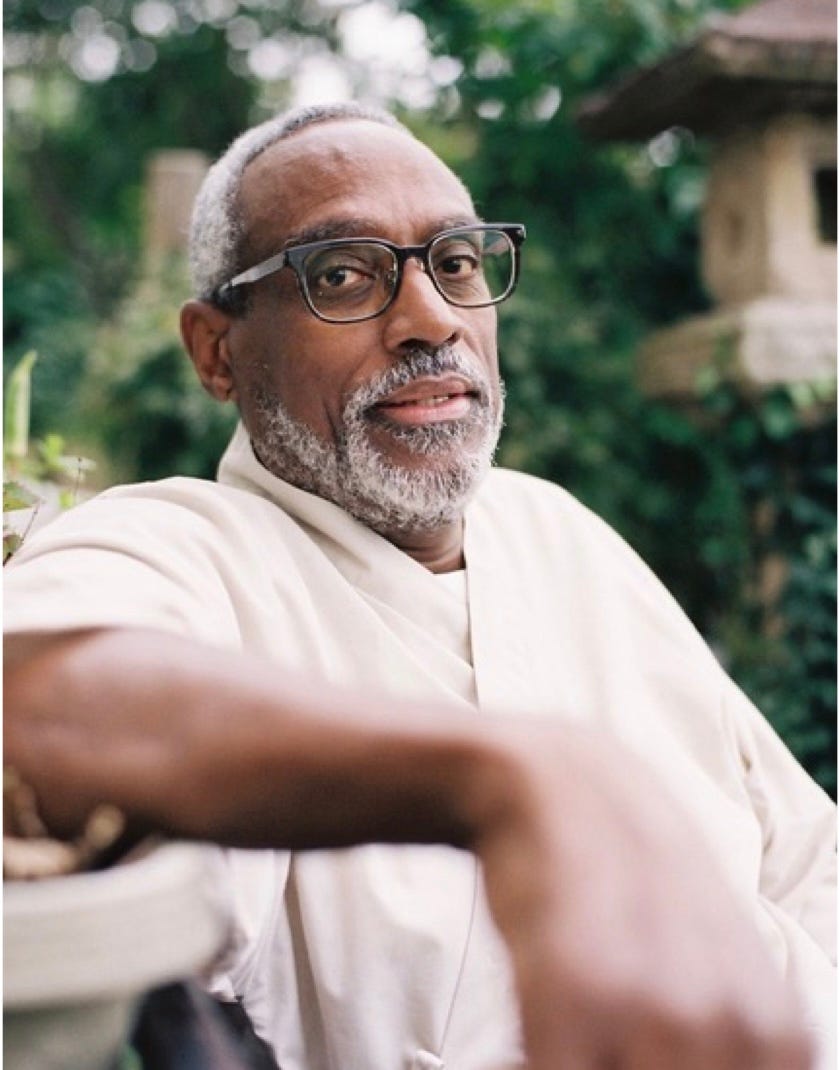
Robert Jefferson is an American broadcast news anchor and Air Force veteran, professor of journalism and has had the majority of his career working in Japan.
Jefferson shares an overview of his career and biography, while offering his views on the decline of journalism and the West. He offers advice for those considering life abroad and emphasizes the importance of staying curious, questioning authority, and learning history to navigate the current media landscape. Jefferson also shares his personal health journey and the benefits of gardening and maintaining a healthy lifestyle in this insightful interview.
Connect with The Kamakura Gardener
Support The Kamakura Gardener : patreon.com/TheKamakuraGardener
Subject Time Stamps:
* (01:26) The Mid-Atlantic Broadcast Accent and Biography
* (03:25) The Dark Side of Paradise
* (07:25) Relationship to Social Media
* (09:25) Work at NHK World TV…
* (15:58) An Interest in the Foreign
* (20:24) Moving to Japan
* (27:19) A Decline in Japanese Media
* (34:48) Being a Free Man in Japan
* (45:07) The Kamakura Gardener / Catharsis
* (57:05) Teaching at Temple University
* (1:02) Critique of being labeled a conspiracy theorist and the importance of seeking truth
* (1:09) Finding Opportunities Abroad
* (1:15) Closure and Where to Connect
Leafbox:
Today I had the pleasure of speaking and learning from Robert Jefferson. Robert is an American 47 year broadcast news anchor, and Air Force veteran. He's a professor of journalism and has had the majority of his career working in Japan. Aside from his broadcast duties, he has a smaller, intimate project known as the Kamakura Gardener. Today we explore his biography, his disenchantment with corporate media, truth finding and sense-making, and his eventual catharsis in finding local content, connecting community to the gardens and surroundings of Kamakura Japan. He shares his experience finding freedom in Japan and offers an analysis of the decline of journalism and of the West. We talk about his brief stint in Hawaii and the mainland, and offer an option for those considering life abroad and paths for finding opportunity. Thanks for listening. I hope you enjoy. That's one of my first questions. I think my mom, she introduced me to your videos and I think she fell in love with your voice. You definitely have a beautiful broadcaster voice. Where did you actually grow up in the States?
Robert Jefferson:
I was born in Philadelphia, but I grew up in Montgomery County, which is about an hour north of Philadelphia. And I have what's called a Mid-Atlantic Broadcast accent. I was in broadcasting in the military. That was my job information broadcast specialist. I was a TV news announcer in the Air Force. I was lucky. I insisted. I had an FCC license when I joined. I had been studying up to that point, actually. They tried to make me an inventory management specialist, and I said, hell no. Hell no. And I prevailed, and it didn't take long, just a week or so, and I was sent to a technical school, the Defense Information School of Journalism Public Affairs. I know Honolulu well, I knew Honolulu very well back in the mid eighties for KHVH News Radio 99 and KGU Talk Radio 76. The voice of "Hawaii".
Leafbox:
Well, you actually had the perfect Hawaii accent there. That was pretty well done.
Robert Jefferson:
Yeah, most people have no clue what the W is a “V” sound.
Leafbox:
It's not America and it's not Japan. It's in between both. But here in Hawaii, I think we have, there's a strong sense of Aina, of place, of localism, of culture, of being connected to each other. People have
Robert Jefferson:
The benefit of true diversity. You have the Japanese, the Chinese, the Portuguese, and the Polynesians, and then all of the other imports from around the world. So yeah, it's truly diverse. And that's not some just trite word. It truly is. Yeah. And then the local traditions, the first time I was ever called nigger was in Hawaii, in Honolulu. I was walking home one night from a club or somewhere. I was living in Lower Manoa, and I was walking up the hill from Honolulu. And these young, they were Asian kids, they were drunk or something, and they lean out the window, Hey nigger. That was the first and only time. I never felt any racial discrimination or antipathy or anything like that while I was there. And I was like, well, what the hell was that all about?
Leafbox:
What year was this in?
Robert Jefferson:
85, 86. But yeah, that was the only time. And so I would never let that taint my view or my experience in Hawaii. I mean, I was, it's this young, skinny black kid basically who got hired at two of the best radio stations in town. And then ABC News hired me to come back to, I left Japan to go to Hawaii, and then ABC News hired me to come back. So I'm not sure what that was all about, but that was the only time most people were very kind and gracious.
Leafbox:
So how long were you in Hawaii for?
Robert Jefferson:
About two years. And I meant to do this. I had to go back. When you get older, you kind of forget certain things, especially when it was four decades ago, a year and a half to two years that I was there. And I was able to, actually, I think I may have it, if you give me just a quick second here. There was a recreation of a voyage, a Polynesian voyage, the Hokulea, and I was there when they arrived at the beach, sort of like a spiritual leader, Sam Ka’ai. He was there, and yeah, I'll never forget that. They were blowing a co shell and they were doing all kinds of Hawaiian prayers and whatnot. It was absolutely beautiful.
Leafbox:
I didn't know anything about this. And your biographies kind of limited online a lot about your
Robert Jefferson:
Yeah, I used to be on LinkedIn and all that. I erased it all. I got rid of it all. I don't trust LinkedIn, and I don't mind people knowing about me. But yeah, I would just prefer to have control over it.
Leafbox:
I apologize about these people in, but
Robert Jefferson:
Oh, no, no, no, no. You don't have to apologize at all. You have to apologize.
Leafbox:
Well, I mean, the good thing is you saw some of the darkness in Paradise as well, that there's very complex class issues.
Robert Jefferson:
When I was in Lower Manoa, I lived at, it was a house share, actually an old converted garage share. I was sharing with two other guys. One was Filipino American and the other one was from Detroit, a black American. And the owners were Chinese, and they were really sweet, very nice. The old lady, she used to get, she realized how poor we were. So she used to give us our lunches or dinner boxes, whatever. And she would always say "Sek Fan" , she couldn't speak much English. Sek Fan" is Cantonese for Have you Eaten? Which means How are you? But basically, it literally means have you eaten Shan Shan? And yeah, she's very sweet. Her sons were very nice, very nice. So yeah, I mean, I never had any racial issues except for that one night. Luckily it was just that one night. Yeah, you're right. It's good that I did experience a little darkness in paradise
Leafbox:
Talking about darkness. I just was wondering what your concern a few times in the interview with the Black Experience guy, you talked about how you removed your Facebook account and how you just said that you deleted your LinkedIn
Robert Jefferson:
Pretty much at the same time. Yeah, that was like 2016. I had just gotten fed up with big media.
Leafbox:
Well, that's one of my first questions is that you were in big media. Yeah. What shifted that media disenchantment or disgust?
Robert Jefferson:
Well, it was what Facebook and Zuckerberg were doing, prying into people's private affairs, restricting people from doing this, that and the other. I could see it coming, what we have now, the blacklisting, the shadow banning the outright banning of people. I could see that coming. And I said, I don't want to be any part of this. That's why I did sign up for Twitter years ago. I tried to use it a couple of times, and I was like, what the hell is this for? I couldn't really see the purpose. And it t…