Well this is a SUPER-POWERED edition of my newsletter—with not one but two fantastic new podcast episodes embedded here for you to enjoy my Wandering Journo Tribe!
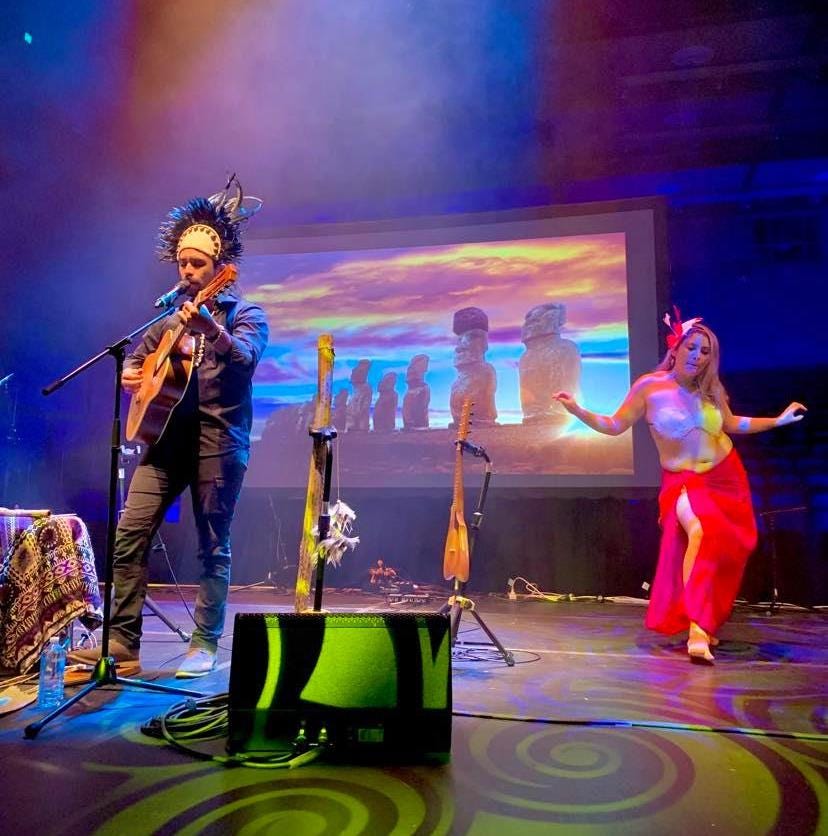
Firstly is the new Streets of Your Town, this time featuring the voice of Easter Island—Yoyo Tuki.
Rapa Nui, or Easter Island, is one of the most remote islands on earth, more than 3700 kilometres off the coast of Chile.
For many people the main thing they know about Rapa Nui is the hundreds of giant stone statues standing up to 20 metres high, looking out over the island.
And while these colossal statues known as Moai are incredible, there is so much more to this remote volcanic island, where the civilisation remained largely untouched by external influence for a thousand years.
Fragments of the ancient culture of Rapa Nui still exist and are passed down through generations of islanders.
Yoyo Tuki comes from a family of storytellers going back generations on the island. He now divides his time between Australia and Rapa Nui, and shares his music and songwriting with a distinct Rapa Nui flavour not only on our shores, but in music festivals around the world.
“I was raised in a very traditional family on the island. I’ve been in Australia for the past ten years travelling back and forth to home and filling up my cup with the culture,” Yoyo says.
“There’s not many Rapa Nui people out there spreading the culture, especially solo.”
Yoyo’s music blends the influence of his sculptor grandfather, whose name Mana Roa means Great Wisdom, with Spanish influences and some of the local Rapa Nui dialect, a Polynesian dialect similar to Tahitian, with some of his more modern compositions in English.
“It’s been sometimes challenging when you’re on your own and far away spreading culture. But at the same time enriching and powerful to open these doors and bring to people the story of Rapa Nui and its music."
Only 8000 people are now left living on Rapa Nui, half of whom are Indigenous.
“Rapa Nui is a very remote place but the culture is strong. It’s wonderful. Still untouched,” Yoyo says.
“The culture is alive and still standing strong. I love it. It’s just beautiful. A rich and wise culture—alive.”
He says it was incredible growing up somewhere so isolated but with such a strong sense of culture.
“For me my childhood was beautiful,” he says. “We lived in the countryside. I had some big beautiful custodians around me.
“I was quite detached from the world. I left the island for the first time when I was twelve. We spent all our time in nature, fishing, learning from the elders. It was very pure actually.
“I feel lucky and a sense of responsibility as well of keeping this—taking the message—the real message of my people—the real story of Rapa Nui.”
So please listen to Yoyo’s podcast by playing the link at the top of this email or webpage above or on Apple Music or Spotify, and if you like what you hear don’t forget to share this newsletter or podcast link with your mates. Especially in these post Facebook sharing times, your support of my work on this email is more important than ever! Thanks for enabling me to get my work out to a wider audience.
Backstory: Returning Fire to Australia’s Landscapes
The second podcast I have to share with you was commissioned by the most impressive quarterly journal Griffith Review as part of its 71st edition—Remaking the Balance. It’s taken me months of work, to find the talent, to go out to Minjerribah, and to do this story on the revival of Indigenous Fire Prevention practices justice. I honestly feel the best way to let Aboriginal people tell their stories is by using audio—so that we can soak up their oral history and tradition the way it has been communicated for thousands of years.
Bushwalking through Minjerribah country with Ranger Jacob Martin was such a joy, and I think hearing him explain the traditional Aboriginal fire management methods while walking through country that had been so recently burnt and was bouncing back to life, made the whole story so much more vivid.
Thanks for supporting the work of journos like me to take on larger more in-depth stories such as these!
Here is a summary of the episode to get a taste before you dive in to hear the whole thing, with a couple of bonus photos thrown in:
At this time of the summer of 2021, we look back over our shoulder to the fires that ravaged Australia’s east coast only a year ago, and wonder how we can live more harmoniously with this wide brown land.
While there is no silver bullet to prevent fires of that magnitude from happening again, particularly in the face of climate change, there is growing interest in the success and revival of traditional Indigenous fire practices to help ameliorate the looming threat.
From Australia’s wild savannah country in the top end to preventing the return of destructive bushfires on idyllic islands such as Minjerribah or Stradbroke Island in Queensland’s Moreton Bay, more credence and attention is being given to the fire practices of traditional owners that were largely lost or ignored after white settlement.
I walk on country on Minjerribah or Stradbroke Island in Moreton Bay, with Quandamooka Principal Ranger Jacob Martin, to see how this revival in Indigenous Fire Practices is not only preventing destructive wildfires, but also reconnecting Indigenous people with their culture and their land that had been separated from them for more than 60 years by sand mining.
In 2014 the safety of people on Minjerribah came under threat when a massive bushfire forced the evacuation of hundreds of residents and tourists from the the island. It was a disaster ecologically and financially, coming in the island’s peak tourist season. But Jacob looks back now and realises that was a critical turning point for the Quandamooka Yoolaburrabee Aboriginal Corporation, or QYAC, which now has much more say in how the fire threat on the island is managed. They are teaching island residents not to fear fire, but to instead learn how to manage it. He says walking through this country today is proof that fire, when properly managed over years, actually helps regenerate the land.
Outgoing CEO of QYAC Cameron Costello explains how the return of Indigenous rangers to oversee fire management on Minjerribah, is a crucial part of the process of gradually reclaiming the cultural practices that were nearly lost. He says the use of traditional Indigenous fire regimes is collaboration and reconciliation at work, “because we all have the same values of protecting life and property and wildlife and cultural heritage sites. So, you can actually map that all out together.”
I also go to the other side of Australia to the remote Kimberley region, to speak to Indigenous people there who have seen first hand the difference traditional fire management has made to the country, with a reduction in the destructive mega fires which have dominated the landscape since colonisation. These interviews include:
- Chantelle Murray who is the Ranger coordinator for the Ngurrara Rangers at Fitzroy Crossing. She works on some of the most isolated country in Australia on an area of land covering more than 100 thousand square kilometres of wilderness.
- Pete O’Connor is the Ranger coach with the Dambimangari Aboriginal Rangers in the Kimberley. He says the revival of traditional fire practices has led not only to less destructive wild fires in the region, but also to stronger cultural connections to country.
- Strategic fire operations officer for the Kimberley Land Council Richard Whately explains how wildfires and mega fires in Northern Australia’s savannah country cause enormous damage. Often the fire fronts are several metres h…