I was having my monthly “Should I go to grad school?” meltdown last week while at coffee with a friend. Faced with my midlife panic, V calmly asked, “What would you even go to grad school for?”
So, I presented this month’s top five: teacher, social worker, nurse, therapist, or pastor. (And “nurse” is mostly because I’ve been watching The Pitt, not due to any natural aptitude.)
Heretic Hereafter is a reader-supported publication. To receive new posts and support my work, consider becoming a free or paid subscriber.
V, with her characteristic bluntness, said, “Basically those are all the same job. Therapists are just pastors for atheists.”
And I laughed, but then I couldn’t stop thinking about it: are therapists just pastors for atheists?
On the one hand, BAD CHRISTIAN COUNSELING. “Oh you’re depressed? Why? You have Jesus! Buck up!”
Therapists certainly receive a lot more training and are (unlike most Christian counselors) actually qualified to recognize and treat serious mental illness.
But serious illness aside, one of our primary existential tasks is finding meaning. Most humans, at some level, believe in fairness, that consequences should follow actions. People should be rewarded for good behavior and punished for bad.
And yet, the universe often fails to comply to this neat directive. Billionaires get rich denying their workers bathroom breaks while schoolteachers have to take on second jobs.
American religiosity has cratered in the last 20 years. But even as fewer of us identify as “religious” or attend weekly services, we still need meaning. Enter the gurus.
I’m as susceptible to these gurus as the next chronically self-doubting midlife Millennial. I’ve read the self-help books and watched hours of Instagram reels by writer/influencers who seem to have life figured out. I eyed Bikram Yoga before that turned out to be a cult, and wondered about NXIVM before that turned out to be a cult, too.
I felt mildly inspired by Glennon Doyle’s Untamed even as I noted the deception in how much she publicly presented a happy marriage while, behind-the-scenes, she was falling in love with someone else.
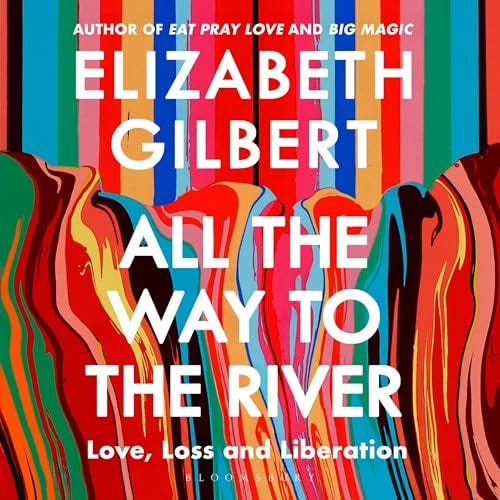
And now it’s Elizabeth Gilbert’s turn. Her new memoir, All the Way to the River, reveals the dark side of her supposedly magical love story with her friend, Rayya. I heard about the story of Gilbert romantically sitting by Rayya’s bedside on NPR, which somehow failed to mention the years of enabling Gilbert did, including procuring and injecting heroin for her lover.
In her review of the book (which releases 9/9) Jia Tolentino writes:
If you’ve read any celebrity profiles about youngish female stars during the past decade or so, you may have noticed that each woman, no matter what, is always stepping into her truth and power—she will also be stepping into her truth and power three years from now, when she promotes her next thing, and she will certainly be stepping into her truth and power five years after that. Every time, the person you’re seeing will really, finally be her.
The marketable, brand-able guru must always present herself as having figured things out and thus able to inspire and instruct us on how to do the same. They point to themselves and their own stories as models for our own lives.
But…they’re not done living yet. And just because they figured something out in the past doesn’t mean they’re living well now. We can admire the way Gilbert moved on from her divorce in Eat, Pray, Love and look at her recent past with shock and horror, wondering, “Where do you get off trying to teach me anything?”
Perhaps this dissonance is due to the fact that humility is incompatible with our age of self-branding and free-market capitalism. Humility is one of the most important spiritual virtues, because humble people are teachable. But it doesn’t sell.
And maybe that’s why religion, for all its many problems, continues to stick around. While gurus say, “look at me,” great religious teachers direct our attention upward. They encourage us to follow principles, allegories, stories of truly remarkable people, not just those with the loudest voices and biggest audiences. They push us to expand our concern past our own self-actualization and towards loving others, even those who are very different from us.
Which brings us back to therapy. Good therapy, like good religion, points us back to a set of principles: things like honesty, reciprocity, accountability. Bad therapy (like the kind offered by ChatGPT) offers us endless ego-boosting validation and can even induce psychosis in some users.
Meaning is something we all must seek in order to have a fulfilling life. There are many ways to get there, but, hopefully, that meaning we find is bigger than ourselves.
As for myself, I still toy with the idea of going to grad school. But, to paraphrase John Lennon, life is still happening as I make other plans. My debut novel comes out in 4 WEEKS! (Eeeeeeeep!)
One thing you won’t find me doing: claiming it solves all your problems.
If you enjoyed this post, liking, leaving a comment, or sharing it are SUPER HELPFUL ways for other folks to find it!
Heretic Hereafter is a reader-supported publication. To receive new posts and support my work, consider becoming a free or paid subscriber.