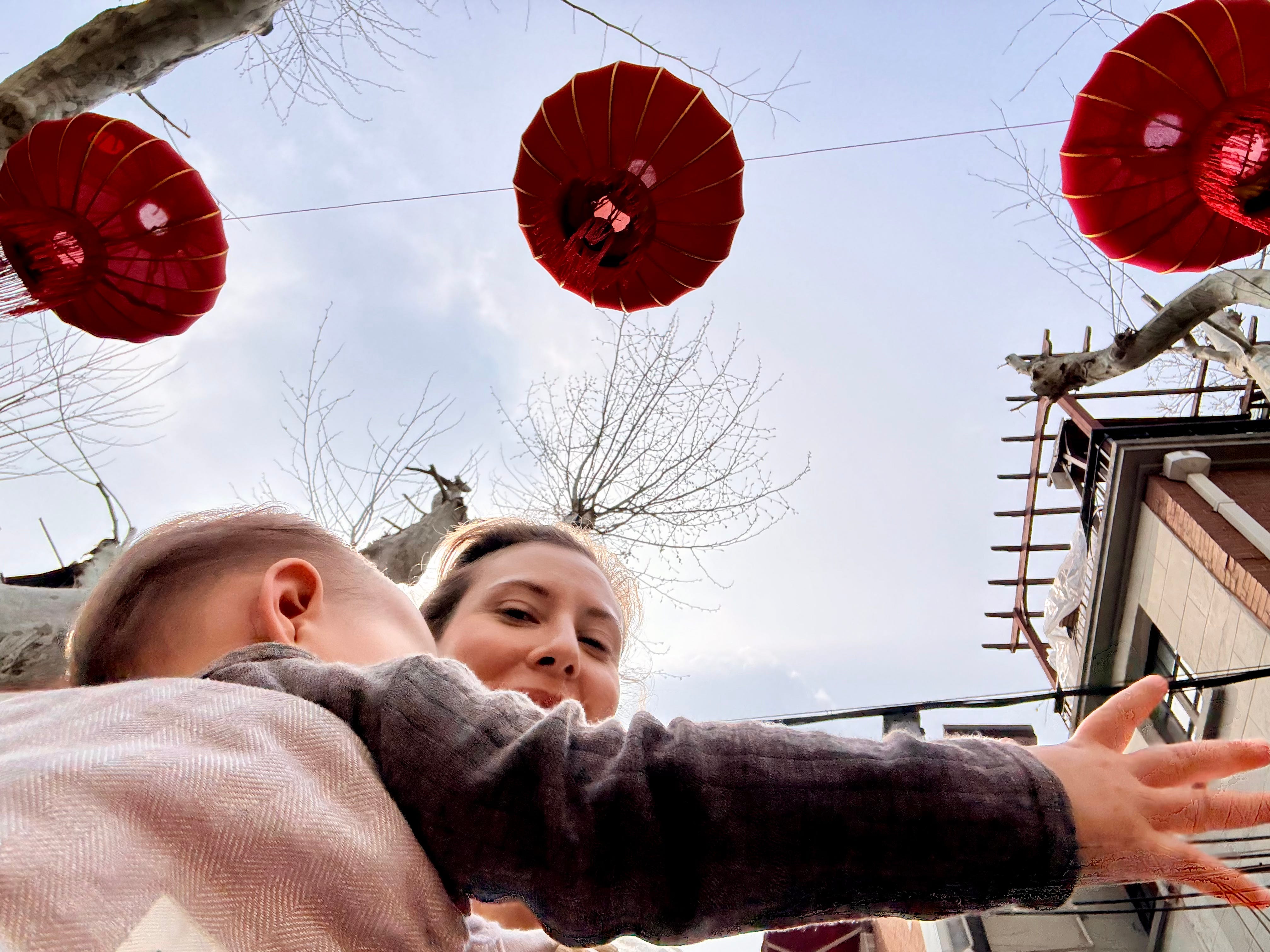
Last episode, you heard the trip.
This episode is what stayed.
Meg is back from China.The recordings are finished—but not resolved.
So Meg and Amy sit down again—not to retell what happened, but to ask what it meant to capture it while it was happening.
To record in the margins of a day.To press record in the middle of exhaustion.To speak into something—when there’s no one else to speak to.
For Meg, recording became a kind of tether.
In quiet moments—stepping away from a room, holding a jet-lagged baby, standing just outside of something she couldn’t fully enter—it gave her somewhere to go.
A way to stay connected.A way to make sense of it in real time.A way to create, even inside uncertainty.
For Amy, listening became something else entirely—
Not just hearing what happened,but witnessing it.
A journal made of voice.A record that images couldn’t hold.
Together, they reflect on what it means to document something sacred while you’re still inside it—how to share without overexposing,how to honor what isn’t yours alone to tell,how to let something remain unfinished.
They talk about the recordings that stayed untouched.The ones that felt too intimate to shape.The moments that asked for presence—not documentation.
And the ones that changed everything.
This is a conversation about creative process—but more than that, it’s about restraint.
About motherhood.About boundaries.About what it means to move through a culture that isn’t fully your own—and still choose how you show up inside it.
It’s about the moment Meg stepped in front of her daughter as firecrackers went off—and how instinct rewrote expectation.
It’s about a three-day funeral in a village in Hunan—held in the same home where a life began,and honored by a community that never forgot it.
And it’s about the quiet decision, over and over again:
What do I keep?What do I share?What do I carry forward?
Topics covered:
* Recording a podcast in real time while traveling
* Creativity in the margins—why recording became a lifeline for Meg
* The difference between writing and speaking as creative outlets
* Amy’s experience listening—why audio captured what photos couldn’t
* Leaving recordings unedited to preserve emotional truth
* Navigating what not to share—respecting intimate family and cultural moments
* Motherhood as a lens for boundary-setting across cultures
* The firecracker moment—instinct, protection, and choice
* A traditional three-day funeral in Hunan—ritual, community, and legacy
* Reflecting on the trip in one word: moving
上一期,我们带你“听”了一趟旅程。这一期,想聊聊旅程结束后,留下来的那些东西。
Meg 从中国回来了。录音键早就按停了,可心里的那些感受,却迟迟没有消散。
于是,Meg 和 Amy 又坐在一起,重新聊了聊过去这两周。这一次,她们不只是复述“发生了什么”,而是试着去理解——当一切正在发生的时候,选择按下录音键,去记录那一刻的声音和情绪,到底意味着什么。
她们在忙得脚不沾地的一天里,硬挤出一点点空隙,按下录音。她们在累到不想说话的时候,还是选择开口。她们在没有人可以倾诉的时刻,对着空气,慢慢说起了话。
对 Meg 来说,录音成了一种安慰。那种安慰,给了她片刻的安宁——尤其是在她抱着因为时差哭得撕心裂肺的孩子的时候。当她不得不从人群中悄悄退出来,站在一个她无法完全融入、充斥着陌生语言和文化的空间之外,对着麦克风说说话,像给自己找到了一个小小的庇护所。这样的记录方式,反而让她和周围的世界,有了一种奇妙的连接。也成了她整理自己的方式——在一切都不确定的日子里,至少还能创造点什么。
而对 Amy 来说,倾听另一端——那个既熟悉又遥远的环境里发生的一切,是一种很新鲜的体验。这一次,她不只是“知道”发生了什么,更像是“亲眼看见”了一样。她读着一本用声音写成的日记,体验着一种照片永远装不下的真实。
两位主播聊起了这样一个问题:当你还身处某个环境中,该怎么去记录那些特别的时刻——怎么分享,又不过度暴露自己,怎么去尊重那些不属于你一个人的故事,又怎么允许一些事情保持“未完成”,给自己和他人留一点白。
她们聊到那些没有被剪辑、听起来或许有点突兀的录音,也聊到那些真实的、不完美的、却根本不需要被“处理”的片段。
有些画面,真的只可意会不可言传。但我们还是拼尽全力,记下了那一瞬间自己最真实的感受。
这不仅仅是一场关于创作的对话,更是一场关于母亲身份、关于边界感、关于身处一个不完全属于自己的文化中,如何找到并站稳自己位置的对话。
她们聊到那个瞬间——鞭炮声突然炸响,Meg 下意识地挡在女儿面前。原来,成为母亲,本能真的会变。
她们也聊到湖南一个小村庄里,那场持续三天的葬礼——在 Meg 丈夫的祖父出生的老屋里举行,整个村庄的人,一起来见证,一起送别。以及那些反反复复拷问自己的问题:什么要留下来?什么可以讲给别人听?什么,会随着时间,慢慢被带走?
本期话题包括:
* 旅途中实时录制播客的体验
* 在缝隙里创作——录音如何变成一种连接和出口
* 写作与表达的不同:声音的力量
* Amy 的倾听体验——为什么声音比影像更能留住真实
* 保留未剪辑录音的意义:情感的真实
* 如何选择“不分享”——对家庭和文化的尊重
* 母亲身份如何影响跨文化中的边界感
* 鞭炮响起的那一刻——本能与保护
* 湖南三日传统葬礼:仪式、社区与记忆
* 用一个词总结这趟旅程:moving —— 触动人心
If you’re reading this in your inbox or on Substack, yay! If you’re not, you can join us on Substack here—where you’ll be the first to know about every new episode and update.
And be sure to follow along with us on…
Instagram: @spark_podcast
WeChat: TheSparkPodcast
Little Universe: The Spark Podcast (赵枣Amy_火花)
Himalaya: The Spark Podcast 火花电台
NetEase:The Spark Podcast 火花电台
如果你是通过Substack的邮件而了解到我们的播客,欢迎你且祝贺你找到了联系我们的最佳渠道!
如果你不了解Sutbstack, 那么,你可以点击这里来关注我们。关注以后,你将了解到我们所有的更新和动态。
我们其他的官方社交平台有:
Instagram: @spark_podcast
微信公众号: TheSparkPodcast
小宇宙: The Spark Podcast (赵枣Amy_火花)
喜马拉雅: The Spark Podcast 火花电台
网易云音乐:The Spark Podcast 火花电台
If this podcast means something to you, it would mean so much to us if you’d be willing to take 30 seconds to do each or all of these three things. First, can you please follow or subscribe to The Spark Podcast? Following The Spark Podcast helps you because you’ll never miss an episode. And it helps us because you’ll never miss an episode. To do this, just go to The Spark Podcast show page on Apple Podcasts, Spotify, or wherever you listen to podcasts, and then just tap the plus sign in the upper right-hand corner or click on follow. This is the most important thing for The Spark. While you’re there, if you’d be willing to give us a five star rating and review and share an episode you loved with a friend, we would be so grateful. We appreciate you very much. Thank you for being here.
如果你喜欢这个播客,且愿意花30秒钟做以下这三件事中的任意一件事情,那对我们来说都非常举足轻重。
首先,请你关注或订阅《The Spark Podcast》。关注《The Spark Podcast》会让你第一时间了解我们的动态,这样你不会错过任何一集节目。关注我们,给我们留言,也可以让我们更加了解你。我们会认真阅读每一条评论,并且认真做出回复。
想和我们保持联系和文字交流,只需前往Apple Podcasts、Spotify或你习惯听播客的任何平台,寻找“The Spark Podcast by Meg and Amy 火花电台”的节目页面,然后点击右上角的加号或关注按钮即可。这是对于The Spark Podcast火花电台最重要的事情。
如果你愿意给我们一个五星评级,并邀请朋友分享你喜欢的一集节目,我们会非常感激!
感谢你一直以来的支持。是你们的存在,让我们知道火花再小,也可以无比璀璨。