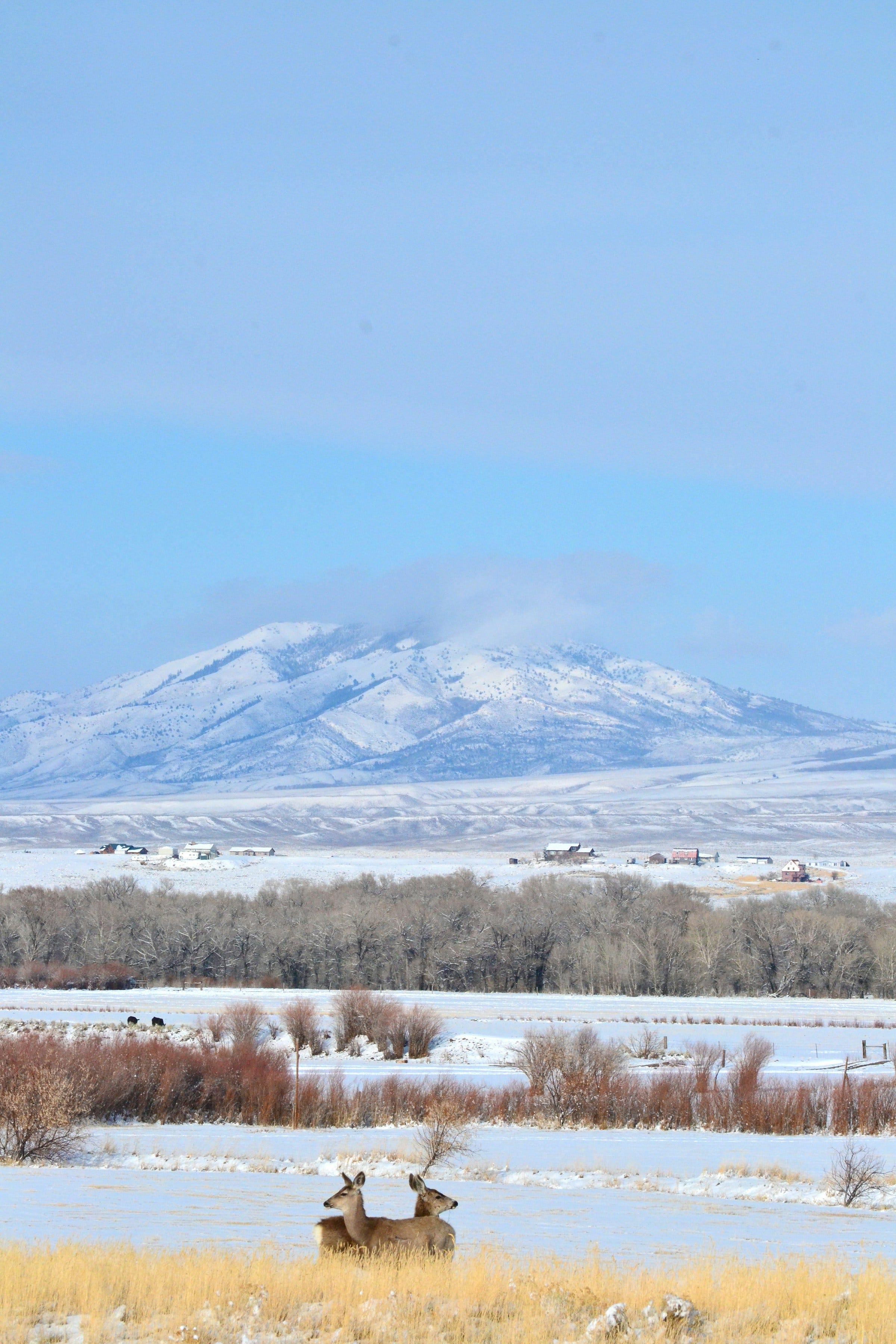
Snow covered the pines through the valley, aspens hanging on to their brown, gold, and yellow leaves. Many had already fallen. Cold air and heavy clouds clung to the mountains. Some white still falling, the snow on the ground reflected a little blue from the sky. The valley and peaks looked gray-blue.
In Saratoga, a small mountain ranching town in Wyoming, a row of nice SUVs lined the fence at the town airport. About half of them had snow on them. A nearby luxury resort brings guests in by private aircraft.
Everyday hardworking people drive by and see it. They live in the town. They work in the businesses that make a place like this possible.
When they look at their own lives, what reason do they have to believe that the person they elected to represent them takes their welfare as seriously as the welfare of the people flying in?
That question is the argument about affordability.
People can judge their leaders by whether those leaders attempt to achieve the national goals, even if they don’t consciously think in those terms. They expect justice. They expect their government to concern itself with their welfare. And when they believe their leaders have overlooked them in favor of somebody else, they feel betrayed.
That same day, Greg Ip raised a related question in The Wall Street Journal. He wrote, “All politicians in their gut believe voters can be bought….Yet the puzzling thing is that shoveling money at voters has a terrible electoral track record.”
A government can help people, and people can reward it for helping them. A family that receives meaningful help has good reason to value it.
But that help doesn’t settle the larger question of how their leaders have governed.
A family can appreciate a tax cut and still believe the government has treated them unfairly. Need the money and still judge the leader who offers it. Accept help while wondering why they need so much of it.
[Paige]
There are a lot of ingredients in the affordability pressure cooker this year.
Inflation. Business survival. Tariffs. Energy costs.
Prices this September were 3.7 percent higher than a year ago. Raises come slower than inflation and hardworking people lose purchasing power.
Producer inflation came in even higher, up 6.3 percent over the same year. Things like energy, food, manufactured supplies, services.
Businesses have to survive and they have a responsibility to pay their labor. They need revenue to do it, and they need profit to keep investing and operating. If a business can’t cover its costs, at some point it has to make the numbers make sense and labor ends up getting cut.
Bottom line. The business owner needs affordable inputs. The worker, a wage that will support a family. The farmer, a viable market, and the family buying groceries needs food it can afford.
[Joel]
Enough economics. This is a leadership topic.
What responsibility does government have toward the people living with the consequences of its decisions?
Our national goals give elected leaders a heading.
We have six. Union, justice, order, defense, general welfare, and liberty. Yes, we disagree about how to achieve them. We elect people to exercise judgment within those disagreements.
The goals seem independent, but that’s not the case. They’re intertwined. Calls for justice turn into protests, protests into riots, and people call for order. Some justify war by calling for blood for defense, and war raises the cost of life for families, threatening welfare. Union holds us together. Liberty creates factions that pull us apart. Serving one goal can put another at risk.
Sometimes serving the country means asking people to accept hardship. Those who have to sacrifice should have good reason to believe that their welfare still counts.
Did protecting the American homeland require Americans to pay significantly more to heat their homes and transport goods?
Who carries that cost?
Congress made choices in the One Big Beautiful Bill. It paired tax cuts with reductions in Medicaid and food assistance. Households at the bottom lost resources, households at the top gained.
The leaders who made these choices owe the people carrying the burden an explanation. How does their sacrifice serve justice and welfare?
If the promise is that investment will create jobs and raise wages, when should those families expect to benefit, and what will their leaders do if they don’t?
The people deserve a response from the people who asked them to bear the cost.
Is this necessary for the common defense?
What about the impact to the general welfare?
When leaders ignore them, they betray the people. And that obligation has no party allegiance.
In November, the people will judge those choices.
So. Six national goals that most Americans can’t recite and may not even know.
No matter. They’re ingrained in the national consciousness.
We judge leaders by their attempt to achieve the national goals, even when we never consciously put the judgment into those words.
When a leader abandons that effort in favor of someone in a private jet in a ranch town, the betrayal falls fresh as the new snow.
References
The Constitution of the United States — National Archives.
Consumer Price Index for September 2026 — Bureau of Labor Statistics, October 14, 2026. The annual increase was 3.7%; September’s monthly increase was 0.6%. BLS seasonally adjusts the headline monthly change but not the headline annual change.
Real Earnings for September 2026 — Bureau of Labor Statistics, October 14, 2026. Real average hourly earnings on private nonfarm payrolls fell 0.7% over the preceding year.
Milton Friedman, The Social Responsibility of Business Is to Increase Its Profits, September 13, 1970. University-hosted reproduction of the original New York Times Magazine essay; includes the constraints of law, ethical custom, and competition without deception or fraud.
Distributional Effects of Public Law 119-21 — Congressional Budget Office, August 11, 2025. The figures are projected annual averages over 2026–2034 in 2025 dollars. CBO’s January 2025 current-law baseline included scheduled expiration of provisions of the 2017 tax law. Its resource measure includes taxes and benefits; tariffs are separate.
Detecting Tariff Effects on Consumer Prices in Real Time Part II — Federal Reserve, April 8, 2026. Estimates consumer-price effects of 2025 tariffs through February 2026. Flaaen and Pierce’s study of the 2018–2019 tariffs examines protection, input costs, retaliation, and manufacturing employment.
Nucor second-quarter 2026 results — company release filed with the SEC, July 27, 2026. The CEO attributes record shipments to investment and supportive trade policy. That attribution does not isolate tariffs’ causal contribution.
Global Oil Markets — Energy Information Administration, October 6, 2026 outlook. Connects September’s oil-price increase with attacks on infrastructure and tankers, supply constraints, and shipping risks.
White House explanation of Operation Epic Fury, March 1, 2026.
Money Power and the Influence of Ordinary People in American Politics — Pew Research Center, September 19, 2023. Survey evidence on perceived influence of constituents, donors, and other interests.
Stefanie Stantcheva, Why Do We Dislike Inflation — Brookings Papers on Economic Activity, 2024. Survey findings on affordability, anger, anxiety, inequity, and how people interpret wage increases.
Ana De La O, Do Conditional Cash Transfers Affect Electoral Behavior — American Journal of Political Science, 2013. Randomized early enrollment in Mexico’s Progresa program increased turnout and incumbent vote share; benefits can earn electoral support.
Shively Field airport information — FAA records reproduced by AirNav; Brush Creek Ranch FAQ; WYDOT Shively Field economic-impact study using 2013 activity.
2 Chronicles 13–14, King James Version, especially 14:2–7. Background to the discussion of moral leadership, peace, and building for a community’s welfare.